Watering Herbs: 5 Common Mistakes and How to Fix Them
Too much water kills herbs faster, and probably more often, than too little. These five mistakes are easy to make and easy to fix once you know what to look for.
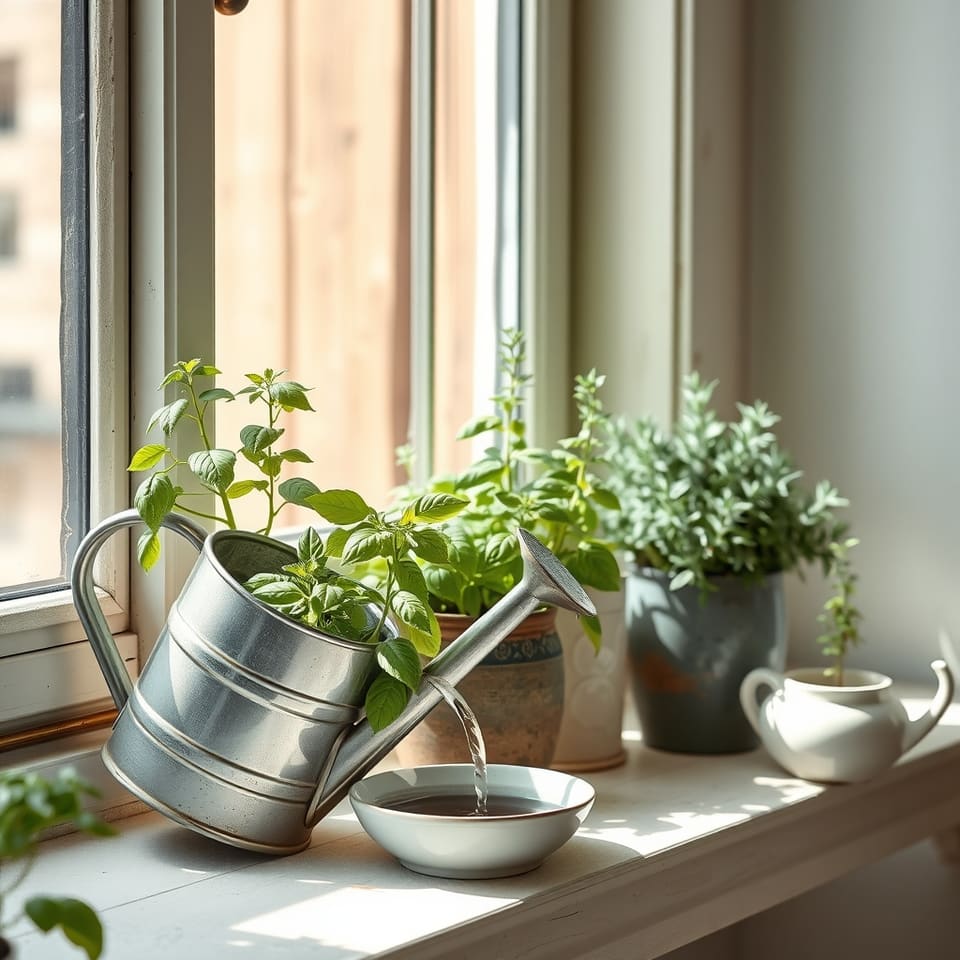
Herbs are forgiving plants, but watering trips up almost everyone at some point. A basil plant wilts on a hot balcony, a rosemary turns brown on a kitchen windowsill, and it is hard to tell whether the problem was too much water or too little.
The good news is that a few simple habits solve most problems. Here are five common watering mistakes, what horticulturists recommend instead, and a simple method you can use for any pot of herbs, wherever in the world you garden.
Mistakes 1 and 2: watering by the calendar, and too often
Watering every day at the same time feels organized, but plants do not follow a calendar. The Royal Horticultural Society (RHS) suggests pushing a finger about a third of the way down the pot and watering only if the compost feels dry at that depth. For indoor herbs, the University of Minnesota suggests watering when the soil is dry about 1 cm (1/2 inch) below the surface.
Watering too often is the bigger danger. The University of Minnesota warns that constantly soggy soil leads to root rot, especially indoors, and University of Tennessee Extension notes that overwatering often kills herbs faster than underwatering.
Not all herbs drink the same. Tennessee lists rosemary, lavender, sage and bay among the herbs that tolerate less moisture, while basil tolerates more. Clemson Extension adds that annual herbs in particular need extra soil moisture.
The Soak-and-Drain Watering Method
You need
- watering can with a narrow spout or fine rose1
- rainwater or ordinary tap water (not softened water)as needed
- pot with drainage holes1
- saucer or tray, optional in summer1
Method
- Push a finger about a third of the way into the compost. If it is still damp, wait and check again tomorrow.
- If it is dry, water slowly and close to the compost, keeping the leaves dry.
- Fill the pot to the rim, let the water soak in, then fill once more.
- Stop just before water starts to run out of the drainage holes.
- Empty the saucer a few hours later so the roots are not left standing in water.
Tips
- Water in the morning where you can, so any splashes on the leaves dry quickly.
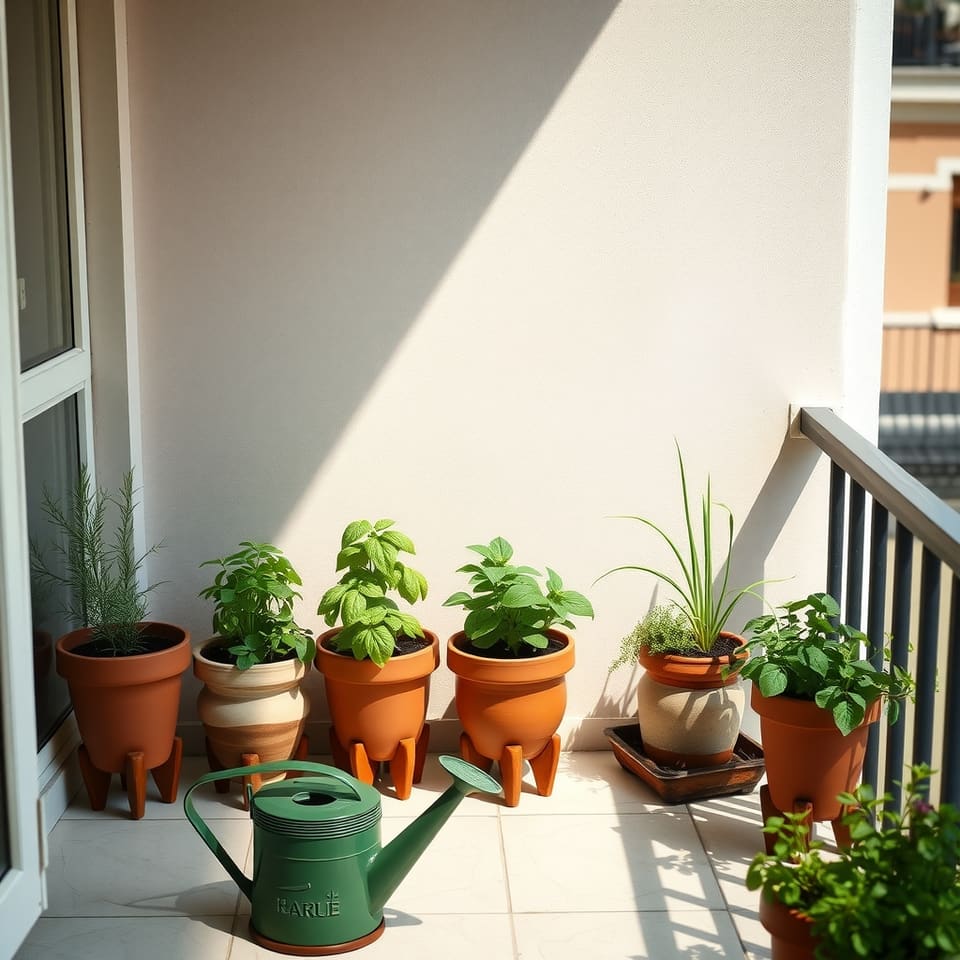
- In hot, windy weather, check small outdoor pots every day. The University of Minnesota notes they may need daily watering.
- Group thirsty herbs such as basil and parsley together and drought-tolerant herbs such as rosemary and thyme together, so one routine suits each pot.
Mistakes 3 and 4: little sips, and pots standing in water
A splash of water every day wets only the surface. The RHS advises watering well when needed rather than little and often. Fill the pot to the rim, let it soak in, and repeat once. In garden beds, the University of Minnesota suggests a deep watering about once a week that soaks the soil to about 20 cm (8 inches). Tennessee puts general herb needs at around 2.5 cm (1 inch) of water a week.
Do not rely on rain either. The RHS points out that a light shower is unlikely to wet the compost more than a few centimeters down.
Water must also be able to leave. Every container needs drainage holes, the University of Minnesota stresses. Saucers are useful in summer, but the RHS advises emptying them a few hours after watering so the compost does not stay waterlogged, and removing them altogether in winter.
Mistake 5: wetting the leaves at the wrong time
Aim the water at the compost, not the plant. The RHS notes that watering the compost rather than the foliage reduces the spread of fungal diseases and leaves more water for the roots.
Timing matters too. The RHS recommends early morning or early evening, when less water evaporates. Clemson suggests watering early enough in the day that leaves can dry before nightfall, so morning is the safer choice if the leaves do get wet.
Two smaller points are worth knowing. Tennessee advises using water from before a water softener, since softeners add sodium. And the RHS notes that terracotta pots dry out quickly, small pots dry faster than large ones, and pots facing the midday sun dry faster than those in shade, so check these more often in hot weather.
What the evidence says
This advice comes from the RHS and university extension services. It reflects long horticultural experience and plant biology rather than precise rules, which is why none of these sources gives a fixed number of waterings a week for pots. The amount depends on the plant, the pot, the weather and your climate.
What the sources agree on is the method: check the compost before watering, water thoroughly, let excess drain away, and never leave roots sitting in water.
Questions people ask
How can I tell overwatering from underwatering?
Check the compost, not the leaves. If it is still wet, do not add more, because constantly soggy compost leads to root rot. If it is dry a third of the way down, the plant needs a drink.
Should I water herbs every day in summer?
Only if they need it. Small pots in hot, windy weather may need daily water, but larger pots and beds often do not. Always check the compost first.
Is rainwater better than tap water?
The RHS encourages collecting rainwater to save mains water. Ordinary tap water is fine too, but avoid water from a softener.
Sources
- How to water containers — Royal Horticultural Society
- Growing herbs — University of Minnesota Extension
- Growing Culinary Herbs in Tennessee Gardens — University of Tennessee Extension
- Herbs — Clemson Cooperative Extension (HGIC)
This article is for general information only and is not medical advice. Herbs can interact with medicines and health conditions. Talk to a doctor or pharmacist before trying a herbal remedy, especially if you are pregnant, breastfeeding, giving it to a child, or taking any medication.