Balcony Herb Garden Layout: A Simple Plan for 6 Pots
Six pots are enough for a herb garden you will use every day. Here is how to arrange them by sun and water needs, which pots and compost to choose, and how to keep them going on a windy, sunny balcony.
From a flat in Lisbon to an apartment in Toronto or Singapore, a balcony is often the only garden a city kitchen has. The good news is that most cooking herbs are happy in pots, and the Royal Horticultural Society (RHS) notes that containers are often the only option on balconies and patios.
The trick is not to buy a dozen small pots and hope. A short plan, built around how much sun your balcony gets and how much each herb likes to drink, gives you a garden that is easier to water and lasts longer.
Start with your sun
Watch your balcony for a day and count the hours of direct sun. University of Vermont Extension says most vegetables and herbs need at least six hours of direct sun a day. The RHS adds that most herbs, including rosemary, thyme, basil and oregano, like full sun and well-drained soil.
Some herbs cope with less. According to the RHS, parsley tolerates part shade, and mint likes rich, moist soil in sun or part shade. That gives you a natural layout: put the sun-lovers at the brightest edge, and the herbs that like more water and some shade behind them.
How to Set Up a 6-Pot Balcony Herb Garden
You need
- large pot, about 30 to 40 cm (12 to 16 inches) wide, for rosemary1
- medium pots, at least 20 to 25 cm (8 to 10 inches) wide and deep, for thyme, basil, parsley and chives4
- large pot for mint, which grows strongly1
- peat-free potting compost: soil-based for rosemary, thyme and chives, multi-purpose for basil and parsleyenough to fill all pots
- young herb plants, or seed for parsley and basil6
- pot feet or small bricks, and a few stones for tall pots1 set
Method
- Check that every pot has drainage holes. If a recycled container has none, add some before you plant.
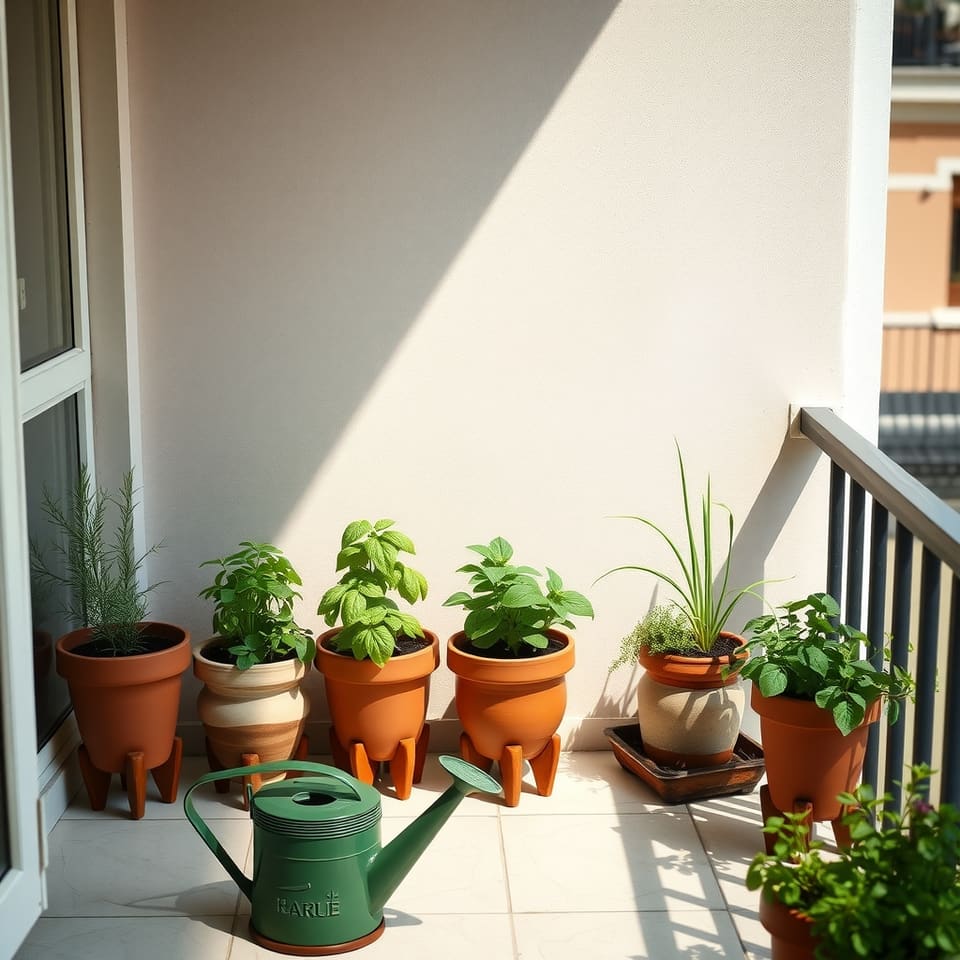
- Set the pots on pot feet so water can drain freely and does not run across the floor to a neighbor below.
- Fill each pot with the right compost to about 2 cm (1 inch) below the rim. Garden compost is a soil improver, not a potting mix, so do not use it alone.
- Plant each herb at the same depth it was in its nursery pot, firm gently and water well.
- Place rosemary, thyme and basil at the sunniest edge, and parsley, chives and mint behind them or at the shadier end.
- On a windy balcony, put a few stones in the base of tall, narrow pots and keep them away from the railing edge.
- Water whenever the top of the compost is dry, checking daily in hot weather. Feed now and then with a liquid fertilizer from spring to late summer, as plants in pots have less compost to draw on than plants in the ground.
Tips
- Check your building's rules before hanging pots over a railing, and make sure nothing can fall onto people below.
- Wet compost is heavy. Choose lighter plastic pots or move pots before watering if your balcony has a weight limit.
- For the specific needs of each herb, see our separate growing guides.
The six-pot plan
Front row, in the most sun: rosemary in the biggest pot, thyme in a medium pot, and basil in a medium pot for the warm months. These like to dry out a little between waterings.
Back row, in light shade or the less sunny end: parsley, chives and mint, each in its own pot. Mint always gets a pot of its own, because the RHS warns it spreads invasively and should be divided regularly. Keeping thirsty herbs together and dry-loving herbs together means you can water each row the way it likes, instead of drowning one herb to keep another alive. Swap any herb for one you cook with more; just keep it in the row that matches its needs.
What the evidence says
Bigger really is better for pots. The RHS explains that large containers hold more compost and dry out more slowly, while small pots in full sun may need watering up to twice a day in hot weather. But do not oversize a pot for a small plant, as it can stay waterlogged.
Drainage is not optional. The RHS calls drainage holes essential and suggests raising pots on pot feet to keep holes clear. Use saucers in summer, but remove them for winter so pots do not sit in water, which can rot roots. Unglazed terracotta dries faster and can crack in frost unless it is frost-proof, while plastic is lighter and holds water longer.
Harvesting and using your balcony herbs
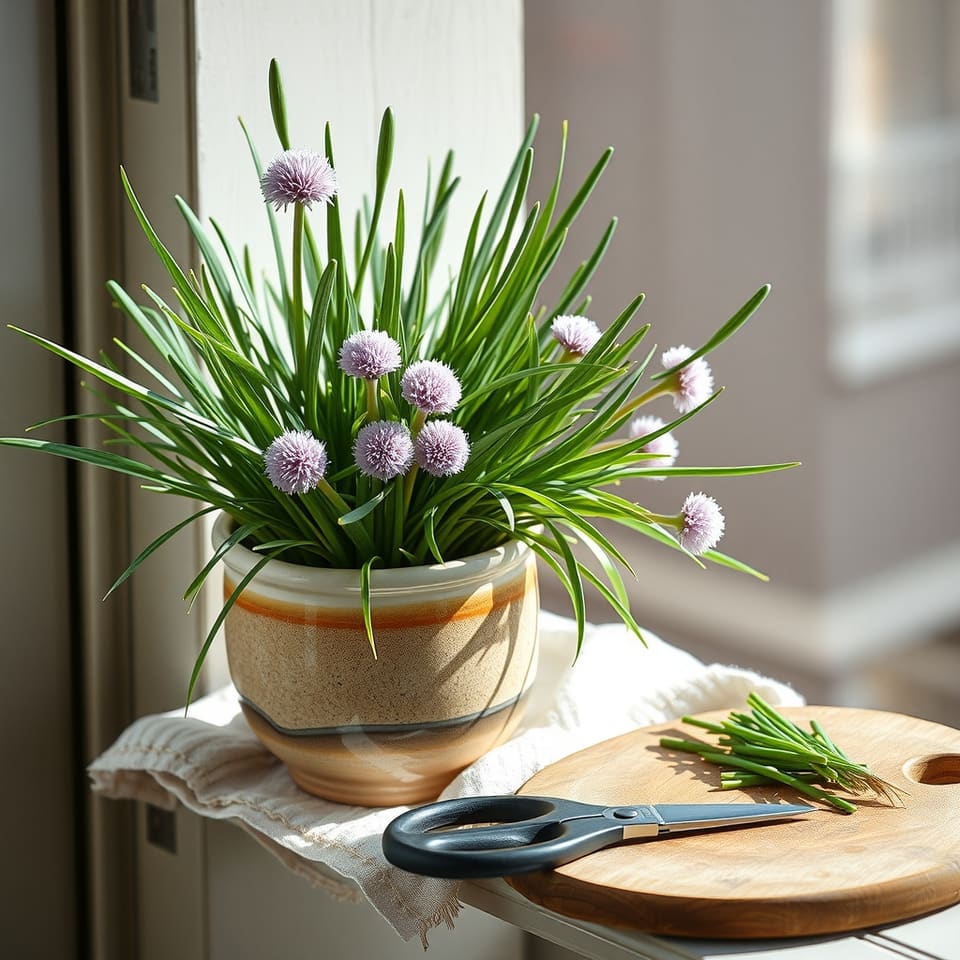
Pick little and often. The RHS advises pinching out or cutting herbs before they flower to keep them bushy. Take the outer stems of parsley, snip chives near the base, and nip the tips of basil and mint.
With six pots you can cover a lot of cooking: rosemary and thyme for roasts and beans, basil for tomatoes, parsley and mint for salads and grain dishes, and chives for eggs and potatoes. Use soft herbs fresh, and add woody ones early in cooking.
Questions people ask
What herbs grow best on a north-facing or shady balcony?
Parsley and mint cope better with part shade than rosemary, thyme or basil. If your balcony gets less than about six hours of direct sun, focus on those.
Can I plant several herbs in one big pot?
Yes, if they like the same conditions, such as thyme and oregano together. Keep mint on its own, and do not mix dry-loving and thirsty herbs in one pot.
How often should I water balcony herbs?
Whenever the top of the compost is dry. In hot summer weather small pots in full sun may need water once or even twice a day, while large pots dry out more slowly.
Sources
- Herbs: Growing and Harvesting — Royal Horticultural Society
- Growing plants in containers — Royal Horticultural Society
- Growing Vegetables and Herbs in Containers — University of Vermont Extension
- Toxic and Non-toxic Plants: Chives — ASPCA
This article is for general information only and is not medical advice. Herbs can interact with medicines and health conditions. Talk to a doctor or pharmacist before trying a herbal remedy, especially if you are pregnant, breastfeeding, giving it to a child, or taking any medication.