Indoor Herb Garden in Winter: A Kitchen Windowsill Guide
Short days are hard on herbs, but a bright kitchen windowsill can still give you fresh leaves all winter. Here is what to grow, how to give it enough light, and the watering mistake that kills most indoor herbs.
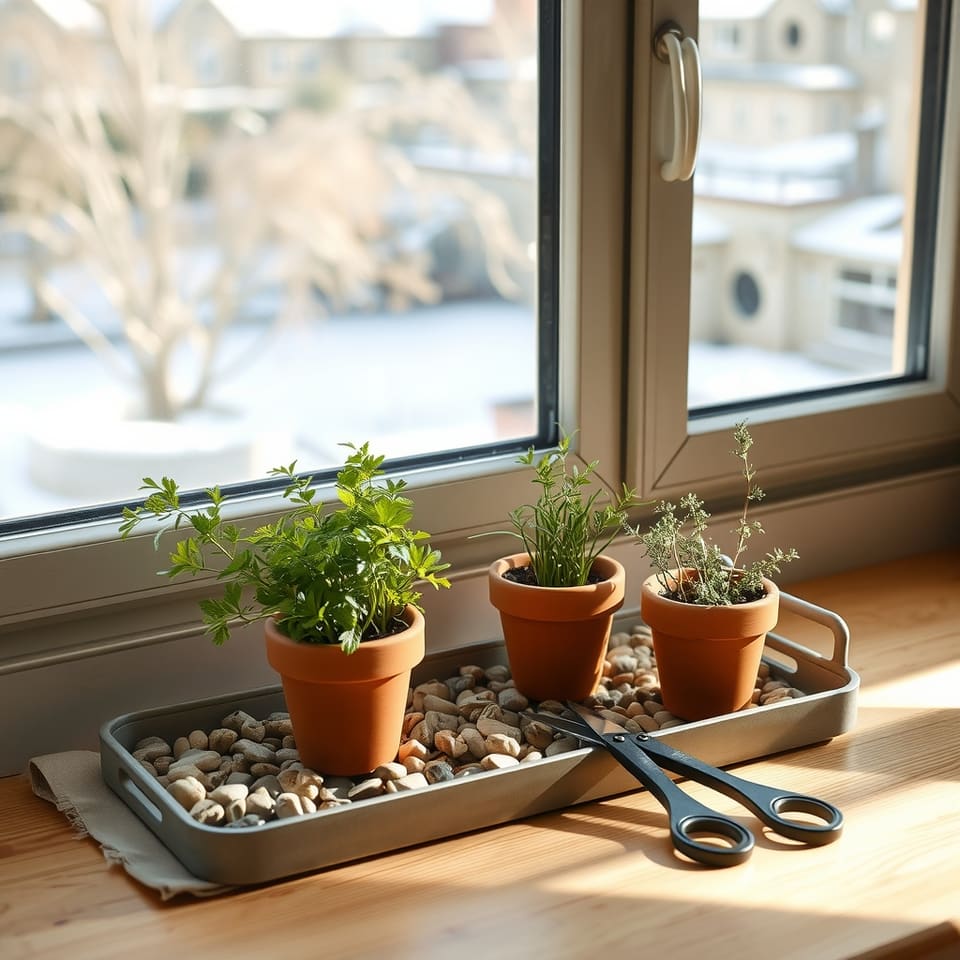
When the garden goes quiet, a few pots by the kitchen window are a small luxury: a handful of parsley for soup, chives for eggs, a sprig of mint for tea. Wherever winters are cold or dark, from northern Europe to Canada or Japan, a windowsill is often the only place herbs can keep growing.
Winter is the hardest season for indoor herbs, because light is low and heating dries the air. With the right spot, the right pots and a lighter hand with the watering can, most kitchen herbs will keep going until spring.
Light is everything
Iowa State University Extension says most herbs grown indoors need about eight hours of direct light a day, while University of Illinois Extension puts it at about six. A south-facing window is best in the Northern Hemisphere, with a bright east or west window as a second choice. If you live south of the equator, a north-facing window gets the most sun.
In winter, even a good window often falls short. Iowa State suggests adding a grow light: a full-spectrum fixture placed 15 to 30 cm (6 to 12 inches) above the leaves, on a timer for 12 to 16 hours a day. University of Illinois Extension notes that without enough light, herbs get leggy and spindly.
How to Set Up a Winter Windowsill Herb Garden
You need
- terracotta pots at least 15 cm (6 inches) wide, each with a drainage hole4
- well-drained potting mixenough to fill the pots
- young herb plants, such as parsley, chives, mint and thyme, or clumps potted up from the garden4
- shallow tray filled with pebbles and a little water1
- small full-spectrum grow light with a timer, optional1
Method
- Choose your brightest window, ideally one that gets six to eight hours of sun, and check it is not right above a radiator or heat vent.
- Pot each herb on its own in fresh potting mix, at the same depth it was growing, and water it once thoroughly.
- Set the pots on the pebble tray. Keep the water level below the bottom of the pots, so they sit above the water, not in it. This raises humidity around the leaves.
- If the leaves start to stretch toward the glass or look pale, add a grow light 15 to 30 cm (6 to 12 inches) above them, set for 12 to 16 hours a day.
- Water only when the top of the mix feels dry, then water until a little drains out. Empty any water left sitting under the pots.
- Turn the pots every few days so they grow evenly.
- Feed lightly or not at all until spring, and start harvesting once the plants have settled in.
Tips
- A small fan on low, as Illinois Extension suggests, improves air flow and helps prevent disease.
- Check the undersides of leaves for tiny pests every week or two, especially on rosemary.
- In spring, move tender perennials such as rosemary and bay back outdoors once the frost has passed.
Which herbs do best indoors
Iowa State lists parsley, mint, chives, basil, oregano, cilantro and thyme as the best choices for indoors. Rosemary, sage, bay and lemon balm can work too, but they need more light or are more prone to pests such as spider mites.
You do not have to start from scratch. The Royal Horticultural Society (RHS) suggests potting up chives, mint, parsley or tarragon from the garden and bringing them in for winter, onto a south-facing windowsill.
What the evidence says
Too much water is one of the easiest ways to lose an indoor herb. Iowa State advises letting the soil dry between waterings, because most herbs do not tolerate wet soil. It recommends a pot sized to the plant, as oversized pots stay wet too long, good drainage, and clay or terracotta, which dries faster. It also suggests one herb per pot.
On feeding, the sources differ. Iowa State says to feed lightly at half or quarter strength from spring through summer, and to skip winter. Illinois suggests a liquid feed every two weeks but warns that too much fertilizer can reduce aroma and taste. With low winter light and slow growth, a light hand is the safer choice. Illinois gives 16 to 21 °C (60 to 70 °F) as the best temperature range, and advises keeping pots away from heat vents, which dry plants out. Expect indoor herbs to taste a little milder than summer ones, as Iowa State notes.
Harvesting and using winter herbs
Cut little and often, and never strip a plant bare in winter, when regrowth is slow. Iowa State suggests cutting leafy annuals such as parsley just above a leaf, leaving 10 to 15 cm (4 to 6 inches) of stem, and trimming perennials such as chives, mint, oregano and thyme by no more than the top third.
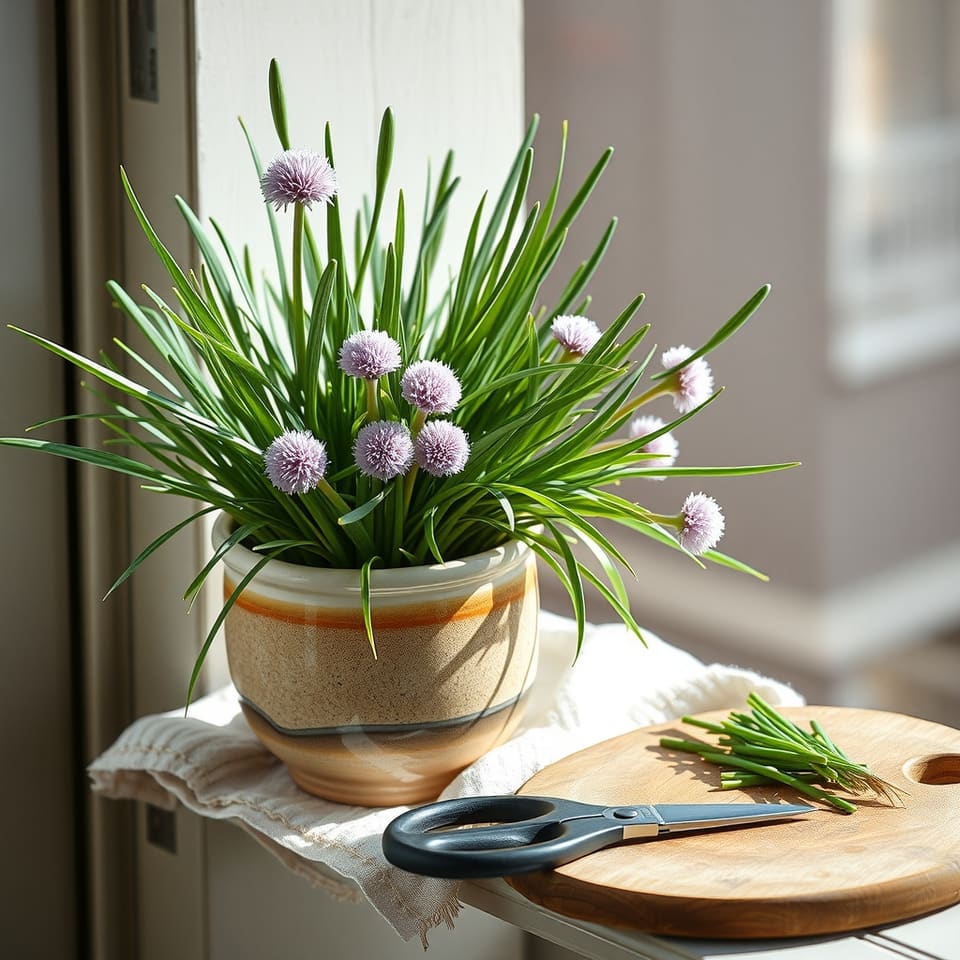
Use your harvest where it counts: chopped parsley over winter stews and soups, chives on baked potatoes, thyme in roasts and bean dishes, and a few mint leaves in hot water. When a parsley or basil plant is worn out after several cuts, Iowa State suggests replacing it with a new one from seed.
Questions people ask
Can I grow herbs indoors in winter without a grow light?
Often yes, on a very bright south-facing window in the Northern Hemisphere. Expect slower growth. If the plants turn pale and leggy, they need more light.
Why are my indoor herbs dying in winter?
Two common causes are too little light and too much water. Move them to the brightest spot, let the top of the mix dry between waterings and make sure the pots drain.
Should I fertilize indoor herbs in winter?
Only lightly, if at all. Growth is slow in low light, and too much fertilizer can reduce aroma and taste. Feed more regularly again from spring.
Sources
- Growing Herbs Indoors — Iowa State University Extension and Outreach
- Herbs all winter: grow them indoors — University of Illinois Extension
- Herbs: Growing and Harvesting — Royal Horticultural Society
- Toxic and Non-toxic Plants: Chives — ASPCA
This article is for general information only and is not medical advice. Herbs can interact with medicines and health conditions. Talk to a doctor or pharmacist before trying a herbal remedy, especially if you are pregnant, breastfeeding, giving it to a child, or taking any medication.