Fresh-Smelling Shoes: Drying, Baking Soda and Herbs
Shoe odor comes from sweat and bacteria, so the real fix is drying your shoes out between wears. Baking soda and dried herb sachets can help a pair smell fresher, but they work best on top of good drying habits.
Few things are as quietly embarrassing as kicking off your shoes and noticing the smell. The good news is that smelly shoes are very common and usually easy to improve at home.
This guide explains where the smell comes from, why drying is the step that matters most, and how to use two simple helpers: baking soda and a small sachet of dried herbs. It also covers when foot odor is a sign you should talk to a pharmacist or doctor.
Where the smell comes from
Your feet sweat, and that sweat soaks into socks and shoe linings. Bacteria on the skin feed on it and give off the familiar sour or cheesy smell. The NHS lists this mix of sweat and bacteria as the usual cause of smelly feet, with fungal infections such as athlete's foot as another possible cause.
Some things make you sweat more, such as hot weather, exercise, standing all day, hormonal changes like puberty, pregnancy or menopause, and some medicines. A shoe that never fully dries gives bacteria a warm, damp home, so the smell keeps coming back.
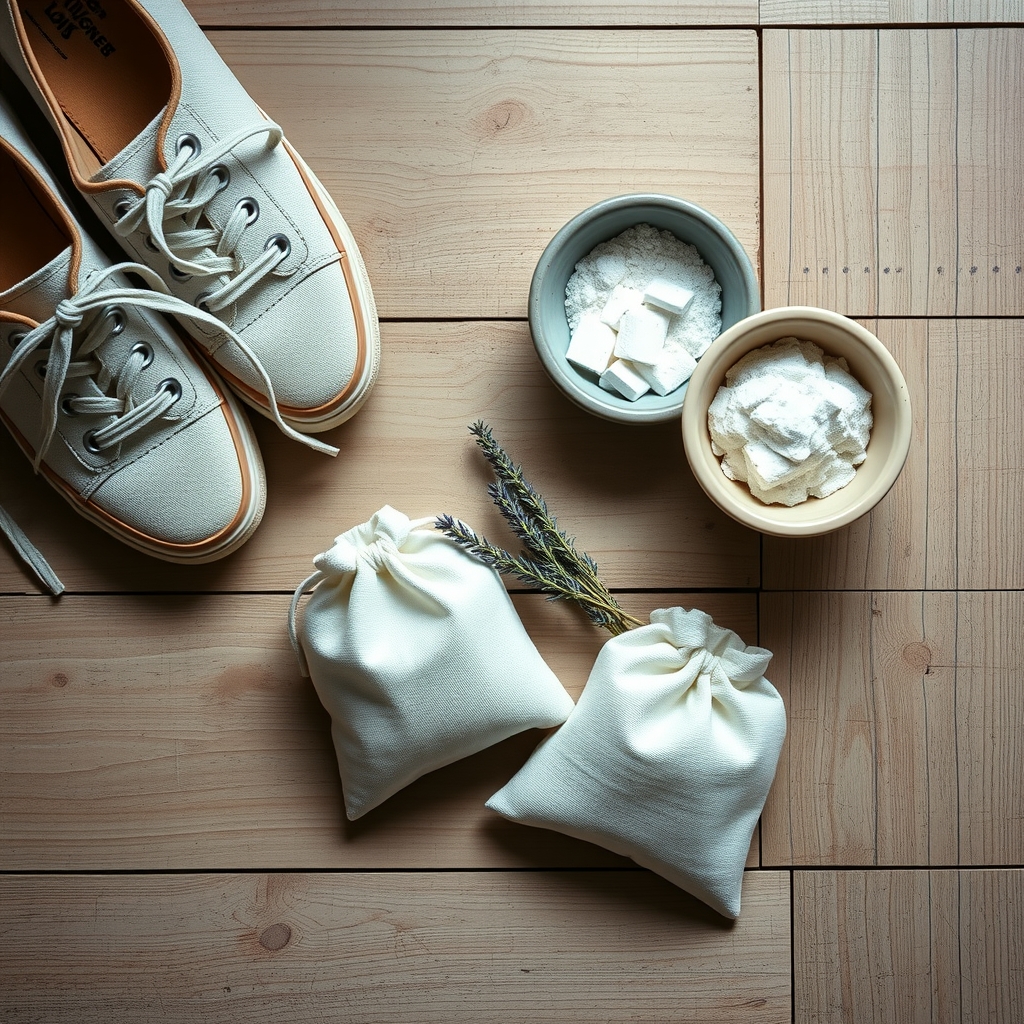
Dried Herb and Baking Soda Shoe Sachets
You need
- baking soda4 tbsp
- dried lavender flowers2 tbsp
- dried rosemary or peppermint leaves, lightly crumbled1 tbsp
- small cotton or muslin drawstring bags, or two clean old socks tied with string2
Method
- Make sure the herbs are fully dry and crisp. Damp herbs can go moldy inside a shoe.
- Mix the baking soda and dried herbs in a small bowl.
- Spoon half of the mixture into each bag and pull the string tight, or tie a firm knot so no powder escapes.
- Once your shoes are dry, place one sachet inside each shoe and leave it overnight or between wears.
- Take the sachets out before wearing the shoes. Let them air on a windowsill now and then to stay dry.
Tips
- Replace the filling every 3 to 4 weeks, or when the scent fades.
- Squeeze the sachet gently before use to release more scent from the herbs.
- Use a tightly woven fabric so the baking soda does not leak into the shoe.
- Never put a sachet into wet shoes. Dry them first, then add it.
Drying comes first
The single most useful habit is to let each pair dry out completely before you wear it again. Both the NHS and the American Academy of Dermatology suggest rotating your shoes so that no pair is worn two days in a row.
After wearing, loosen the laces, pull the tongue forward and take out any removable insoles. Leave the shoes somewhere airy and at room temperature. Stuffing them loosely with newspaper or paper towels can soak up moisture faster; swap the paper if it gets damp. Avoid putting shoes right on a radiator or in strong sun, as high heat can warp glue and leather.
Socks matter too. Choose breathable socks made of natural fibers or materials that wick moisture away, and change them every day, or more often if they get wet. Breathable shoes in leather or canvas usually stay fresher than tight shoes made of plastic or rubber.
Baking soda and dried herbs
Baking soda is widely used to absorb odors in the home. Sprinkling a small amount inside dry shoes overnight and shaking it out in the morning is a cheap, gentle way to freshen them. Tap the shoes out well over a bin or outdoors so the powder does not build up in the lining.
Dried herbs add a pleasant scent. Lavender, rosemary and peppermint leaves are popular choices because they smell clean and keep their aroma once dried. Tucked into a small cloth sachet, they can sit inside shoes between wears. Think of them as a scent, not a treatment: they make a shoe smell nicer, but they do not dry it or deal with the cause.
What the evidence says
The advice with real backing is the boring part: wash your feet daily, dry them well, including between the toes, change socks often and let shoes dry out between wears. These steps are recommended by the NHS and the American Academy of Dermatology because they take away the damp conditions that bacteria and fungi like.
There is little formal research on baking soda or herb sachets for shoe odor. Their use is based mostly on practical experience. They may help a shoe smell fresher, but if the smell is strong or keeps returning despite good drying, the cause is more likely your feet, your socks or an infection, and a home sachet will not fix that.
Questions people ask
Can I put my shoes in the freezer to kill the smell?
Freezing is a popular tip, but there is no good evidence that it reliably removes odor. Drying shoes fully and rotating pairs is a more dependable approach.
How often should I change the herbs in my sachets?
Every 3 to 4 weeks is a good rule, or sooner if the scent fades or the sachet ever gets damp.
Do sachets work in sports shoes?
They can help between wears, but sports shoes get very sweaty. Take out the insoles after every session and let everything dry fully first, then add the sachet.
Sources
- Smelly feet — NHS
- How to prevent athlete's foot — American Academy of Dermatology
- Lavender — ASPCA
- Preserving herbs — University of Illinois Extension
- Mint — ASPCA
This article is for general information only and is not medical advice. Herbs can interact with medicines and health conditions. Talk to a doctor or pharmacist before trying a herbal remedy, especially if you are pregnant, breastfeeding, giving it to a child, or taking any medication.