Growing and Drying Lavender for the Home
A few lavender plants can fill your drawers and vases with scent all year. Here is how to grow it, when to cut it, and how to dry it so the color and fragrance last.
Lavender is one of the easiest herbs to grow for scent. It loves sun, needs little care once settled, and dried stems keep their color and fragrance for months.
This guide covers the growing basics, the right moment to cut, and a simple drying method. You will also find a sachet recipe for drawers and an honest look at what dried lavender can and cannot do, including whether it keeps moths away.
Growing lavender
According to the University of Connecticut Home and Garden Education Center, lavender needs a sunny spot and well-drained soil with a near-neutral pH. Wet roots, especially in winter, are its biggest enemy. More plants are lost to winter wet than to summer drought.
Plant it in the sunniest, best-drained corner you have, or in a pot with a free-draining mix and a drainage hole. Water young plants until they are settled, then water only when the soil is dry. Feed sparingly, if at all; rich soil gives soft growth and less scent.
Early in the season, cut plants back to about 15 to 20 cm (6 to 8 inches). This keeps them bushy and encourages more flower stems.
Simple Lavender Drawer Sachet
You need
- dried lavender buds, fully dry4 to 5 tbsp
- small breathable cotton or linen bags, or squares of fabric2
- ribbon or string2 pieces
Method
- Check that the buds are completely dry and crisp, with no musty smell.
- Spoon 2 to 3 tbsp of buds into each bag, or into the center of a fabric square.
- Tie the bag tightly closed, or gather the corners of the square and tie them with ribbon.
- Place the sachets in drawers, linen cupboards or among stored clothes, away from children and pets.
- When the scent fades, squeeze the sachet gently to release more, and replace the buds every few months.
Tips
- Do not add essential oil to sachets for drawers that hold baby clothes or anything that touches a child's skin.
- Keep sachets out of direct contact with damp fabric so the buds do not go moldy.
- For moth protection, clean clothes and airtight storage matter far more than scent.
When to cut and how to dry
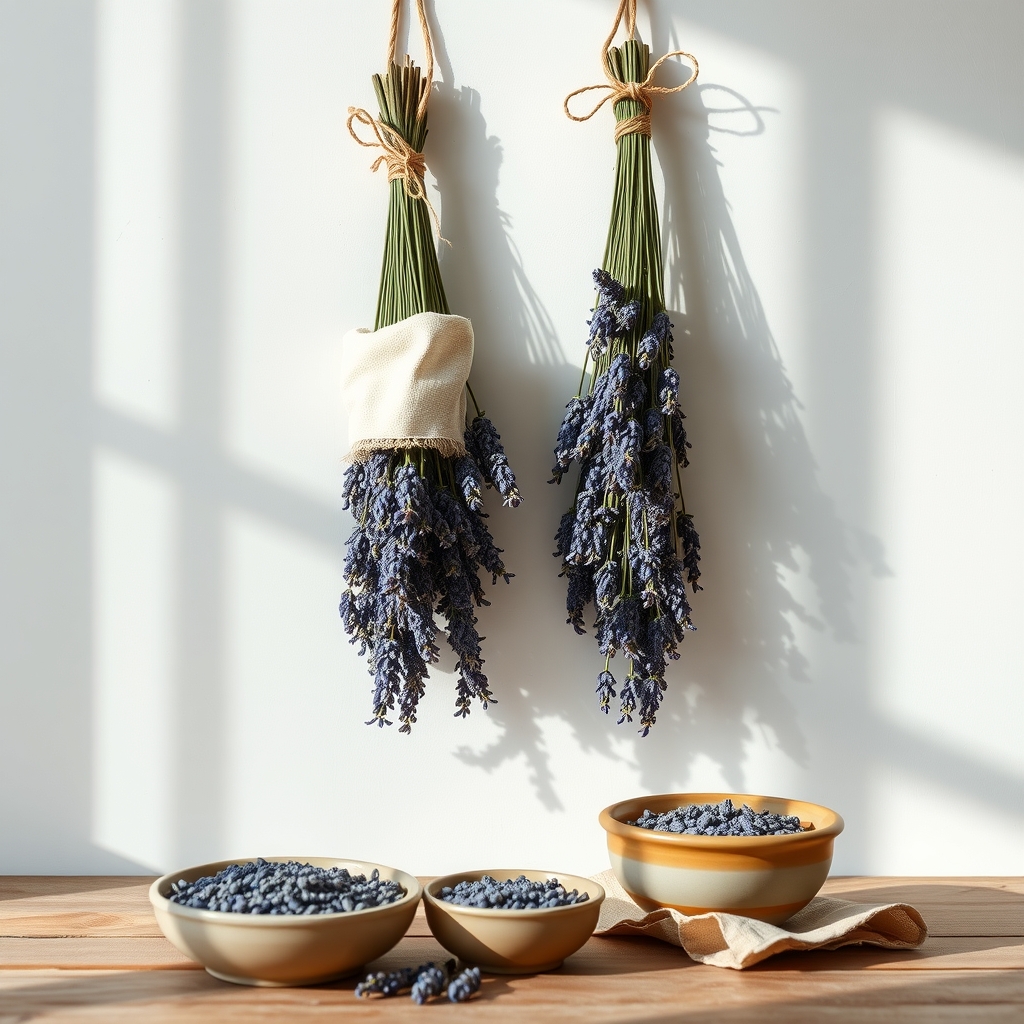
Cut stems when the flower spikes are about half to two-thirds open. At this stage the buds hold their color and fragrance best when dried. Cut in the morning after any dew has dried, so the stems are not wet.
Gather small bunches of stems and secure them with a rubber band or ribbon. A rubber band tightens as the stems shrink, so bunches do not slip out.
Hang the bunches upside down in a dark, dry place with some air movement for 1 to 3 weeks. Darkness helps keep the purple color. They are ready when the stems snap and the buds fall off easily when rubbed.
Use whole dried stems in vases, or rub the buds off over a bowl for sachets. Store loose buds in a clean, dry, airtight jar away from light.
What the evidence says
Dried lavender is widely used to scent drawers and linen, and many people find the smell pleasant and relaxing. The NCCIH notes that it is unclear whether lavender aromatherapy helps with anxiety or sleep, so enjoy the scent without expecting a treatment.
Lavender is often said to keep clothes moths away, but there is little good evidence that a sachet of dried buds protects clothes. Utah State University Extension recommends cleaning clothes before storing them and keeping them in clean, airtight containers, and notes that even cedar-lined closets and chests have limited value against moths. Think of a lavender sachet as a nice scent, not as moth protection.
Safety matters too. The NCCIH reports that topical lavender products can cause allergic skin reactions in some people, and that a few cases of breast swelling have been reported in children who used topical lavender products, although it is unclear whether lavender was the cause.
Questions people ask
Which lavender is best for drying?
English lavender types are popular for drying and sachets because they hold their shape and color well, but most garden lavenders can be dried the same way.
Why did my dried lavender turn brown?
It was probably cut too late, dried in bright light, or dried too slowly in a damp place. Cut when spikes are half to two-thirds open and dry in a dark, dry spot.
Will a lavender sachet keep moths away?
There is little good evidence that it does. Clean clothes before storing them and keep them in clean, airtight containers. Use lavender for its scent.
Sources
- Lavender is Lovely — UConn Home and Garden Education Center
- Lavender — NCCIH
- Lavender — ASPCA
- Clothes Moths — Utah State University Extension
This article is for general information only and is not medical advice. Herbs can interact with medicines and health conditions. Talk to a doctor or pharmacist before trying a herbal remedy, especially if you are pregnant, breastfeeding, giving it to a child, or taking any medication.