Scalp Massage for Hair Growth: What the Studies Show
Scalp massage is free, relaxing and popular online as a way to grow thicker hair. The research behind it is small and early. Here is what it actually found, and how to do a gentle routine if you want to try.
Few hair tips sound as appealing as this one: rub your scalp for a few minutes a day and your hair may grow back thicker. It costs nothing, it feels good, and videos about it are everywhere.
The idea is not pure fantasy. A small number of researchers have tested it. But the studies are tiny, and the headlines usually say more than the data does. Before you set a daily alarm, it helps to know what was actually measured, and why hair thinning sometimes needs a proper diagnosis first.
Why your hair might be thinning
The American Academy of Dermatology (AAD) says it is normal to shed between 50 and 100 hairs a day. Shedding more than that, called telogen effluvium, often follows a trigger such as childbirth, a high fever, surgery, major stress or losing a lot of weight. This kind of shedding is usually temporary, and hair often regains its fullness within six to nine months.
True hair loss is different. It happens when something stops hair from growing, such as hereditary hair loss, immune problems, some medicines, tight hairstyles or harsh products. The AAD notes that the sooner treatment begins, the better the outlook. That is the main reason not to rely on massage alone if your hair is clearly getting thinner.
Gentle Daily Scalp Massage
You need
- fingertips, with short, smooth nailsClean
- quiet spot where you can sit comfortably1
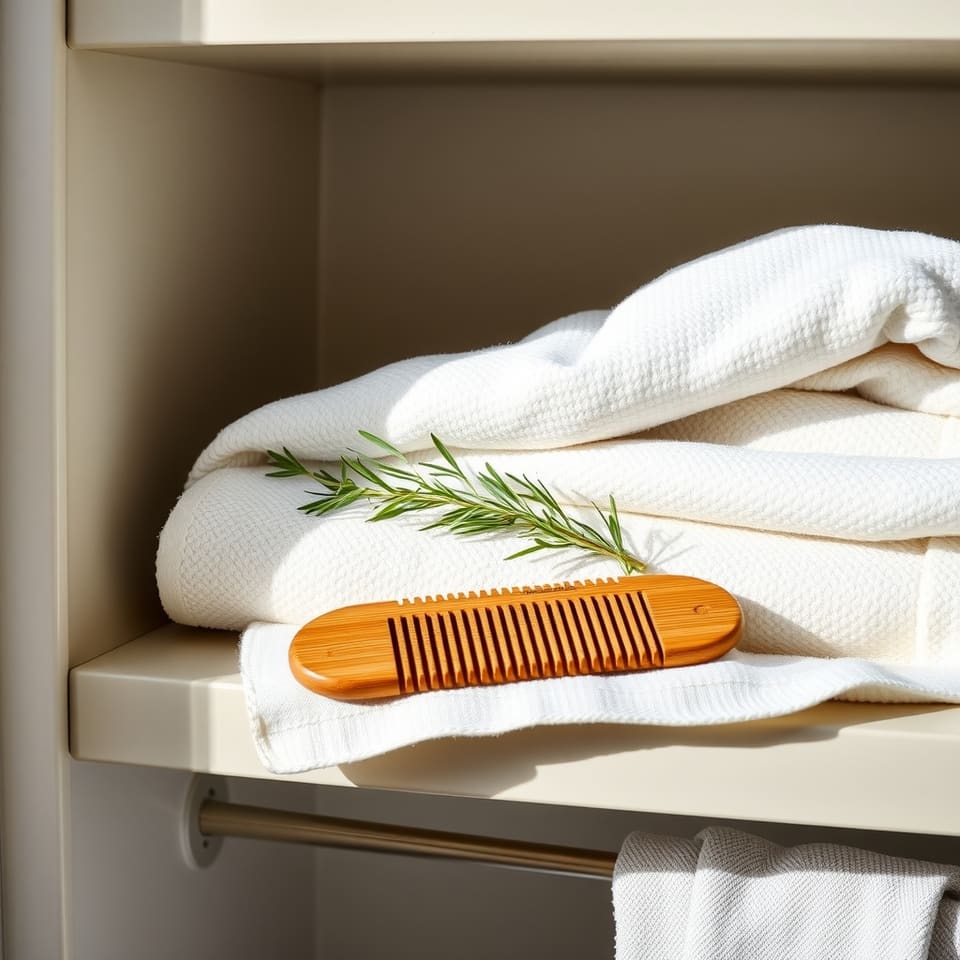
- wide-tooth comb for afterwardOptional
Method
- Sit with your shoulders relaxed. You can do this on dry hair, or in the shower while shampoo is on your scalp.
- Place the pads of your fingers, not your nails, on your scalp just above your ears.
- Press gently and move the skin in small circles for about 30 seconds, letting the skin slide over the skull rather than rubbing the hair.
- Move your hands up toward the crown, then to your hairline and finally to the back of your head, spending about 30 seconds in each spot.
- Finish by gently pressing and holding with spread fingers for a few breaths. Aim for about 4 to 5 minutes in total.
- If your hair is wet, detangle afterward with a wide-tooth comb, working from the ends up.
Tips
- Consistency matters more than pressure. The study routines lasted months, not days.
- Use only light to moderate pressure. Scalp massage should never hurt.
- A massage done while shampooing is an easy way to build the habit into a routine you already have.
What the evidence says
The study quoted most often was published in 2016 in the journal Eplasty. Nine healthy Japanese men with no obvious hair loss used a massage device on one side of the scalp for 4 minutes a day for 24 weeks, while the other side was left alone for comparison. On the massaged side, average hair thickness rose from 0.085 mm to 0.092 mm. However, the hair count on that side actually dipped for a while, growth rate did not change, and the paper's own figures report no significant difference between the massaged and untreated sides. The study was partly funded by industry.
The second piece of evidence is a 2019 online survey in Dermatology and Therapy. Of about 1,900 people with self-assessed pattern hair loss who were invited, 340 completed it and 327 said they had tried a set massage routine. The usual effort was 11 to 20 minutes a day, and 68.9 percent reported that their hair loss had stabilized or that hair had regrown. People who massaged for longer, and for more months, were more likely to report improvement.
That sounds encouraging, but a survey is not a trial. Results were self-reported, there was no comparison group, and the people who answered may have been those most pleased with the results. The 2016 authors themselves wrote that scalp massage has not been evaluated in sound clinical trials. Honest summary: scalp massage is a low-risk habit with weak, early evidence. It is not a proven hair loss treatment.
How it might work
Researchers have two main ideas. One is that the gentle stretching of the skin during massage may send mechanical signals to the cells at the base of the hair follicle. In the 2016 study, stretching these cells in a lab dish changed the activity of thousands of genes. The other idea is improved blood flow. Neither has been proven in people.
For now, it is fair to enjoy a scalp massage for what it reliably gives you: a few relaxing minutes, and a good reason to check in with your scalp. If you have a diagnosed condition, proven treatments such as minoxidil are a better place to put your hopes. The AAD notes minoxidil can help early hair loss, though results take months and stop if you stop using it.
Questions people ask
How long before scalp massage shows results?
In the 2016 study, changes in hair thickness were measured over months, and survey respondents kept it up for an average of over seven months. Expect no quick changes, and keep in mind the evidence is weak.
Is a massage brush or device better than fingers?
The 2016 study used a device, while the survey used fingertip routines. No study has compared them directly, so choose whatever is gentle and comfortable for you.
Can scalp massage replace hair loss treatment?
No. It may be a pleasant extra, but it is not a proven treatment. If you have pattern hair loss or another diagnosed cause, talk to a dermatologist about options with stronger evidence.
Sources
- Standardized Scalp Massage Results in Increased Hair Thickness by Inducing Stretching Forces to Dermal Papilla Cells in the Subcutaneous Tissue — Eplasty (PubMed Central)
- Self-Assessments of Standardized Scalp Massages for Androgenic Alopecia: Survey Results — Dermatology and Therapy (PubMed Central)
- Do you have hair loss or hair shedding? — American Academy of Dermatology
- Hair loss: Diagnosis and treatment — American Academy of Dermatology
This article is for general information only and is not medical advice. Herbs can interact with medicines and health conditions. Talk to a doctor or pharmacist before trying a herbal remedy, especially if you are pregnant, breastfeeding, giving it to a child, or taking any medication.