Egg Hair Mask: How to Make It and Use It Safely
An egg whisked with a spoonful of oil is one of the oldest kitchen hair treatments around. It can leave hair feeling softer, but raw egg needs the same care in the bathroom as it does in the kitchen.
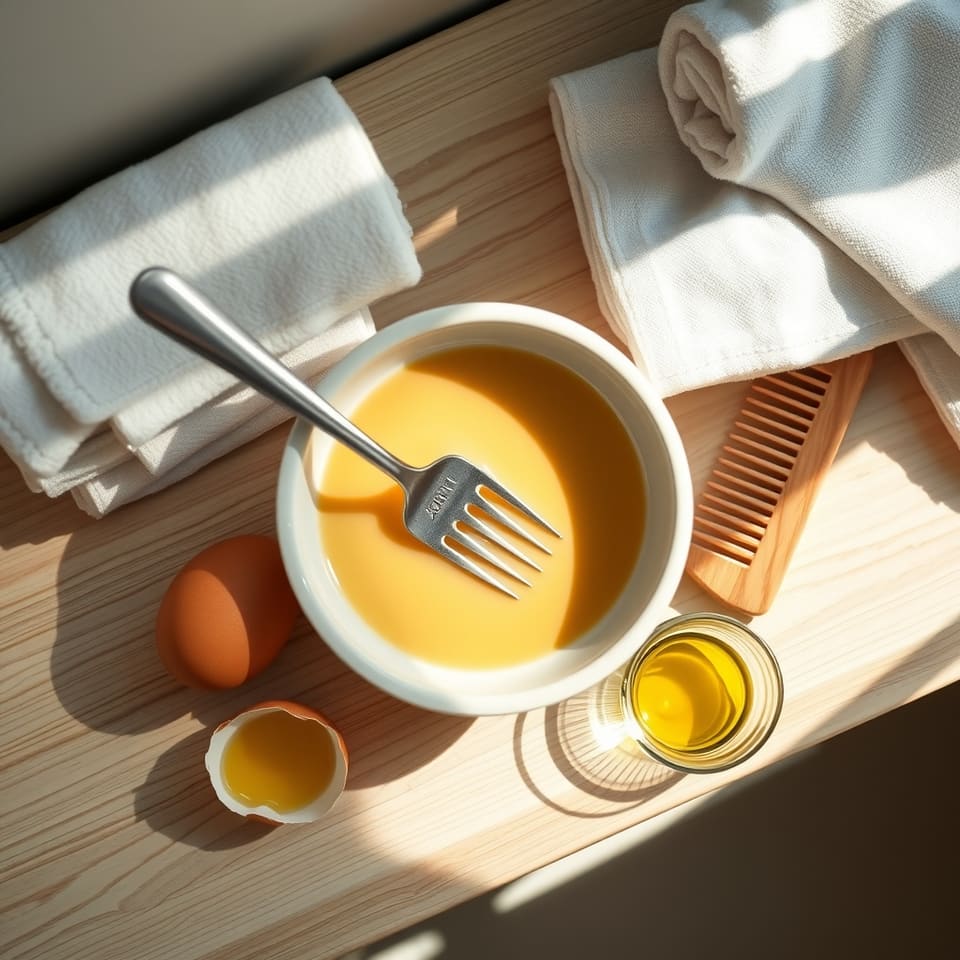
Egg masks turn up in home beauty traditions all over the world, usually passed down by a grandmother with a fork and a bowl. The reasoning sounds sensible: hair is made of protein, eggs are full of protein, so egg must feed your hair.
The reality is more modest. An egg mask can leave hair feeling smoother for a wash or two, but it cannot rebuild damaged strands, and raw egg brings a real hygiene risk that many recipes skip. Here is how to make one properly, and what to expect from it.
Why people use it
People reach for eggs when hair feels dry, rough or limp. The yolk is rich and creamy, and the white turns slightly tacky as it dries. Common folk advice says to use the yolk for dry hair and the white for oily hair, though no study has tested this.
Most people mix the egg with a spoonful of oil, which makes the mask easier to spread and adds slip for combing. The result, when it works, is hair that feels a little softer and looks a little glossier after rinsing.
Simple Egg and Oil Hair Mask
You need
- fresh egg, kept in the fridge until use, shell clean and uncracked1
- olive oil or another plain cooking oil, optional1 tbsp (15 ml)
- water, if the mixture is too thick1 to 2 tbsp (15 to 30 ml)
Method
- Crack the egg into a small bowl you can wash in hot water afterwards. For longer hair, use two eggs.
- Whisk well with the oil until smooth. Add a splash of water if it is hard to spread.
- Work over the sink or in the shower. Apply to damp hair from the middle down to the ends, avoiding broken or irritated skin on the scalp.
- Twist your hair up loosely and leave the mask on for 15 to 20 minutes. Keep it away from your eyes and mouth.
- Rinse thoroughly with cool or lukewarm water. Hot water can start to cook the egg, leaving sticky bits in your hair.
- Shampoo, focusing on your scalp, then use your usual conditioner.
- Wash the bowl, whisk, sink and your hands with hot, soapy water, and put towels straight in the wash.
Tips
- Make only what you need and throw away leftovers. Do not keep a raw egg mixture to use later.
- Detangle with a wide-tooth comb rather than brushing wet hair, as the AAD suggests. Thick or curly hair is easiest to comb while the conditioner is still in.
- Once every week or two is plenty. Your regular conditioner is still doing most of the work.
What the evidence says
We could not find any clinical study of a kitchen egg mask on people's hair. What science does say is useful for setting expectations. A review of hair cosmetics in the International Journal of Trichology notes that broken-down proteins, called protein hydrolysates, are used in hair products because they can help protect hair from chemical and environmental damage. The same review stresses that keratin, the protein that gives hair its strength, cannot simply be replaced once it is damaged.
Whole egg proteins are not the same as the small, processed proteins in products, and nobody has shown they get inside the hair. So think of an egg mask as a temporary coating that may make hair feel smoother, not as a repair treatment. The American Academy of Dermatology's everyday advice, shampooing mainly the scalp and using conditioner after washing, does more for dry hair over time.
Raw egg hygiene in the bathroom
The US Food and Drug Administration warns that even clean, uncracked eggs may carry Salmonella bacteria. A mask on your head is close to your mouth and eyes, and egg drips onto hands, sinks and towels. The FDA advises washing hands, utensils and surfaces with hot, soapy water after they touch raw egg.
Salmonella illness usually starts 12 to 72 hours after infection, with diarrhea, fever, stomach cramps and vomiting. The FDA lists children, older adults, pregnant women and people with weakened immune systems as more likely to become seriously ill. If that includes you or the person you are treating, it is sensible to skip raw egg masks.
Questions people ask
Should I use the yolk, the white or the whole egg?
Folk advice suggests yolk for dry hair and white for oily hair, but no study has compared them. The whole egg is easiest and wastes nothing.
Why does my hair smell of egg afterwards?
A little egg was probably left behind. Rinse longer with cool water, then shampoo your scalp well and condition.
Can an egg mask make my hair grow faster?
There is no evidence that it does. It may make hair feel smoother for a while, but it does not change how your hair grows.
Sources
- Hair Cosmetics: An Overview — International Journal of Trichology (PMC)
- What You Need to Know About Egg Safety — US Food and Drug Administration
- Tips for healthy hair — American Academy of Dermatology
This article is for general information only and is not medical advice. Herbs can interact with medicines and health conditions. Talk to a doctor or pharmacist before trying a herbal remedy, especially if you are pregnant, breastfeeding, giving it to a child, or taking any medication.