Coconut Oil for Hair: How to Use It and When Not To
Coconut oil is one of the few kitchen oils with some lab evidence behind it for hair. It belongs on the lengths of your hair, and it may be a poor choice for a flaky or spotty scalp.
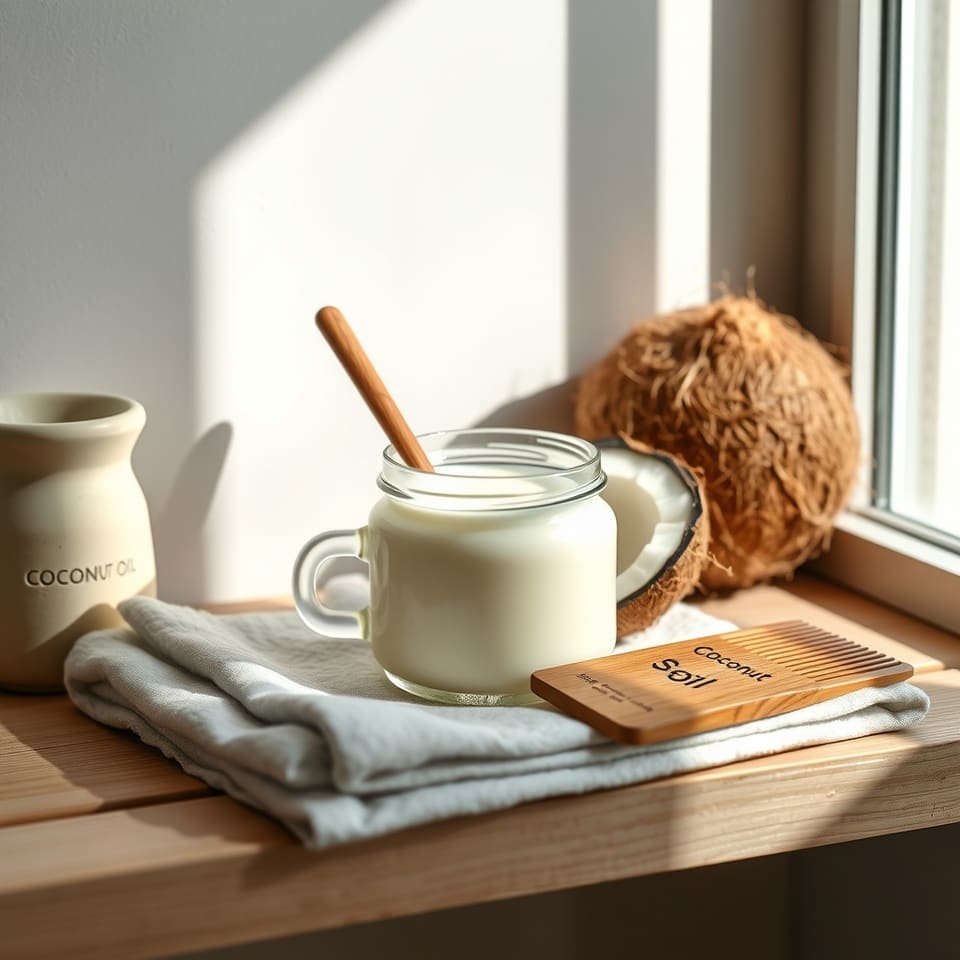
Hair oiling is an old habit in many parts of the world, and coconut oil is the favorite in places such as India, Sri Lanka, Indonesia and Malaysia. Today it is popular almost everywhere, and social media credits it with everything from shine to faster growth.
Some of that reputation has a basis in lab research, and some of it does not. The way you use it matters too. Put on the lengths before washing, coconut oil may help protect hair. Rubbed into a flaky or spotty scalp, it may make things worse.
Why coconut oil is different from other oils
Many oils, such as mineral oil, stay on the surface of the hair. They can add shine and reduce friction, but they do not get inside. Coconut oil is made mostly of fats with a fairly small, straight shape, and a review of hair oils in the International Journal of Trichology says this lets it get inside the hair shaft rather than only coating it.
Another review of hair cosmetics in the same journal describes coconut oil as having a high affinity for hair proteins. Oils that get inside the strand may also reduce how much water hair absorbs. That matters because repeated swelling and drying during washing, sometimes called hygral fatigue, is one way hair gets weaker over time.
Coconut Oil Pre-Wash Treatment
You need
- plain coconut oil, more for long or thick hair1 to 2 tsp (5 to 10 ml)
- old towel or shower cap1
Method
- Scoop the oil into your palm. If it is solid, rub your hands together until it melts. There is no need to heat it on the stove, which risks burns.
- Work it through dry or slightly damp hair from the mid-lengths to the ends, where hair is oldest and most worn. Use less near the roots, or none if your scalp is oily, flaky or prone to spots.
- Comb through gently with a wide-tooth comb to spread it evenly.
- Twist your hair up, cover it with a shower cap or old towel, and leave it for at least 30 minutes. Some people leave it overnight with a towel over the pillow.
- Shampoo, focusing on the scalp. You may need two rounds of shampoo to remove all the oil.
- Follow with your usual conditioner.
Tips
- Start with less than you think. Too much oil is hard to wash out and leaves hair limp.
- Fine hair usually needs only a few drops on the ends. Thick or curly hair can take more.
- Once or twice a week is plenty for most people.
What the evidence says
The best-known study, from 2003 and described in the hair cosmetics review, compared coconut, sunflower and mineral oil used before and after washing. Coconut oil was the only one that reduced protein loss, in both undamaged and damaged hair. Sunflower and mineral oil did not.
These were tests on hair strands in a lab, not trials of people's hair over months. The hair oils review is frank that scientific material on hair oils is limited and that many claims are exaggerated. There is no good evidence that coconut oil makes hair grow faster or thicker, or that it treats hair loss.
So a fair summary is this: coconut oil may help hair resist damage from washing when used on the lengths, and it is cheap and simple to try. Anything beyond that is not proven.
When to keep it off your scalp
Seborrheic dermatitis, a scalp condition, is linked to a yeast called Malassezia that needs fats to grow. In a 2023 letter in Skin Appendage Disorders, dermatologists noted that in a lab experiment coconut and olive oil both supported the growth of this yeast. They stress that no clinical studies have tested hair oils in seborrheic dermatitis, but suggest people with the condition keep oils off the scalp and use them on the ends instead.
Oily hair products can also play a part in scalp pimples. Cleveland Clinic lists haircare products made with oil, and a buildup of hair products, among the things that can lead to acne on the scalp. If you get spots along your hairline or on your scalp, try leaving the oil out for a few weeks.
Questions people ask
Should I put coconut oil on before or after washing?
The 2003 lab study tested coconut oil both before and after washing. Traditional hair oiling is usually done before shampooing, often once a week, and a pre-wash treatment is easy to wash out fully.
Does coconut oil help hair grow?
There is no good evidence that it does. Its likely benefit is protecting the hair you already have from wear during washing.
Is refined or virgin coconut oil better for hair?
No study has shown a difference for hair. Virgin oil smells of coconut and refined oil is mostly scentless, so choose whichever you prefer.
Sources
- Hair Cosmetics: An Overview — International Journal of Trichology (PMC)
- Hair Oils: Indigenous Knowledge Revisited — International Journal of Trichology (PMC)
- Hair Oils May Worsen Seborrheic Dermatitis in Black Patients — Skin Appendage Disorders (PMC)
- Scalp Pimples and Acne — Cleveland Clinic
This article is for general information only and is not medical advice. Herbs can interact with medicines and health conditions. Talk to a doctor or pharmacist before trying a herbal remedy, especially if you are pregnant, breastfeeding, giving it to a child, or taking any medication.