Red Clover Tea: Tradition, Research and Cautions
Red clover blossoms make a mild, sweet tea, and the plant is widely promoted for menopause. The research is mixed, and its estrogen-like compounds mean it is not for everyone.
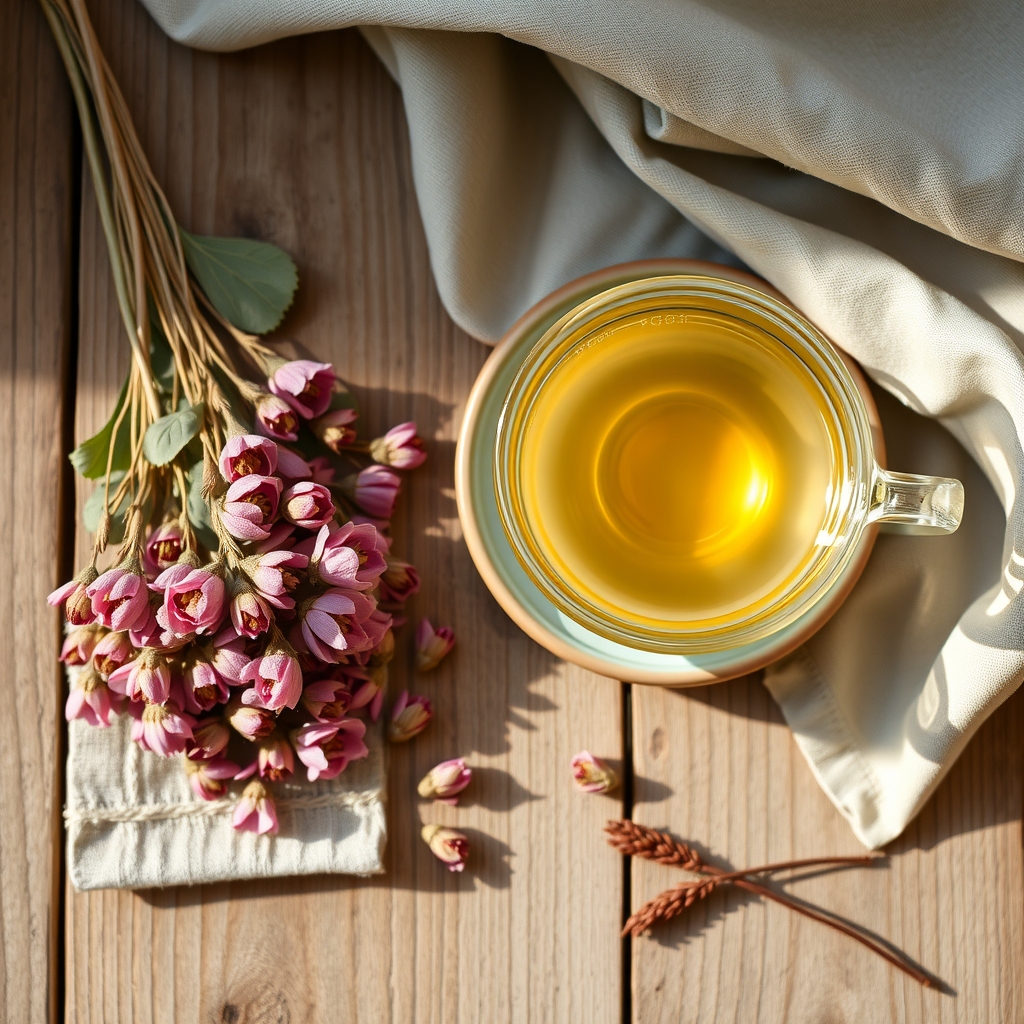
Red clover is the round, pinkish-purple flower you see in meadows and roadside verges across Europe and much of the world. Its blossoms make a light, faintly sweet and grassy tea that has been part of folk herbalism for a long time.
Today, red clover is best known as a supplement for menopause. That is because it contains isoflavones, plant compounds with a structure similar to estrogen. This guide explains what that means, what the research shows, how to make a simple blossom tea, and the important cautions around hormones and blood thinners.
Why people use red clover
The National Center for Complementary and Integrative Health (NCCIH) describes red clover as a legume native to Europe, central Asia and northern Africa. Supplements made from it are promoted mainly for women's health, especially hot flashes during menopause.
Memorial Sloan Kettering notes that red clover is also promoted for bone health and cholesterol, and that it was traditionally used for skin complaints and coughs. Those traditional uses have not been properly studied.
Red Clover Blossom Tea
You need
- water, just off the boil250 ml (1 cup)
- dried red clover blossoms, or 4 to 5 fresh flower heads1 to 2 tsp
- honey, optional1 tsp
Method
- Put the dried blossoms or rinsed fresh flower heads in a mug or small teapot.
- Pour the hot water over them and cover.
- Steep for 10 to 15 minutes.
- Strain, stir in honey if you like, and let it cool to a comfortable temperature.
Tips
- Only pick fresh flowers you are sure of, from clean places away from roads and sprayed fields, and choose bright, unbrowned heads.
- Red clover tastes mild, so it blends well with a little mint or lemon balm.
- Do not give honey to babies under 12 months.
What the evidence says
NCCIH says that research in people has not shown conclusive evidence that red clover helps any health condition. For hot flashes, results are inconsistent, and some of the studies were small or of low quality. The few studies on bone density in postmenopausal women also gave mixed results.
Memorial Sloan Kettering adds that some trials of isoflavone extracts showed modest improvements in menopausal symptoms, but systematic reviews do not agree. A pooled analysis suggested a possible small drop in cholesterol, although the studies were very different from each other.
Almost all of this research used concentrated extracts in tablet form, not tea. Home-brewed blossom tea has not been studied, and how much isoflavone a cup contains is not known, so you should not expect the same effects.
The hormone question
Because red clover isoflavones act a little like estrogen, Memorial Sloan Kettering advises people with hormone-sensitive cancers, such as some breast cancers, to avoid it. Laboratory studies have given conflicting results: some suggest red clover extract may encourage the growth of estrogen-sensitive breast cancer cells.
Long-term safety is not known. Extracts have been used in studies for up to 2 years and seemed well tolerated, according to NCCIH, but that does not settle the question for everyone.
Questions people ask
Is red clover tea a natural alternative to HRT?
No. The evidence that red clover helps hot flashes is mixed, and the studies used concentrated extracts, not tea. Talk to your doctor about your options instead of using it as a replacement.
Can I drink red clover tea if I take a blood thinner?
Check with your doctor first. Memorial Sloan Kettering lists warfarin, other anticoagulants and antiplatelet drugs as possible interactions because red clover may increase bleeding risk.
Is red clover the same as the white clover in my lawn?
No. Red clover is Trifolium pratense, with larger pinkish-purple heads. The research and cautions in this guide are about red clover only.
Sources
- Red Clover: Usefulness and Safety — NCCIH
- Red Clover (About Herbs) — Memorial Sloan Kettering Cancer Center
- Using Dietary Supplements Wisely — NCCIH
- Postmenopausal bleeding — NHS
This article is for general information only and is not medical advice. Herbs can interact with medicines and health conditions. Talk to a doctor or pharmacist before trying a herbal remedy, especially if you are pregnant, breastfeeding, giving it to a child, or taking any medication.