Papaya and Digestion: Food, Not a Cure
Ripe papaya is soft, sweet and full of fiber and water, which makes it a friendly fruit for your gut. But it is a food, not a treatment, and the research behind the bigger claims is small.
Papaya has a reputation as a stomach-friendly fruit. You will find it in breakfast bowls, smoothies and supplements that promise easier digestion, less bloating or a calmer gut.
Some of that reputation is fair, and some of it is marketing. This guide looks at why papaya is linked with digestion, what the limited research shows, how to enjoy it as part of a fiber-rich diet, and when digestive symptoms are a reason to see a doctor rather than reach for fruit.
Why papaya is linked with digestion
Papaya is often promoted because it contains papain, a natural enzyme that breaks down protein. Because of this, many people assume papaya must help you digest a meal.
The more down-to-earth reason papaya can be good for your gut is simple: like other fruits, it provides fiber and water. The NHS advises eating more fiber, increasing it gradually and drinking plenty of fluids to help prevent and ease constipation. Cleveland Clinic suggests high-fiber fruits as part of the same approach.
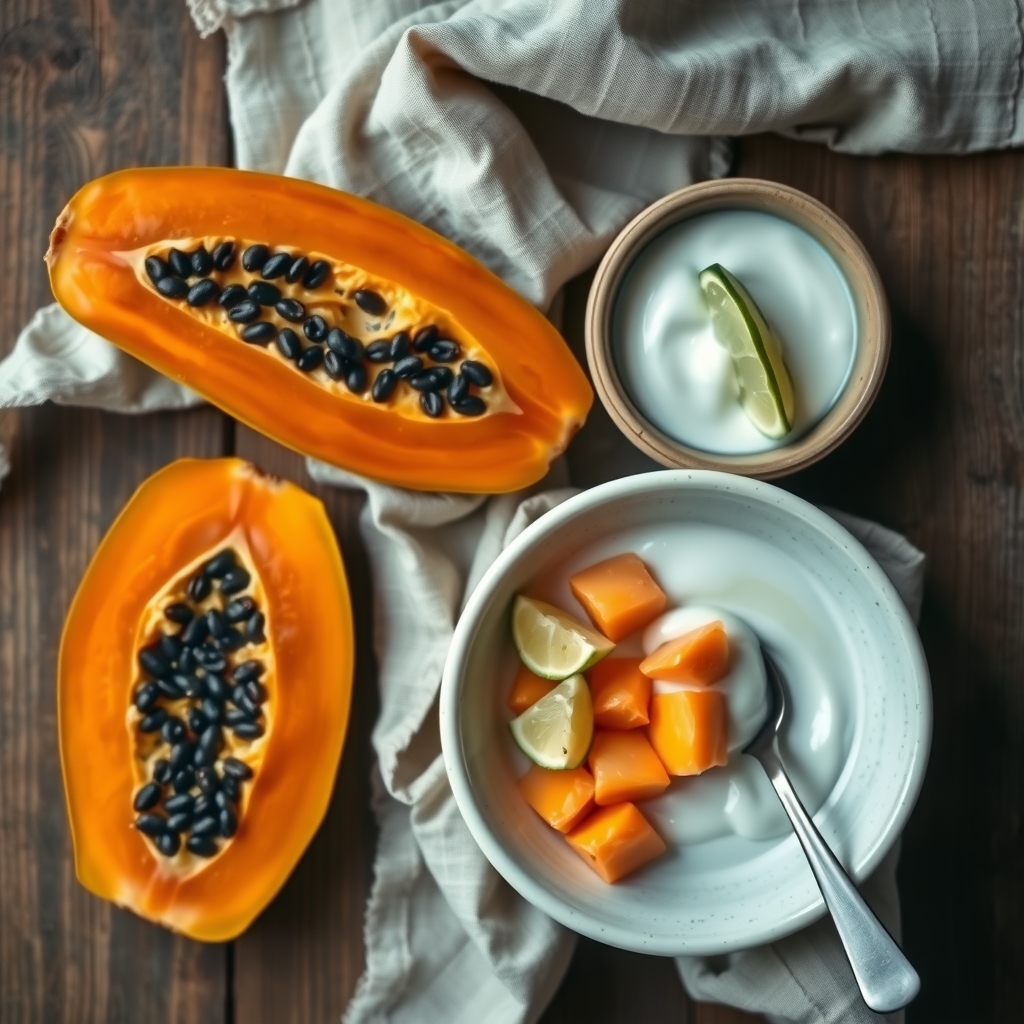
Papaya and Lime Breakfast Bowl
You need
- ripe papaya, peeled, seeded and cubed150 g (1 cup)
- lime, juiced1/2
- plain yogurt or kefir (optional)2 tbsp
- rolled oats or ground linseed1 tbsp
- fresh minta few leaves (optional)
Method
- Wash the outside of the papaya, cut it in half and scoop out the black seeds with a spoon.
- Peel the papaya and cut it into bite-size cubes.
- Put the cubes in a bowl and squeeze the lime juice over them.
- Top with yogurt or kefir, if using, and sprinkle with oats or ground linseed.
- Add a few torn mint leaves and eat straight away, with a glass of water.
Tips
- If you are not used to much fiber, start with a smaller portion and build up over a few days.
- Lime brightens the mild taste of papaya. Orange juice works too.
- Use ripe fruit. Unripe papaya is firm and green. If you are pregnant, ask your doctor before eating unripe or semi-ripe papaya, and if you have a latex allergy, ask your doctor before eating papaya at all.
What the evidence says
The research specific to papaya is small. A 2013 double-blind, placebo-controlled study published in Neuro Endocrinology Letters gave volunteers with long-standing digestive complaints 20 ml a day of a fermented papaya preparation or a placebo for 40 days. The papaya group reported less constipation and bloating, but there was no clear improvement in heartburn, and the benefits did not last after people stopped.
That study used a concentrated commercial preparation, not fresh fruit, and it was small. It does not show that eating papaya will treat irritable bowel syndrome, reflux or any other condition. There is no good evidence that the enzymes in a portion of papaya change how a healthy person digests a meal.
So the fair summary is this: ripe papaya is a pleasant source of fiber and fluid that can be part of a gut-friendly diet. Treat bigger promises with caution.
Fruit versus supplements
Papaya enzyme tablets and papaya leaf products are not the same as eating the fruit. Memorial Sloan Kettering Cancer Center notes that papaya leaf, sold as a supplement, may cause stomach upset and rash, and advises avoiding it in pregnancy and in people with liver problems.
If you are tempted by a papaya supplement for digestion, talk to your doctor or pharmacist first, especially if you take any regular medicines. For most people, a bowl of fruit is the simpler and safer choice.
Making papaya part of a gut-friendly routine
Papaya works best alongside the habits that have the clearest support: eating a balanced diet with plenty of fiber from fruit, vegetables, oats and whole grains, drinking enough fluid, moving every day and not ignoring the urge to go.
Choose papaya that gives slightly when pressed and smells sweet. Scoop out the seeds, peel it, and eat it fresh, or keep cut pieces covered in the fridge for a day or two.
Questions people ask
Does papaya help with bloating?
One small study of a concentrated papaya preparation found less bloating, but it was not fresh fruit. Papaya may be a comfortable choice for some people, but it is not a proven remedy.
Is papaya good for constipation?
Like other fruits, papaya adds fiber and water to your diet, which the NHS recommends for constipation. It works best alongside other fiber, fluids and regular activity.
Should I take papaya enzyme tablets?
There is little evidence they help healthy people digest food. Talk to your doctor or pharmacist before taking any supplement, especially if you take medicines.
Sources
- Constipation — NHS
- Constipation — Cleveland Clinic
- Papaya preparation (Caricol) in digestive disorders — PubMed
- Papaya Leaf — Memorial Sloan Kettering Cancer Center
This article is for general information only and is not medical advice. Herbs can interact with medicines and health conditions. Talk to a doctor or pharmacist before trying a herbal remedy, especially if you are pregnant, breastfeeding, giving it to a child, or taking any medication.