Kefir with Fresh Mint and Cucumber: What Is Known
Kefir is a tangy fermented milk drink with a big reputation for gut health. Blended with fresh mint and cucumber it makes a refreshing glass, but the science is more modest than the marketing.
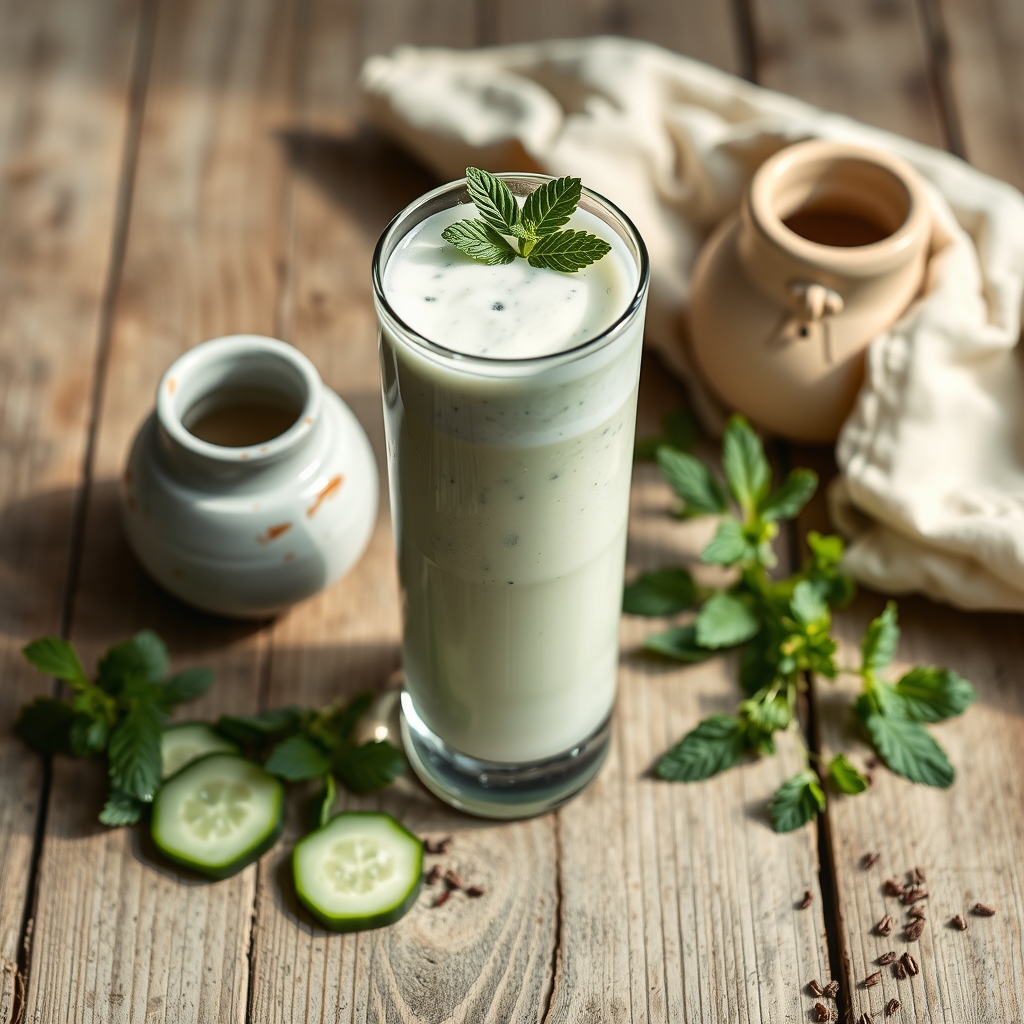
Kefir is a fermented milk drink, a little thinner and more sour than yogurt, made by adding a starter culture of bacteria and yeasts to milk. Across the Caucasus, the Middle East and the Eastern Mediterranean, cultured milk drinks have long been served cold and salted, often with mint and cucumber.
Today kefir is sold as a gut health drink. This guide explains what probiotics are, what the research on kefir actually shows, and how to make a simple savory kefir, mint and cucumber drink that is good for what it is: a cool, light glass of a familiar food.
What probiotics are
The NIH Office of Dietary Supplements defines probiotics as live microorganisms, such as bacteria and yeasts, that provide a health benefit when you consume them. They mostly act in the digestive tract, where they may affect the community of microbes known as the gut microbiome.
Not every fermented food counts. Some, such as sourdough bread and most shop-bought pickles, are processed after fermentation, which kills the microbes. Others contain microbes that have not been studied, so any benefit is unknown. Benefits also depend on which strains are present and in what amounts, and these vary from product to product.
Kefir, Mint and Cucumber Cooler
You need
- plain, unsweetened kefir, well chilled200 ml (3/4 cup)
- medium cucumber, about 75 g (2 1/2 oz), roughly chopped1/4
- fresh mint leaves6 to 8
- cold water, or more for a thinner drink50 ml (3 1/2 tbsp)
- salt1 small pinch
- dried mint or ground cumin1 small pinch (optional)
Method
- Wash the cucumber and mint well. Peel the cucumber if the skin is thick or waxed.
- Put the kefir, cucumber, fresh mint, water and salt in a blender.
- Blend for about 30 seconds until smooth and frothy.
- Taste and add a little more water if you like it thinner.
- Pour into a glass, sprinkle with dried mint or cumin if using, and drink straight away.
Tips
- No blender? Grate the cucumber, chop the mint finely, and whisk everything together in a jug.
- Keep salt to a small pinch, especially if you are watching your blood pressure.
- Drink it fresh. Keep kefir in the fridge and use it by the date on the pack.
What the evidence says
For probiotics in general, the US National Center for Complementary and Integrative Health (NCCIH) says there is some evidence that they may help with acute diarrhea and diarrhea linked to antibiotics, but strong evidence is lacking for most other uses. The US Food and Drug Administration has not approved any probiotic for preventing or treating any health problem.
Research on kefir itself is limited. One small study, published in 2003 in the Journal of the American Dietetic Association, gave 15 adults with lactose maldigestion milk, kefir and yogurt on different days. Compared with milk, kefir led to less gas and lower breath hydrogen, a marker of poorly digested lactose. The study was small and funded by a kefir maker, so it is a hint rather than proof.
What about the mint? NCCIH notes that enteric-coated peppermint oil capsules may ease irritable bowel syndrome symptoms, but there is very little research on peppermint leaf, and not enough to say it helps any condition. A few fresh leaves add flavor, not a measured dose. Cucumber adds water and freshness.
Where kefir fits
Kefir can be a useful everyday food. Some people who find plain milk uncomfortable seem to tolerate it better, and it works well in drinks, dressings and over oats. But it is not a treatment for any gut condition, and it should not replace proven care for diarrhea, irritable bowel syndrome or other digestive problems.
If you would like to try it, start with a small glass and see how you feel. Plain, unsweetened kefir lets you control the salt and sugar.
Questions people ask
Is kefir better for the gut than yogurt?
There is not enough research to say. Both are fermented milk foods, and the benefits depend on the strains and amounts of live microbes, which vary between products.
Can I drink kefir if I am lactose intolerant?
One small study found adults with lactose maldigestion had less gas after kefir than after milk. Start with a small glass and see how you feel.
Does mint help digestion?
Peppermint oil capsules have some evidence for irritable bowel syndrome, but there is very little research on mint leaves. In this drink, mint is there for flavor.
Sources
- Probiotics: Fact Sheet for Consumers — NIH Office of Dietary Supplements
- 5 Things To Know About Probiotics — NCCIH
- Peppermint Oil — NCCIH
- Kefir improves lactose digestion and tolerance in adults with lactose maldigestion — PubMed
This article is for general information only and is not medical advice. Herbs can interact with medicines and health conditions. Talk to a doctor or pharmacist before trying a herbal remedy, especially if you are pregnant, breastfeeding, giving it to a child, or taking any medication.