Hydroponic Herb Garden: Is It Worth It?
Growing herbs in water instead of soil can give you fresh basil all year, but it is not effortless and it is not free. Here is what you gain, what it costs, and a cheap way to find out if it suits you.
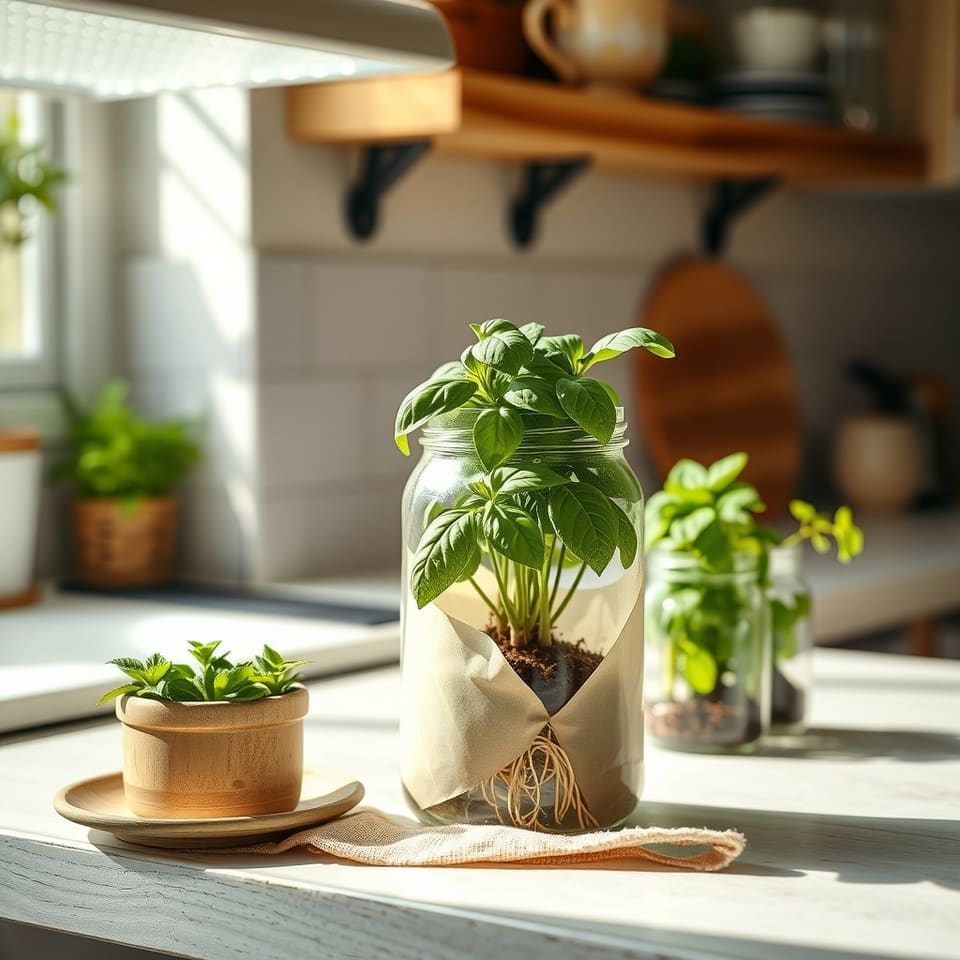
Countertop herb gardens that grow in water have become a popular gift. They promise basil in midwinter, no muddy pots and no guesswork. The idea behind them is old and simple: plants do not need soil itself, they need water, nutrients, oxygen and light.
So is it worth it? Here are the honest trade-offs, then a no-pump jar you can try for very little money first.
How growing in water works
In hydroponics, plants sit in a small mesh pot filled with an inert material such as rock wool, perlite, coconut coir, expanded clay or coarse sand. Their roots hang into water mixed with a complete plant nutrient. Because there is no soil to supply food, the solution has to provide every nutrient a plant needs, and University of Minnesota Extension points out that this means far more than the three numbers on a fertilizer label.
The simplest home version is deep water culture: roots hang in a container of nutrient water. Many setups add an air pump and air stone, because roots need oxygen, and Oregon State University Extension calls good aeration essential for this method. The passive Kratky method skips the pump. Only part of the root zone stays in the water, and the air gap above it supplies oxygen.
Try-It-First Basil Jar (No Pump)
You need
- wide-mouth jar or food-safe tub, about 1 to 2 liters (4 to 8 cups), wrapped in paper or painted so no light gets in1
- mesh net pot that sits snugly in the lid or a hole cut in it1
- inert growing medium such as rock wool, perlite or expanded clay, soaked firsta handful
- complete hydroponic plant nutrient, measured exactly as the label saysas needed
- basil seedling with soil gently rinsed off the roots, or rooted basil cuttings1
- simple pH test kit or strips1
Method
- Wash the jar, lid and net pot in hot soapy water.
- Fill the jar with water and add nutrient at the label rate. Test the pH and aim for slightly acidic, roughly 5.5 to 6.5.
- Set the seedling in the net pot and pack the damp medium around it. Fit the pot in the lid.
- At first, the bottom of the net pot should just touch the water. As roots grow, let the level drop so about a third to a half of the roots sit in water and the rest hang in air.
- Place it in your brightest spot or under a small grow light, somewhere ideally above 18 °C (65 °F).
- Check every few days, top up with nutrient water at the label rate, and keep the jar covered against algae.
- Harvest basil by pinching just above a pair of leaves. Once the plant is tired, compost it, wash the jar and start again.
Tips
- If you enjoy the routine after a month, a bigger system is a reasonable next step.
- Do not pour old nutrient water down the drain. Minnesota Extension suggests using it on a garden bed or houseplants instead.
- Rinse herbs before eating and wash your hands before handling the system or harvesting.
The real pros and cons
On the plus side, Minnesota Extension lists less water use, no weeds, fewer soil insects, a small footprint and year-round growing under lights. Leafy herbs suit it well. Basil, cilantro, mint and parsley are popular choices, and soft herbs can be cut again and again, often three to five times before you replant.
On the minus side, ready-made systems can be pricey, and lights add both an upfront and a running cost. Illinois Extension notes that hydroponics is not less work than soil, just different work: you manage the water instead of the earth. That means checking pH and nutrient strength, topping up, and cleaning. Pumped systems depend on electricity, and if a pump fails, plants can dry out fast. Algae and slimy films grow in warm, lit, nutrient-rich water, too much water can rot roots, and diseases spread quickly through shared water.
As for running costs, Minnesota Extension worked out that one small 9-watt LED for a one or two container setup, running 14 hours a day, used about 5 US dollars of electricity a year at their example price. Simple meters for pH and nutrient strength start at around 20 US dollars, while better ones cost over 200.
What the evidence says
Extension services agree that hydroponics works well for leafy greens and herbs, and Minnesota Extension reports faster growth and higher yields than in soil when conditions are right. That last part matters. Without enough light, a water garden will grow pale, leggy herbs just like a dim windowsill pot, and Illinois Extension calls extra light essential indoors.
Most herbs grow well in slightly acidic water. Minnesota Extension gives a working range of about pH 5.4 to 7, and Illinois Extension notes that most plants do well around 5 to 6. Test your tap water first.
So the honest verdict: a hydroponic herb garden is worth it if you cook with fresh herbs most days, have little outdoor space, and do not mind a weekly ten-minute check. If you rarely use herbs or travel often, a pot of good mix on a sunny sill is cheaper and more forgiving.
Questions people ask
Which herbs grow best in a hydroponic garden?
Soft, leafy herbs do best. Basil, mint, parsley and cilantro are popular choices.
Do I need a grow light?
Indoors, almost always, especially in winter. Without enough light, herbs grow pale and stretched no matter how good the water is.
Are hydroponic herbs as good to eat as soil-grown ones?
They are the same plants and can taste just as good. Keep the system clean, wash your hands before harvesting and rinse the herbs before use.
Sources
- Small-scale hydroponics — University of Minnesota Extension
- Hold on to summer with home hydroponics — University of Illinois Extension
- Hydro hints: Deep water culture — Oregon State University Extension Service
This article is for general information only and is not medical advice. Herbs can interact with medicines and health conditions. Talk to a doctor or pharmacist before trying a herbal remedy, especially if you are pregnant, breastfeeding, giving it to a child, or taking any medication.