How to Keep Fresh Herbs Fresh for Longer
Most fresh herbs last about a week in the fridge if you stop them drying out. Basil is the exception. Here is how to store each kind, plus safe freezing and the rule for herbs in oil.
You buy a big bunch of cilantro for one recipe, use a handful, and three days later the rest is a slimy mess at the back of the fridge. It happens in kitchens everywhere, from Mexico City to Mumbai to Manchester.
Fresh herbs are delicate, but a few simple steps keep them in good shape for much longer. The key is knowing which herbs like the cold and which do not, keeping leaves from drying out, and washing them at the right time. This guide also covers freezing, and one important safety rule for herbs stored in oil.
Most herbs: cold, dark and protected from drying out
University of Tennessee Extension advises keeping most fresh herbs in ordinary refrigerator conditions, dark and between 0 and 5 °C (32 and 41 °F), protected from drying out. Stored this way, quality should last about a week or a little longer.
The US FDA recommends keeping your fridge at 4 °C (40 °F) or below for perishable produce, and suggests using a fridge thermometer to check.
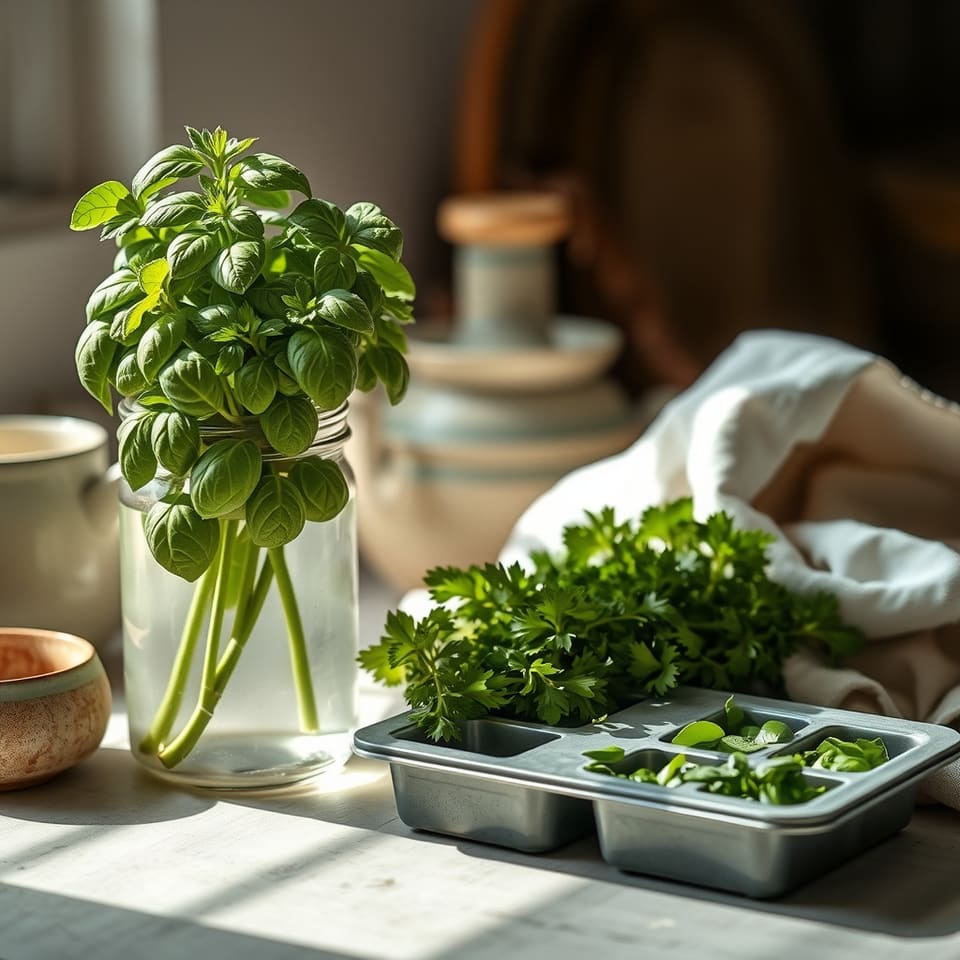
To stop leaves drying out, wrap the bunch loosely in a damp paper towel and put it in a loosely closed bag or a lidded box. Leafy herbs with sturdy stems, such as parsley and cilantro, can also stand like a bouquet in a jar with a little water, with a bag loosely over the top, in the fridge.
The Herb Jar and Basil Glass
You need
- bunch of fresh parsley, cilantro, dill or mint1
- bunch of fresh basil1
- clean jars or glasses2
- cold water in each jarabout 2.5 cm (1 inch)
- loose food bag or damp paper towel1
Method
- Remove any yellow, wilted or slimy leaves and any rubber bands.
- Trim a little off the base of each stem with clean scissors.
- For parsley, cilantro, dill or mint: stand the stems in a jar with a little water, cover loosely with a bag and keep in the fridge. Or wrap in a damp paper towel and store in a loosely closed bag or box.
- For basil: stand the stems in a glass of water in a cool spot out of direct sun, not in the fridge.
- Change the water every day.
- Wash the herbs under running water just before you use them, then pat dry.
Tips
- Keep the herb jar near the front of the fridge so you remember to use it.
- If you have more than you can use within a week, freeze the rest chopped in ice cube trays.
- Label frozen herb cubes with the herb name, as they look alike once frozen.
Basil: the herb that hates the cold
Basil is the exception. Tennessee notes that basil is sensitive to chilling, and that long periods below 10 °C (50 °F) damage it, so it should be stored warmer than other herbs.
Purdue University Extension suggests keeping fresh basil at about 10 to 18 °C (50 to 65 °F). Trim the stem ends and stand the basil upright in a glass of water in a cool spot out of direct sun, changing the water daily. Or wrap it in a damp paper towel inside a loosely closed bag, which Purdue says keeps it for several days.
If your kitchen is very hot, a cool room or pantry is a better place for basil than the fridge.
Washing, freezing and herbs in oil
The FDA advises washing all produce, including homegrown herbs, thoroughly under running water before preparing or eating it. Do not use soap, detergent or produce wash. Pat the leaves dry with a clean towel or paper towel. Washing reduces bacteria but does not remove them all.
For longer storage, freeze. Tennessee recommends freezing for herbs such as basil, mint and dill, and notes frozen herbs usually last a few months. A simple way is to chop the herbs, pack them into an ice cube tray with a little water or oil, freeze, then move the cubes to an airtight bag or jar.
Herbs in oil need special care. Oregon State University Extension explains that covering low-acid herbs or garlic with oil creates an oxygen-free environment in which the bacteria that cause botulism can grow. Homemade herbs in oil, herb oils and pesto should be kept in the fridge and used within 4 days, or frozen.
What the evidence says
The storage temperatures here come from university extension services, and the safety advice from the FDA and Oregon State. These are practical, well-established guidelines rather than exact shelf lives, because how long herbs last also depends on how fresh they were when you got them.
The botulism warning is the most important point in this guide. Oregon State describes the herbs-in-oil combination as an environment for deadly bacteria, which is why the 4-day rule matters.
Questions people ask
Should I wash herbs before storing them?
The safest habit is to wash them just before you use them, under running water, and pat dry. If you do wash them first, dry them well before storing.
Why does my basil go limp and dark in the fridge?
Basil is sensitive to cold. Long periods below about 10 °C (50 °F) damage it, so keep basil in a cool spot outside the fridge.
Can I keep herbs in olive oil on the counter?
No. Homemade herbs in oil can allow botulism bacteria to grow. Keep them in the fridge and use within 4 days, or freeze them.
Sources
- Growing Culinary Herbs in Tennessee Gardens — University of Tennessee Extension
- Basil (FoodLink) — Purdue University Extension
- Selecting and Serving Produce Safely — US Food and Drug Administration
- Herbs and vegetables in oil (SP 50-701) — Oregon State University Extension
This article is for general information only and is not medical advice. Herbs can interact with medicines and health conditions. Talk to a doctor or pharmacist before trying a herbal remedy, especially if you are pregnant, breastfeeding, giving it to a child, or taking any medication.