Horsetail Tea: What to Know Before You Brew
Horsetail is an old European remedy used to make you pee more. It is not a cure-all, and a few specific risks are worth knowing before you put the kettle on.
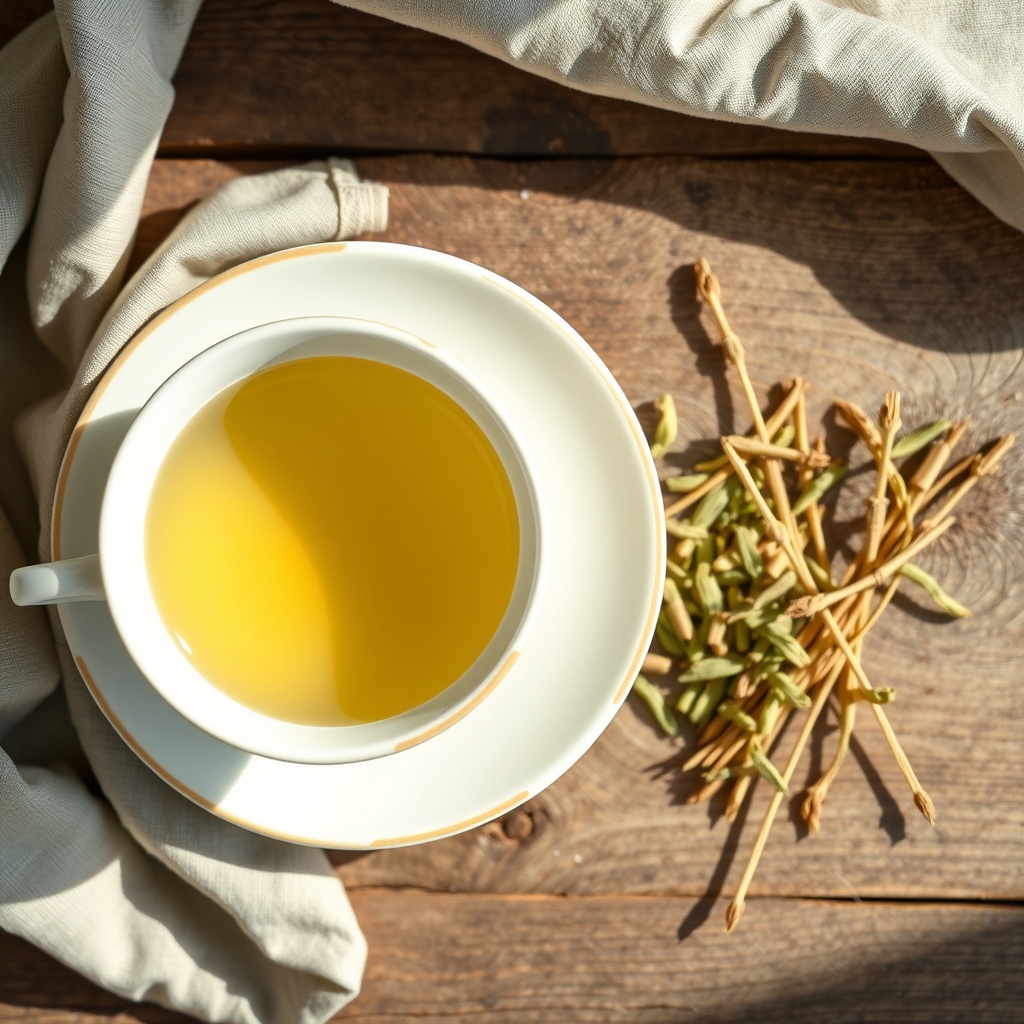
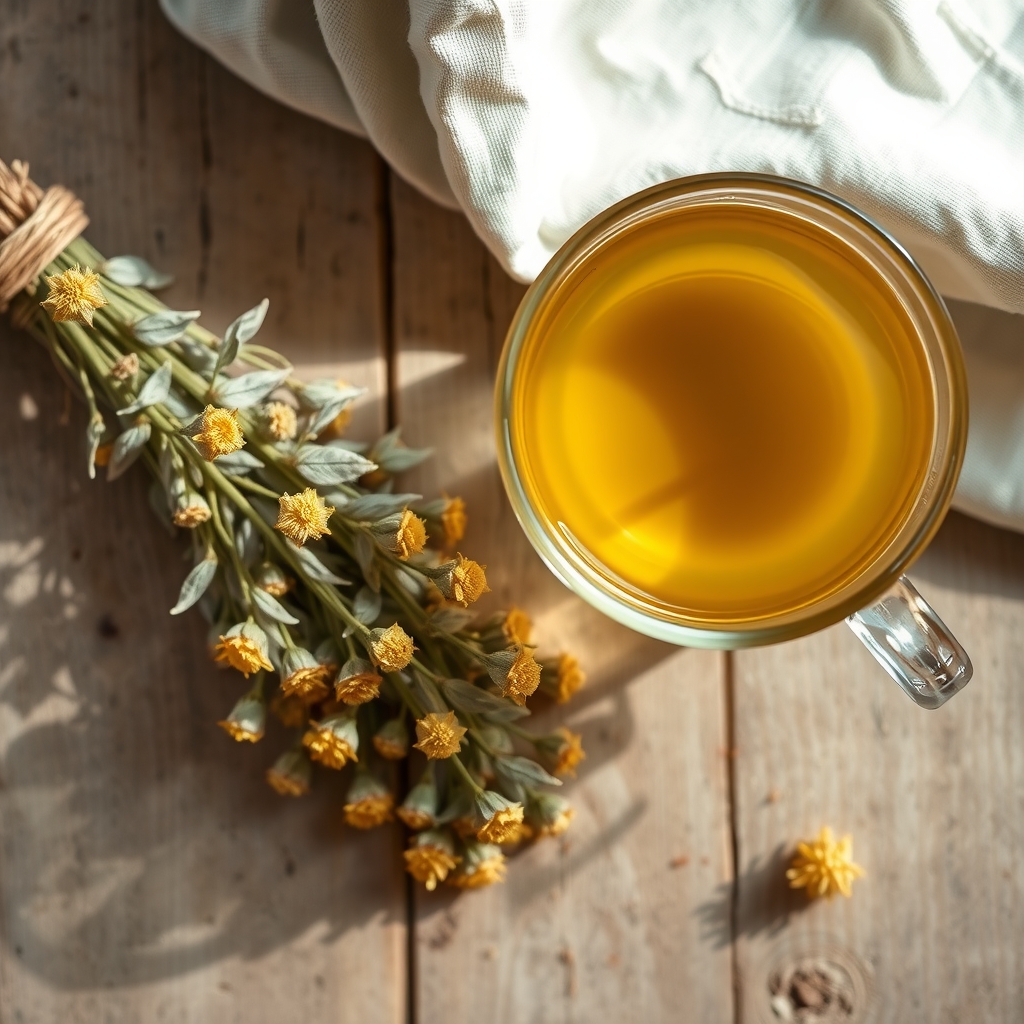
Field horsetail (Equisetum arvense) is a plant with hollow, jointed green stems that look a little like tiny bamboo. It grows in damp ground across Europe, Asia and North America, and the dried green stems have long been brewed into a mild, grassy tea.
In European tradition, horsetail is used to increase the amount of urine you pass. That single effect explains both why people reach for it and why it needs care. This guide covers how it is traditionally made, what the evidence actually says, and the people who should leave it alone.
Why people use it
The European Medicines Agency (EMA) lists horsetail as a traditional herbal medicine for two uses: to increase urine output and help flush the urinary tract in minor urinary complaints, and, applied on the skin, as a support for small, superficial wounds.
Traditional means the use is accepted because it has been around safely for a long time, not because clinical trials have proven that it works. The EMA states this clearly.
Simple Horsetail Tea
You need
- dried, cut horsetail herb from a reliable source2 g (weigh it, as spoon sizes vary with the cut)
- freshly boiled water150 ml (2/3 cup)
Method
- Put the dried horsetail in a mug or small teapot.
- Pour over the boiling water, cover, and steep for 10 to 15 minutes.
- Strain well and drink warm.
Tips
- The EU traditional range is 1 to 4 g of herb per cup, up to 3 or 4 times a day. Start at the low end and do not exceed it.
- Drink it earlier in the day, since it may send you to the bathroom more often.
- Do not keep drinking it for more than 2 to 4 weeks at a time. If your urinary symptoms last longer than a week, see a doctor.
What the evidence says
Human research is thin. The EMA assessment describes one small, double-blind trial in 36 healthy young men. A dried horsetail extract taken for four days made them pass more fluid than a placebo, roughly similar to a low dose of a common prescription water pill, without changing their salt or potassium levels.
The EMA reviewers judged that this was not enough to prove a well-established medical use. The trial was small, tested an extract rather than home-brewed tea, and involved healthy people, not people with any illness.
So the honest summary is this: horsetail may act as a mild diuretic, and its traditional use for minor urinary complaints is accepted in the EU. There is no good evidence that it helps with any disease, and it is not a way to lose weight or remove so-called toxins.
Thiamine, look-alikes and other specific risks
Horsetail contains an enzyme called thiaminase, which breaks down thiamine (vitamin B1). The EMA assessment reports that horses poisoned by eating horsetail recovered with thiamine injections. The same report notes that heat inactivates the enzyme, and it was not found in water-based extracts. That is one reason to use the herb only as a properly brewed hot tea and not as raw, unheated powder, where the reviewers could not rule out harm.
A related plant, marsh horsetail (Equisetum palustre), is toxic. The EMA notes that dried horsetail can be mixed up with it when it is gathered by people who cannot tell the species apart. Do not pick your own unless you are an expert, and buy dried herb only from a seller that tests and identifies it.
The EMA also mentions that small amounts of nicotine may be present, and that people sensitive to nicotine may react. Allergic reactions, including rash and facial swelling, and mild stomach upset have been reported.
Questions people ask
Does horsetail tea help you lose weight?
No. It may make you pass more urine for a while, which is water, not fat. There is no evidence that horsetail helps with weight loss.
Why do people mention vitamin B1 with horsetail?
The raw plant contains an enzyme that breaks down thiamine. Heat inactivates it, so a properly brewed tea is the traditional form. Raw powders are where a risk cannot be ruled out.
Can I drink horsetail tea if I have kidney problems?
It is best not to. The EMA says it should not be used when fluid intake must be restricted, and there are no safety data for people with kidney disease. Ask your kidney doctor before using any herbal diuretic.
Sources
- Equiseti herba - herbal medicinal product — European Medicines Agency
- European Union herbal monograph on Equisetum arvense L., herba — European Medicines Agency
- Assessment report on Equisetum arvense L., herba — European Medicines Agency
- Lithium — MedlinePlus
This article is for general information only and is not medical advice. Herbs can interact with medicines and health conditions. Talk to a doctor or pharmacist before trying a herbal remedy, especially if you are pregnant, breastfeeding, giving it to a child, or taking any medication.