How to Read an Herbal Supplement Label
A supplement label tells you more than the brand name, but it also leaves a lot unsaid. Here is how to read one, which words mean less than they seem, and what to check before you swallow anything.
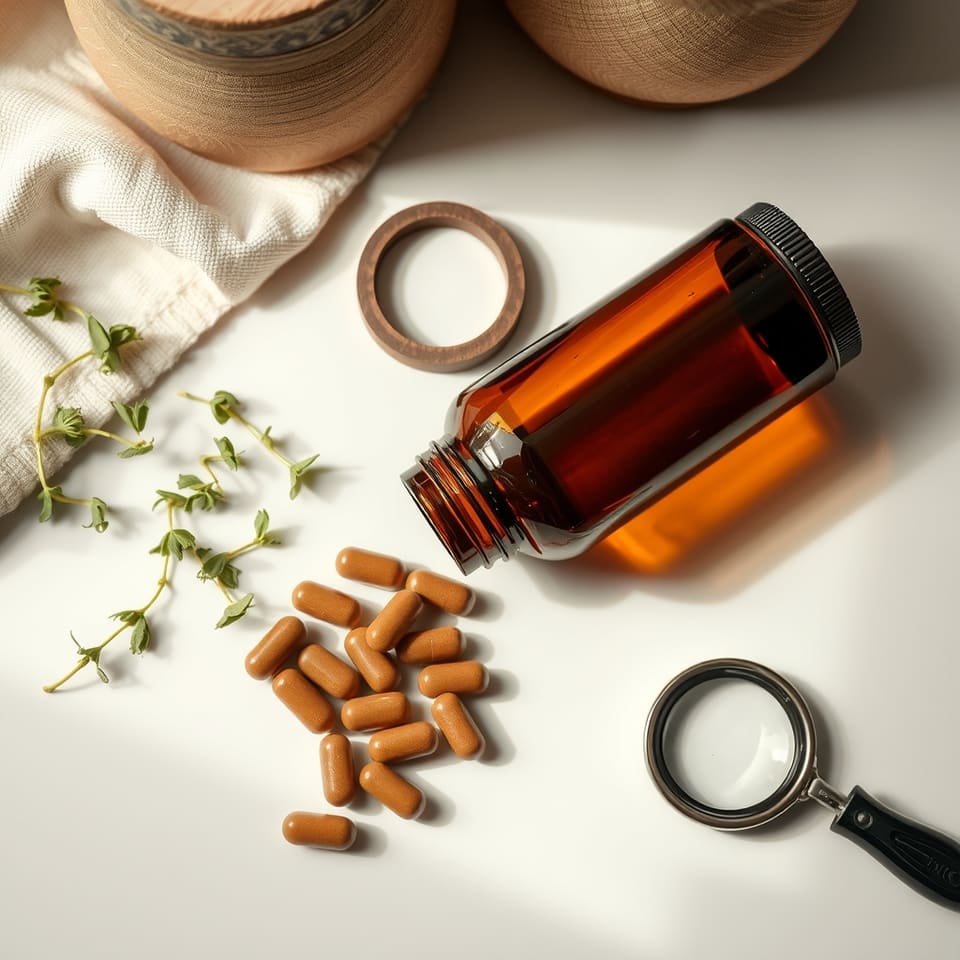
Herbal capsules, tinctures and powders are sold in pharmacies, supermarkets and online all over the world. The rules for what goes on the label differ from country to country, and many people assume that if something is on a shelf, someone has checked that it works and is safe.
That is often not the case. Learning to read the label, and to notice what it does not say, is one of the simplest ways to protect yourself. This guide uses the US and EU rules as examples, but the checklist works wherever you shop.
What the label tells you
In the US, herbal products are usually sold as dietary supplements. The NIH Office of Dietary Supplements explains that the label lists the active ingredients, the amount in each serving, and other ingredients such as fillers, binders and flavorings. The serving size is the manufacturer's suggestion, and your health care provider may advise a different amount.
The label should also give contact details for the company. Keep them, because they let you report a problem.
In the EU, some herbal products are registered as medicines instead. The European Medicines Agency explains that a traditional herbal medicine must have been used for at least 30 years, including 15 in the EU. Clinical trials are not required for this route, so registration is based mostly on long use and published data rather than new studies proving it works.
Words that mean less than they seem
Supplements are not approved by the FDA before they are sold, and the FDA does not decide whether they work. Labels are not allowed to claim that a product diagnoses, treats, cures or prevents a disease. They can make general claims about the body, such as supporting digestion, but these must carry a note saying the statement has not been evaluated by the Food and Drug Administration.
NCCIH warns that words such as standardized, verified or certified do not necessarily guarantee quality or consistency. And natural does not mean safe: comfrey and kava are natural plants that can harm the liver.
Some independent organizations test products and award a quality seal. A seal can tell you the product was tested for quality, but the Office of Dietary Supplements is clear that seals do not guarantee a product is safe or effective.
What the evidence says
A label tells you what the maker says is inside. It is not proof that the herb works. For most herbal supplements, the research is limited, and NCCIH notes that many have not been tested in pregnant or breastfeeding women or in children.
There is also a quality problem. NCCIH reports that the FDA has found prescription drugs, such as the blood thinner warfarin and the seizure medicine phenytoin, hidden in products sold as supplements, and that some products contain ingredients not listed on the label.
A label checklist, step by step
Step 1: Find the herb's full name and the plant part used, such as root, leaf or flower, and how much is in one serving.
Step 2: Read the other ingredients for anything you are allergic to.
Step 3: Be wary of any promise to cure or treat a disease. Supplement labels are not allowed to make such claims.
Step 4: Check whether it is registered as a medicine or sold as a supplement. Ask your pharmacist if you are not sure.
Step 5: Show the bottle to your doctor or pharmacist before you start, especially if you take any medicine, are pregnant or breastfeeding, or have surgery coming up.
Step 6: Write down the product name, dose and how often you take it, and keep the package in case you have a reaction.
Questions people ask
Does a quality seal mean a supplement is safe?
No. A seal from an independent testing organization can tell you about quality checks, but the Office of Dietary Supplements says seals do not guarantee that a product is safe or effective.
What does 'This statement has not been evaluated by the FDA' mean?
It means the claim on the label about how the product affects your body has not been reviewed by the FDA. The product has also not been approved for treating any disease.
Is an herbal medicine safer than a supplement?
A registered herbal medicine has to meet quality and manufacturing rules, but traditional registration in the EU is based mostly on long use rather than new trials. Either way, check with a pharmacist about interactions.
Sources
- Dietary Supplements: What You Need To Know — NIH Office of Dietary Supplements
- Using Dietary Supplements Wisely — NCCIH
- Herbal medicinal products — European Medicines Agency
This article is for general information only and is not medical advice. Herbs can interact with medicines and health conditions. Talk to a doctor or pharmacist before trying a herbal remedy, especially if you are pregnant, breastfeeding, giving it to a child, or taking any medication.