How to Grow Mint in a Pot Without It Taking Over
Mint is one of the easiest herbs to grow and one of the hardest to stop. A pot solves most of the problem. Here is how to plant it, pick it all season and keep it from escaping.
Mint grows in gardens and on balconies from Morocco to Mexico, and almost everyone who plants it learns the same lesson. One small plant set loose in a bed can turn into a carpet of runners within a couple of seasons, popping up among your other herbs and under paving.
The good news is that mint is happy in a pot, and a pot keeps it exactly where you want it. Here is how to grow mint at home, harvest it well and stop it from taking over the garden.
Why mint spreads, and why a pot is the answer
Mint spreads by underground stems called rhizomes. University of Illinois Extension describes it as aggressive and potentially invasive, and Utah State University Extension warns that once it is established in open ground it is very hard to get rid of.
Both recommend confining the roots. The Royal Horticultural Society (RHS) says mint is best grown in a pot rather than in the ground. If you want it in a bed, sink a container into the soil and leave the rim slightly above the surface, so that creeping shoots cannot root over the edge. Utah State suggests a buried container that reaches 25 to 38 cm (10 to 15 inches) deep, with 8 to 10 cm (3 to 4 inches) standing above the soil.
Planting Mint in a Pot
You need
- young mint plant, or a rooted cutting of a variety you like1
- pot about 30 cm (12 inches) wide, with drainage holes1
- peat-free multipurpose or soil-based compostas needed
- saucer or a few pot feet1
- jar of water, for rooting extra cuttings1
Method
- Plant in spring or autumn. Fill the pot with compost to a few centimeters below the rim.
- Set the plant at the same depth it grew before, firm the compost gently and water well.
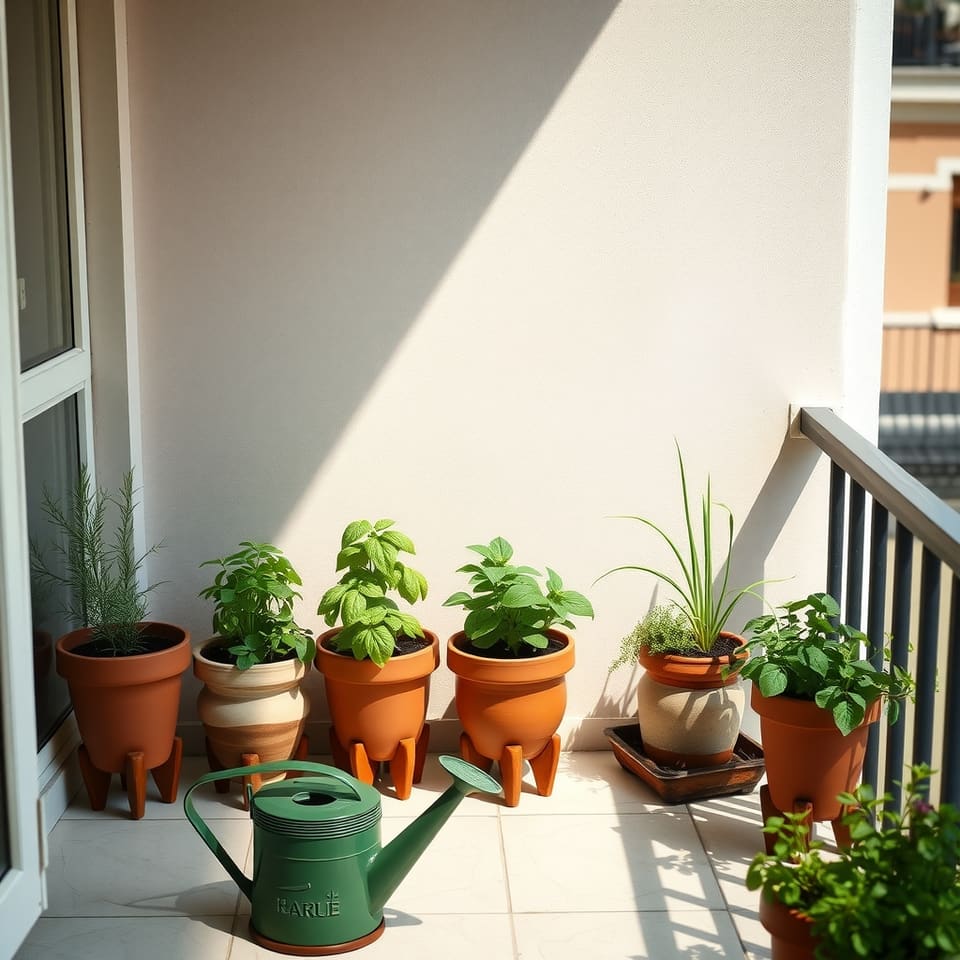
- Place the pot in sun or partial shade. If it stands on soil, raise it on pot feet so runners do not grow out through the drainage holes.
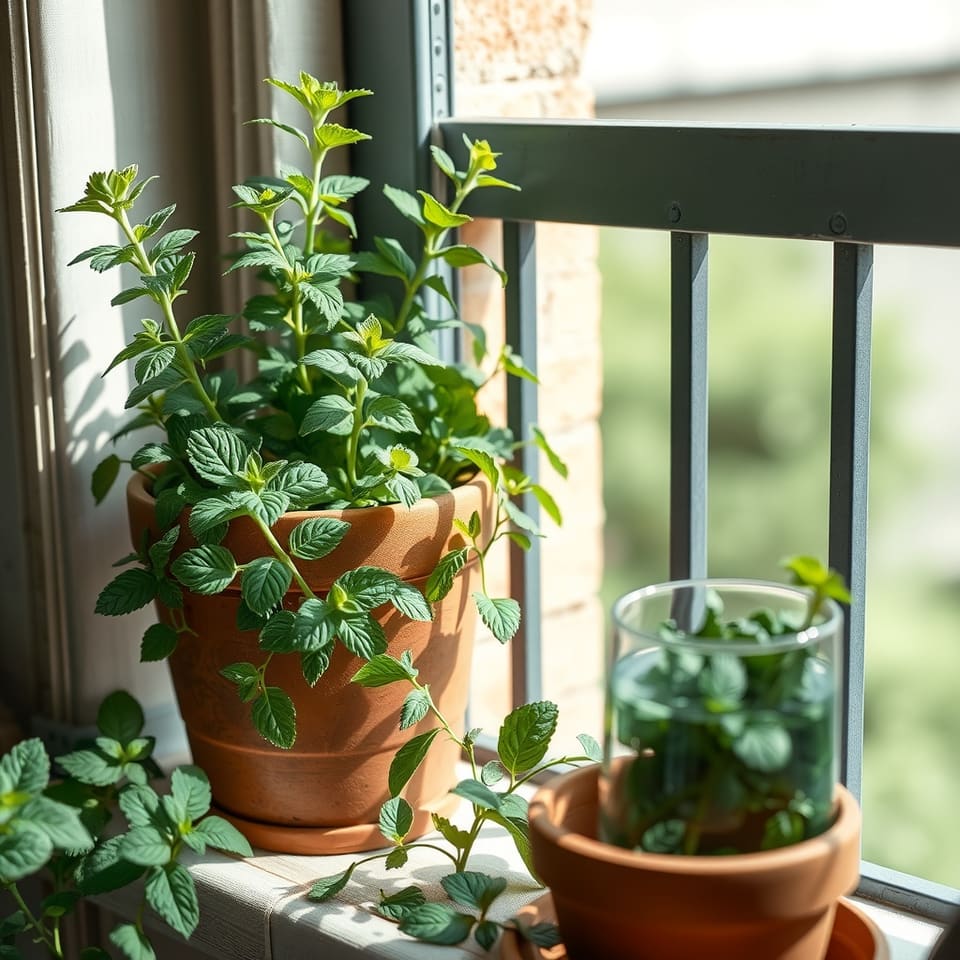
- To make more plants, cut a few healthy non-flowering stems in spring, strip the lower leaves and stand them in a jar of water. Pot them up once roots appear.
- Water whenever the top of the compost feels dry, and water at the base rather than over the leaves.
Tips
- Grow each type of mint in its own pot so the flavors stay true and one does not crowd out another.
- For winter leaves, the RHS suggests bringing a potted plant indoors in autumn and keeping it on a sunny windowsill.
- Fresh stems keep for about a week standing in water in the refrigerator, and chopped mint freezes well in ice cube trays.
Sun, compost and water
Mint grows in full sun or partial shade. Variegated types, such as pineapple mint, can scorch in strong sun, so give them some afternoon shade. Use a peat-free multipurpose or soil-based compost, and choose a pot with drainage holes.
Potted mint dries out much faster than mint in the ground, so check it often in summer and keep the compost evenly moist. In a heatwave, moving the pot into light shade cuts down on watering. Avoid soggy compost and wet leaves overnight. Utah State notes that overwatering and too much fertilizer encourage mint rust and reduce mint oil, so go easy on both.
Picking, cutting back and dividing
Start picking once stems are about 8 to 10 cm (3 to 4 inches) tall. The young, soft tips have the most flavor, and frequent picking keeps the plant bushy. Pinch off flower spikes as they appear: Illinois Extension advises this to keep the leaves' flavor. If the plant does flower, the RHS suggests cutting the whole thing back to about 5 cm (2 inches) from the base: fresh leaves follow within a few weeks.
Mint dies back in winter. Cut the old stems down any time from late autumn to early spring. Every few years the roots fill the pot and growth slows. Then divide the clump in spring or autumn: slice the rootball into sections, throw away the old, woody middle and replant the healthy pieces in fresh compost. Illinois Extension suggests dividing every three to four years.
What the evidence says
On containment, the extension services agree on the basics but differ on details. Illinois Extension considers raised, above-ground pots more reliable than sunken bottomless ones, because roots can sometimes escape a buried container. So if mint must be in a bed, check the edges each season and pull any runners that slip out.
On seed, Utah State explains that mints cross with each other easily, so plants grown from seed often do not match the variety on the packet. If you want a particular flavor, such as a good spearmint for tea, start from a plant you have tasted, a cutting or a division instead. The RHS notes that stems placed in a jar of water root readily.
Questions people ask
Can I grow mint from seed?
You can, but mints cross easily, so seedlings may not taste like the variety you expected. A plant, cutting or division gives you a known flavor.
Why are my mint leaves getting small and woody?
The pot is probably full of old roots. Divide the plant in spring or autumn, discard the woody center and replant the young pieces in fresh compost.
Can I sink the pot into a flower bed?
Yes. Leave the rim above the soil so runners cannot creep over it, and check the edges each season, because roots can sometimes escape.
Sources
- Mint in the Garden — Utah State University Extension
- Mint — University of Illinois Extension
- How to Grow Mint — Royal Horticultural Society
- Mint (Toxic and Non-Toxic Plants) — ASPCA
This article is for general information only and is not medical advice. Herbs can interact with medicines and health conditions. Talk to a doctor or pharmacist before trying a herbal remedy, especially if you are pregnant, breastfeeding, giving it to a child, or taking any medication.