How to Grow Chamomile From Seed on a Balcony
Chamomile goes from a pinch of dust-fine seed to a pot full of little daisies in about ten weeks. Here is how to sow it, grow it in containers and pick the flowers for tea.
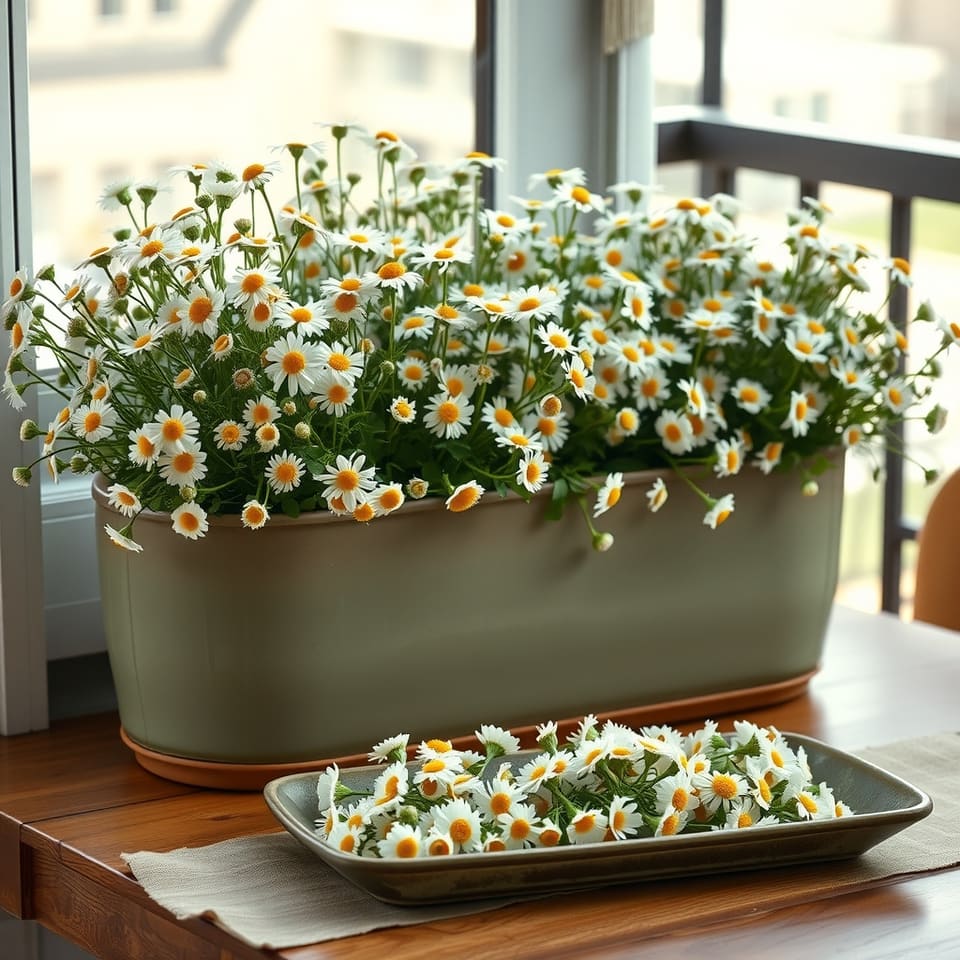
Few plants give you so much for so little effort. A packet of chamomile seed costs very little, the plants are happy in a sunny window box, and by midsummer you can be picking small daisy-like flowers every few days. Gardeners in many countries grow it for tea.
You do not need a garden. A balcony, a sunny windowsill or a few pots on a step is enough. Here is how to grow chamomile from seed, keep it flowering and dry the flowers so you have some left for winter.
German or Roman chamomile?
Two different plants share the name. German chamomile is a hardy annual that grows up to about 40 cm (16 inches) tall, flowers heavily and then dies after setting seed. Roman chamomile is a low, spreading hardy perennial, up to about 30 cm (12 inches), that comes back each year and is the one used for chamomile lawns.
For a balcony and a steady supply of flowers for tea, German chamomile is the usual choice: it is quick and generous. The Royal Horticultural Society (RHS) notes that dwarf varieties can be grown permanently in containers. Some named Roman varieties, such as 'Treneague', do not produce viable seed and are grown by dividing an existing plant instead.
Sowing Chamomile in a Balcony Planter
You need
- German chamomile seed1 pinch
- planter or wide pot with drainage holes1
- peat-free seed compost for sowing, and multipurpose or soil-based compost for the planteras needed
- small tray or pots for starting seed indoors1
- fine-rose watering can or spray bottle1
Method
- In spring, fill a seed tray with damp seed compost and firm it lightly.
- Scatter the seed thinly over the surface. Do not cover it, because it needs light to germinate. Press it gently so it touches the compost.
- Keep the surface moist with a fine spray and place the tray in a bright spot out of harsh midday sun.
- When the seedlings can be handled, move each one into its own small pot.
- Once the weather has warmed, harden the plants off for a week, then plant them into the planter about 15 cm (6 inches) apart, at the same depth they were growing.
- Pick newly opened flowers throughout summer. Spread them in a single layer on a tray in a warm, dry place out of direct sun for one to two weeks, until fully dry.
Tips
- Regular picking and removing faded flowers encourages more blooms.
- Store fully dried flowers in an airtight jar in a cool, dark place. They keep for up to a year.
- Leave a few flower heads on the plant at the end of summer and collect the seed to sow the following spring.
Sowing: the seeds need light
The single most important tip is this: chamomile seed needs light to germinate. Scatter it thinly on the surface of damp, peat-free seed compost and do not cover it. Burying the seed, even lightly, is a common reason nothing comes up.
Sow indoors in small pots or trays in spring, or outdoors once the soil has warmed from mid-spring onward. When seedlings are big enough to handle, move them into their own pots. Harden off indoor-raised plants by putting them outside for a few hours a day before planting them out in late spring or early summer. In a pot or planter, space plants about 15 cm (6 inches) apart. They can flower in as little as ten weeks from sowing.
Sun, soil and watering in pots
Give chamomile the sunniest spot you have. It likes light, free-draining soil that never stays waterlogged but does not dry out completely either. In pots, use a peat-free soil-based or multipurpose compost. There is no need to feed the plants: the RHS says chamomile grows and flowers well without feeding, even in poor soil.
Water young plants regularly until they are established. Plants in the ground need extra water only in long dry spells, but containers dry out much faster. The RHS suggests checking pots daily in warm weather. Water when the top of the compost feels dry, and avoid overwatering.
What the evidence says
Chamomile tea has a long tradition as a calming evening drink, but the research is thinner than its reputation. The US National Center for Complementary and Integrative Health (NCCIH) says there is very little information on chamomile and insomnia, and one study found no benefit. Early studies suggest a chamomile supplement might help generalized anxiety, but this is preliminary.
On safety, the NCCIH says chamomile is likely safe in the amounts normally found in tea. So enjoy your home-grown cup as a pleasant, gentle drink rather than a treatment, and see the cautions below if you have allergies or take medicines.
Questions people ask
Why did my chamomile seeds not come up?
The most common reason is that they were covered with soil. Chamomile seed needs light, so sow it on the surface and keep it moist.
Will chamomile come back next year?
German chamomile is an annual and dies after setting seed, though it often self-seeds. Roman chamomile is a perennial and returns each year.
When should I pick the flowers?
Pick them when they are newly opened, through the summer. Frequent picking keeps the plants producing more flowers.
Sources
- How to Grow Chamomile — Royal Horticultural Society
- Chamomile — National Center for Complementary and Integrative Health
- Chamomile (Toxic and Non-Toxic Plants) — ASPCA
This article is for general information only and is not medical advice. Herbs can interact with medicines and health conditions. Talk to a doctor or pharmacist before trying a herbal remedy, especially if you are pregnant, breastfeeding, giving it to a child, or taking any medication.