Ginger for Travel Sickness: Tea, Chews and Timing
Ginger is one of the most popular home remedies for motion sickness, but the research is mixed. Here is how to use it sensibly, alongside the travel habits that make the biggest difference.

Motion sickness can turn a short car ride, a ferry crossing or a bumpy flight into a long hour of queasiness, sweating and wishing you were somewhere else. It happens when what your eyes see and what your inner ear feels do not match.
Ginger is the home remedy most people reach for, as a tea, a biscuit or a piece of candied ginger. The NHS lists it as something you can try. This guide explains how to prepare it for a journey, what the studies really show, and which simple habits help most.
Why people use ginger
Ginger root has been used for nausea for a long time, and it is easy to carry. The NHS suggests ginger in tablet form, as a biscuit or as tea. Mayo Clinic mentions ginger supplements, ginger snaps, ginger ale and candied ginger as options that may help curb nausea.
Ginger chews and crystallized ginger are handy because you can nibble them slowly in the car without needing a hot drink. They are usually coated in sugar, so a few small pieces are plenty.
Travel Ginger Tea
You need
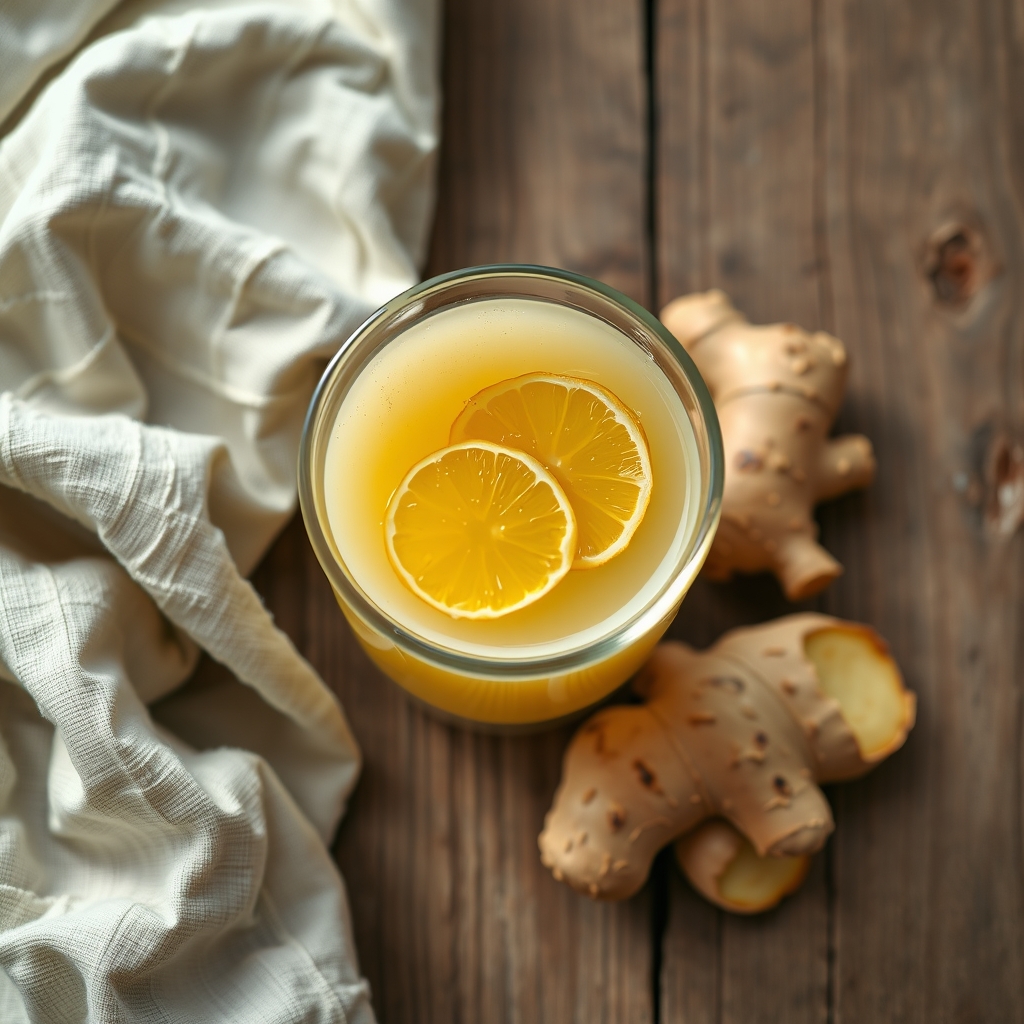
- fresh ginger root, thinly sliced2 cm (3/4 inch) piece
- water300 ml (1 1/4 cups)
- honey, not for babies under 12 months1 tsp (optional)
- lemon1 slice (optional)
Method
- Wash the ginger and slice it thinly. There is no need to peel it.
- Bring the water and ginger to a boil in a small pan, then lower the heat and simmer gently for 5 to 10 minutes.
- Strain into a cup or an insulated travel flask.
- Stir in honey and add lemon if you like.
- Sip slowly before you set off, and take small sips during the journey if it suits you.
Tips
- A lukewarm tea is easier to sip in a moving car than a very hot one. Never drink a hot drink while driving.
- For a no-spill option, pack a few small pieces of crystallized ginger or a plain ginger biscuit.
- If hot drinks do not appeal on the road, chill the tea and pour it into a bottle.
What the evidence says
The evidence for ginger and motion sickness is genuinely mixed. The US National Center for Complementary and Integrative Health (NCCIH) says most studies have not shown ginger to be helpful for motion sickness. Memorial Sloan Kettering Cancer Center, on the other hand, notes that some studies support short-term use of ginger for motion sickness.
Ginger has better support for nausea in pregnancy, where NCCIH says research suggests it may help. For travel sickness, it is reasonable to try ginger if you like it, but do not rely on it alone for a long sea crossing or if you are badly affected. Pharmacy medicines and the travel habits below have a clearer track record.
Timing: when to have it
Motion sickness is much easier to prevent than to stop once it has started. The NHS lists ginger among the ways to prevent or ease it, so the simplest approach is to have your ginger tea or a chew shortly before you set off, then nibble or sip a little more during the journey. There is no agreed best time or dose for ginger.
If you plan to use a pharmacy medicine, timing matters more. Mayo Clinic advises taking over-the-counter antihistamines for motion sickness at least 30 to 60 minutes before you travel. They can make you drowsy, so do not drive after taking them. Ask a pharmacist which option suits you or your child.
Travel habits that help most
Where you sit makes a big difference. The NHS and Mayo Clinic suggest the front seat of a car, the middle of a boat, a seat over the wing on a plane, and a forward-facing seat near the front of a train.
Look at the horizon or a fixed point in the distance, keep your head still, and get fresh air if you can. Avoid reading or screens while moving. Eat lightly before and during the trip, and skip heavy, spicy or greasy food and alcohol. Plain crackers with cold water may help, and on long journeys take breaks to walk and drink some water.
Questions people ask
Does ginger work for car sickness?
It may help some people, but the research is mixed and most studies have not found a clear benefit. Sitting in the front, looking at the horizon and avoiding screens are the most reliable steps.
When should I take ginger before a trip?
There is no agreed timing. Many people have ginger tea or a chew shortly before setting off and a little more along the way, since motion sickness is easier to prevent than to stop.
Can I take ginger with travel sickness tablets?
Ask a pharmacist before combining them. Ginger can interact with some medicines, especially blood thinners and diabetes medicines, and travel sickness tablets may already cause drowsiness.
Sources
- Motion sickness — NHS
- Motion sickness: First aid — Mayo Clinic
- Ginger — NCCIH
- Ginger — Memorial Sloan Kettering Cancer Center
This article is for general information only and is not medical advice. Herbs can interact with medicines and health conditions. Talk to a doctor or pharmacist before trying a herbal remedy, especially if you are pregnant, breastfeeding, giving it to a child, or taking any medication.