Homemade Ginger Shots: Strength, Stomach and Safety
A small, fiery glass of fresh ginger and lemon. Here is how to make it, how strong is too strong, and what ginger shots can and cannot do.
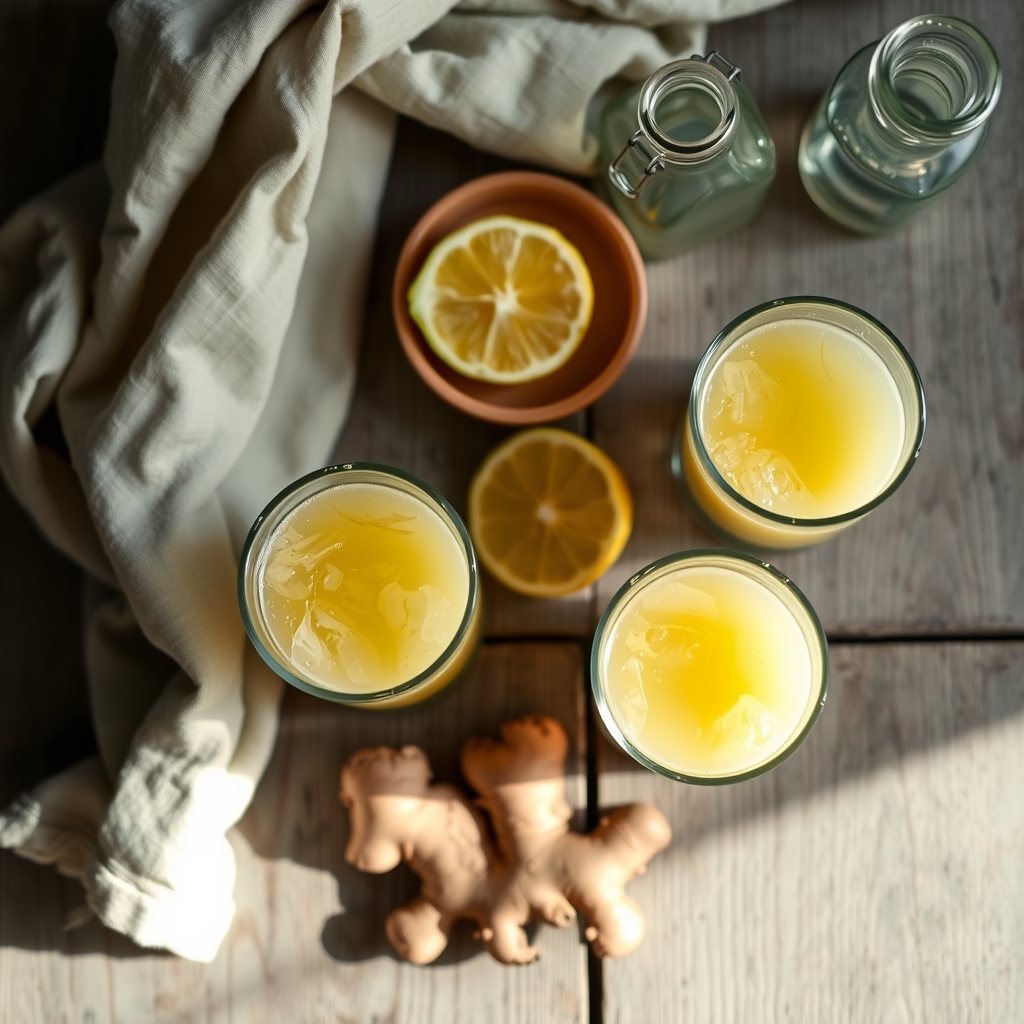
Ginger shots are small servings of concentrated fresh ginger juice, usually sharpened with lemon. They are popular as a quick morning ritual and are easy to make with a blender.
They are also much stronger than ginger tea. That strength is part of the appeal, but it can be hard on your stomach, and it matters if you take certain medicines. Here is how to make them sensibly.
Why people drink them
Mostly for the bold, warming kick. Many people like the ritual of a small, spicy drink to start the day.
Ginger shots are often promoted online for boosting immunity, flushing toxins or burning fat. None of these claims is supported by good evidence, and no drink can flush toxins or melt fat.
Fresh Ginger and Lemon Shots
You need
- fresh ginger root, scrubbed and roughly chopped (no need to peel)100 g (3.5 oz)
- lemons, juiced (about 80 ml / 1/3 cup)2
- cold water200 ml (about 3/4 cup)
- apple or orange, chopped, to soften the heat (optional)1 small
Method
- Wash the ginger well and chop it into small pieces.
- Put the ginger, water and fruit, if using, into a blender and blend on high for about 1 minute until very fine.
- Pour through a fine sieve or a clean cloth into a jug, pressing or squeezing to get out the juice. Discard the pulp.
- Stir in the lemon juice and taste. Add more water if it is too fiery.
- Pour into a clean bottle with a lid and keep in the fridge. Use within 3 days and shake before pouring.
Tips
- Start with half a shot, about 25 ml (1 fl oz), to see how your stomach handles it.
- If the heat is too much, mix your shot into a glass of water or sparkling water.
- Drinking it with or after breakfast is gentler on the stomach than on an empty stomach.
What the evidence says
NCCIH says research shows ginger may help with nausea and vomiting in pregnancy, although most studies used supplements rather than food or drinks. Ginger supplements may also ease period cramps, and might ease knee osteoarthritis symptoms, though much of that research is of poor quality.
For motion sickness, most studies have not shown ginger helps, and it is uncertain whether it helps nausea after surgery or with chemotherapy as an add-on to standard care.
The research summarized by NCCIH does not show that ginger strengthens your immune system or prevents colds. Enjoy a ginger shot for its flavor, and do not rely on it to keep you well.
Strength, your stomach and your teeth
Taken by mouth, ginger can cause heartburn, stomach discomfort, diarrhea and irritation of the mouth and throat. A concentrated shot on an empty stomach is the most likely way to trigger these. If you get heartburn, try a smaller shot, dilute it with water, or have it with food.
The NHS lists spicy foods among common heartburn triggers. If you already have reflux, ginger shots may not suit you.
Lemon juice is acidic, and acidic drinks can wear tooth enamel over time. Cleveland Clinic suggests rinsing your mouth with plain water afterward and waiting at least 30 minutes before brushing your teeth.
Questions people ask
Do ginger shots boost your immune system?
There is no good evidence that they do. The best ginger research is on nausea, mostly using supplements.
Is it OK to have a ginger shot every day?
NCCIH notes ginger has been used safely in many studies, but a daily shot is strong. Keep it small, and check with your doctor first if you take blood thinners or diabetes medicines, are pregnant, or have reflux or gallstones.
How long do homemade ginger shots keep?
Keep them in a clean, closed bottle in the fridge and use them within 3 days.
Sources
- Ginger: Usefulness and Safety — NCCIH
- Ginger — Memorial Sloan Kettering Cancer Center
- Heartburn and acid reflux — NHS
- Tooth Erosion — Cleveland Clinic
This article is for general information only and is not medical advice. Herbs can interact with medicines and health conditions. Talk to a doctor or pharmacist before trying a herbal remedy, especially if you are pregnant, breastfeeding, giving it to a child, or taking any medication.