Hibiscus Iced Tea: Recipe and Blood Pressure Facts
Bright, tart and deeply red, hibiscus makes a refreshing iced tea. Here is the recipe and what the blood pressure research really says.
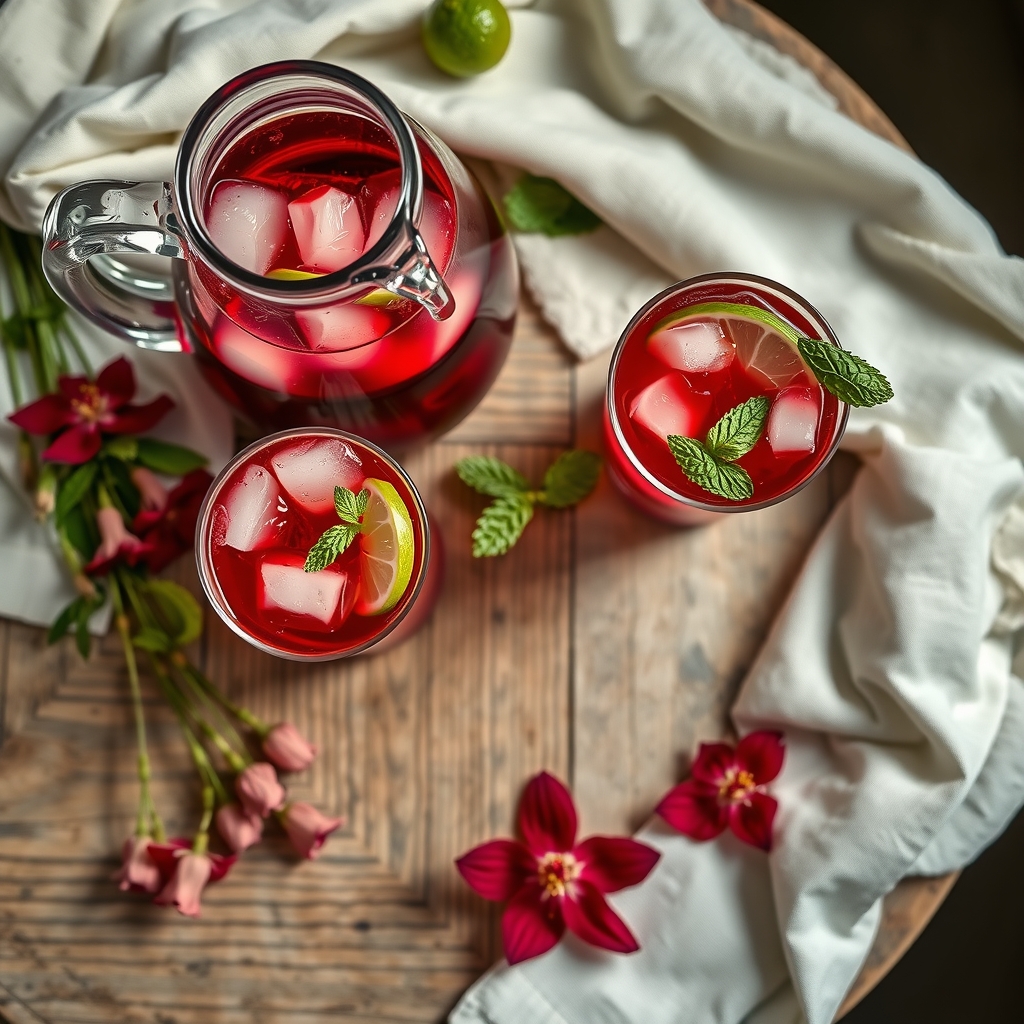
Hibiscus tea is made from the dried, deep-red parts of the roselle flower. It brews into a vivid ruby drink with a tart, cranberry-like taste that is perfect over ice on a warm day.
You may also have read that hibiscus can lower blood pressure. The research is more mixed than many headlines suggest, and there are real medicine interactions to know about. Here is the full picture, plus a simple pitcher recipe.
Why people use it
Most people drink hibiscus simply because it tastes good and looks beautiful. It is popular as a cold drink in many parts of the world.
Interest in hibiscus for health centers mostly on blood pressure, which is where it pays to look closely at the evidence.
Iced hibiscus is also an easy way to drink more water through the day if you find plain water boring, and you can keep it lightly sweetened or not sweetened at all.
Hibiscus Iced Tea
You need
- freshly boiled water500 ml (2 cups)
- dried hibiscus flowers5 g (about 2 tablespoons)
- cold water500 ml (2 cups)
- lime, sliced1
- fresh minta few sprigs
- sugar or maple syrup (optional)1-2 tablespoons
Method
- Put the hibiscus in a heatproof jug and pour over the hot water, at about 95°C (203°F).
- Steep for 10 minutes. Stir in sweetener now if you are using it, so it dissolves.
- Strain into a pitcher and add the cold water.
- Add the lime slices and mint, chill, and serve over ice.
Tips
- Hibiscus stains fabric and wooden surfaces, so wipe spills quickly.
- Taste before sweetening. A little lime often balances the tartness without extra sugar.
- Keep it in the fridge and drink within two days.
What the evidence says
Harvard Health reports that a study found hibiscus tea may help lower blood pressure, and that a pooled analysis of studies supports this.
A Cochrane review, which uses very strict standards, came to a more cautious conclusion. Only one small trial met its criteria, the certainty of the evidence was very low, and the authors said there is not enough evidence to know whether hibiscus lowers blood pressure compared with a placebo.
The US National Center for Complementary and Integrative Health notes that no dietary supplement has been shown to work as well as blood pressure medicines. Hibiscus tea may have a small effect, but it is not a substitute for treatment.
Why do the sources seem to disagree? Many of the studies are small and differ in how they were run, and stricter reviews leave out trials with weaknesses. The honest summary is that the question is still open.
If you have high blood pressure
Keep taking your prescribed medicine and talk to your doctor before adding hibiscus regularly. They can tell you whether it is suitable alongside your treatment.
If you enjoy the tea, think of it as a pleasant, sugar-light drink to include in a healthy routine, not as a way to manage your blood pressure on its own.
Questions people ask
Does hibiscus tea lower blood pressure?
It may have a modest effect, but the evidence is mixed. A strict Cochrane review found too little high-quality evidence to be sure. It does not replace medicine.
Can I drink it hot?
Yes. Steep the flowers in a cup of hot water for 5 to 10 minutes and drink it warm. The same cautions apply.
Is hibiscus tea safe in pregnancy?
There is little research on herbal teas in pregnancy. The NHS suggests limiting herbal tea to 4 cups a day, and it is best to check with your midwife or doctor about hibiscus.
Sources
- Roselle for hypertension in adults — Cochrane Library
- The health benefits of 3 herbal teas — Harvard Health Publishing
- Complementary Health Approaches for Hypertension — NCCIH
- Foods to avoid in pregnancy — NHS
This article is for general information only and is not medical advice. Herbs can interact with medicines and health conditions. Talk to a doctor or pharmacist before trying a herbal remedy, especially if you are pregnant, breastfeeding, giving it to a child, or taking any medication.