Moroccan-Style Mint Green Tea
Fresh mint and green tea brewed together in one pot, the way it is served across Morocco. Bright, sweet if you like, and lower in caffeine than coffee.
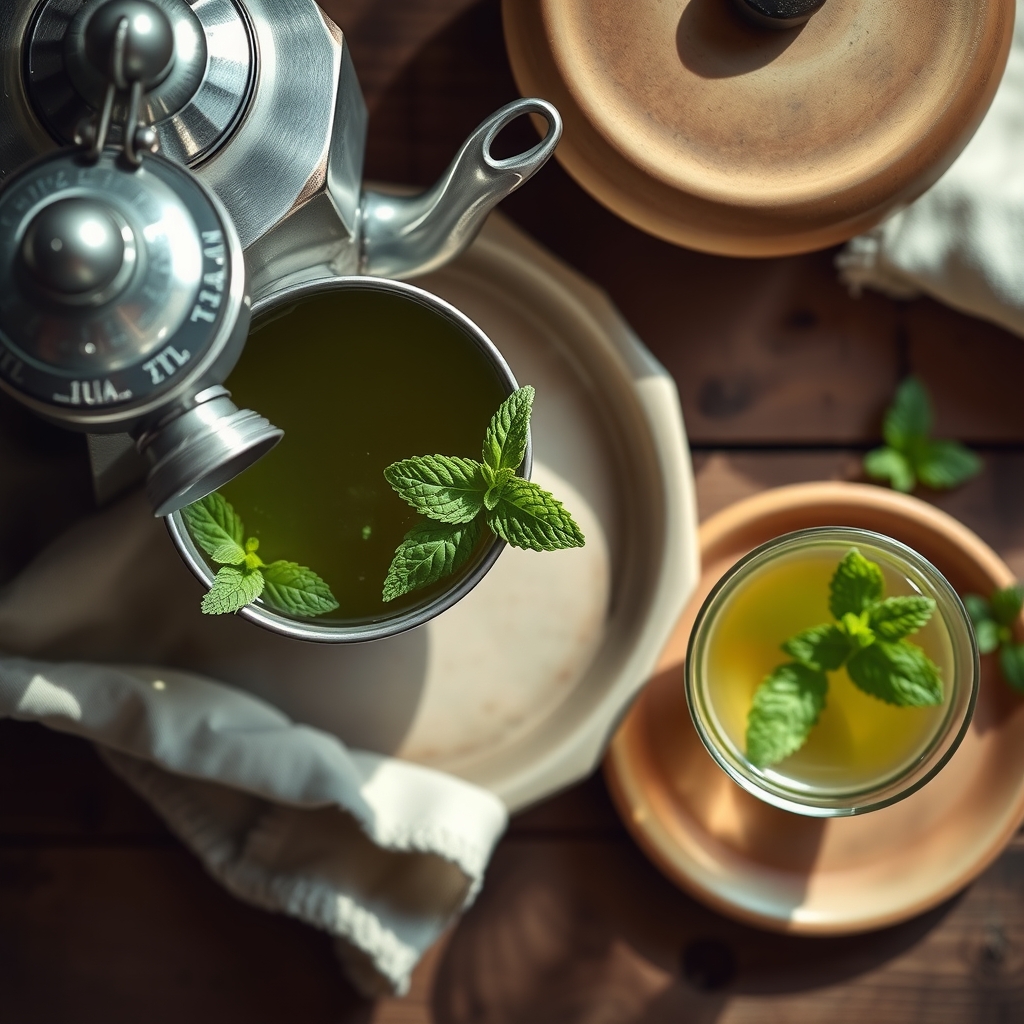
In Morocco, mint tea is a daily ritual and a sign of welcome. Green tea, a big bunch of fresh mint and, traditionally, plenty of sugar are brewed together and poured from a height into small glasses.
It is easy to make at home. Because it is made with real tea, it does contain caffeine, so it helps to know how much is in your glass and who should go easy on it.
Why people drink it
Mostly for the pleasure of it. The tea is fresh and cooling from the mint, with a gentle green tea backbone, and it is usually shared after meals or with guests.
The traditional version is very sweet. You can follow tradition, use a little sugar, or leave it out entirely. The flavor still works.
Moroccan-Style Mint Green Tea
You need
- loose green tea, such as gunpowder green tea2 tsp (about 4 g)
- fresh spearmint sprigs, rinsed1 large handful (about 15 g)
- water, plus a splash for rinsing750 ml (3 cups)
- sugar, to taste (optional)0-3 tbsp
Method
- Bring the water to a boil.
- Put the tea leaves in a teapot and pour over about 60 ml (1/4 cup) of the hot water. Swirl for a few seconds, then pour this rinse water away.
- Add the remaining hot water and let the tea steep for 2 minutes.
- Push the mint sprigs into the pot and add sugar if using. Steep for 3 to 4 more minutes.
- Pour a glass and tip it back into the pot once or twice to mix, then pour into glasses from a little height to make a light foam.
Tips
- For a milder cup with less caffeine, use 1 tsp of tea instead of 2.
- Steeping green tea for a long time makes it bitter. Taste after a few minutes and pour when you like it.
- Out of green tea? Fresh mint leaves on their own make a caffeine-free evening alternative.
What the evidence says
NCCIH reports no safety concerns for green tea consumed as a drink by adults. It also says that definite conclusions cannot yet be reached about whether green tea helps with most of the things people use it for.
Some studies found green tea modestly lowered total and LDL cholesterol, but research on other claims, including cancer, has been inconsistent. Treat this as an everyday drink you enjoy, not a health treatment.
On the mint side, NCCIH says peppermint tea appears to be safe, though the long-term safety of drinking large amounts of peppermint leaf is unknown.
How much caffeine is in it
Mayo Clinic lists about 29 mg of caffeine in a 237 ml (8 oz) cup of brewed green tea, compared with about 96 mg in brewed coffee and 48 mg in brewed black tea. The exact amount depends on how much tea you use and how long you steep it.
Experts say up to 400 mg of caffeine a day may be safe for most adults. If you get headaches or feel jittery or restless, cut back.
During pregnancy, caffeine should stay at moderate levels, so talk with your doctor or midwife about your limit. Caffeine also passes into breast milk, and large amounts can make babies fussy and disrupt their sleep.
Questions people ask
Does Moroccan mint tea have caffeine?
Yes. It is made with green tea, which has about 29 mg of caffeine per 237 ml (8 oz) cup, roughly a third of a cup of brewed coffee.
Can I drink it in the evening?
If caffeine affects your sleep, have it earlier in the day, use less tea, or make a mint-only version in the evening.
Is it healthy to drink every day?
For most adults, green tea as a drink has no reported safety concerns. Keep an eye on total caffeine and added sugar, and remember the evidence for specific health benefits is not settled.
Sources
This article is for general information only and is not medical advice. Herbs can interact with medicines and health conditions. Talk to a doctor or pharmacist before trying a herbal remedy, especially if you are pregnant, breastfeeding, giving it to a child, or taking any medication.