Ginger and Feeling Full: What Small Studies Show
One small study found that a ginger drink with breakfast lowered hunger ratings in a group of men. Here is what that does and does not mean, with a simple fresh ginger tea and the cautions that matter.
Ginger is one of the most trusted kitchen remedies, best known for settling a queasy stomach. Lately it also shows up in posts promising that ginger will keep you full and curb snacking.
That claim rests on very little research. There is one small, interesting pilot study, and that is about it. This article explains what that study found, why it is too early to draw firm conclusions, and how to enjoy ginger safely if you like the taste.
Why people use ginger around meals
Ginger has a long tradition as a warming spice for digestion, and it is often sipped after meals. It is also widely used for nausea. NCCIH, part of the US National Institutes of Health, says research suggests ginger may help with nausea and vomiting in pregnancy, although results for motion sickness are weak.
Because ginger feels warming and settling, it is easy to see why people hope it might also make them feel satisfied. That hope is the starting point for the fullness research.
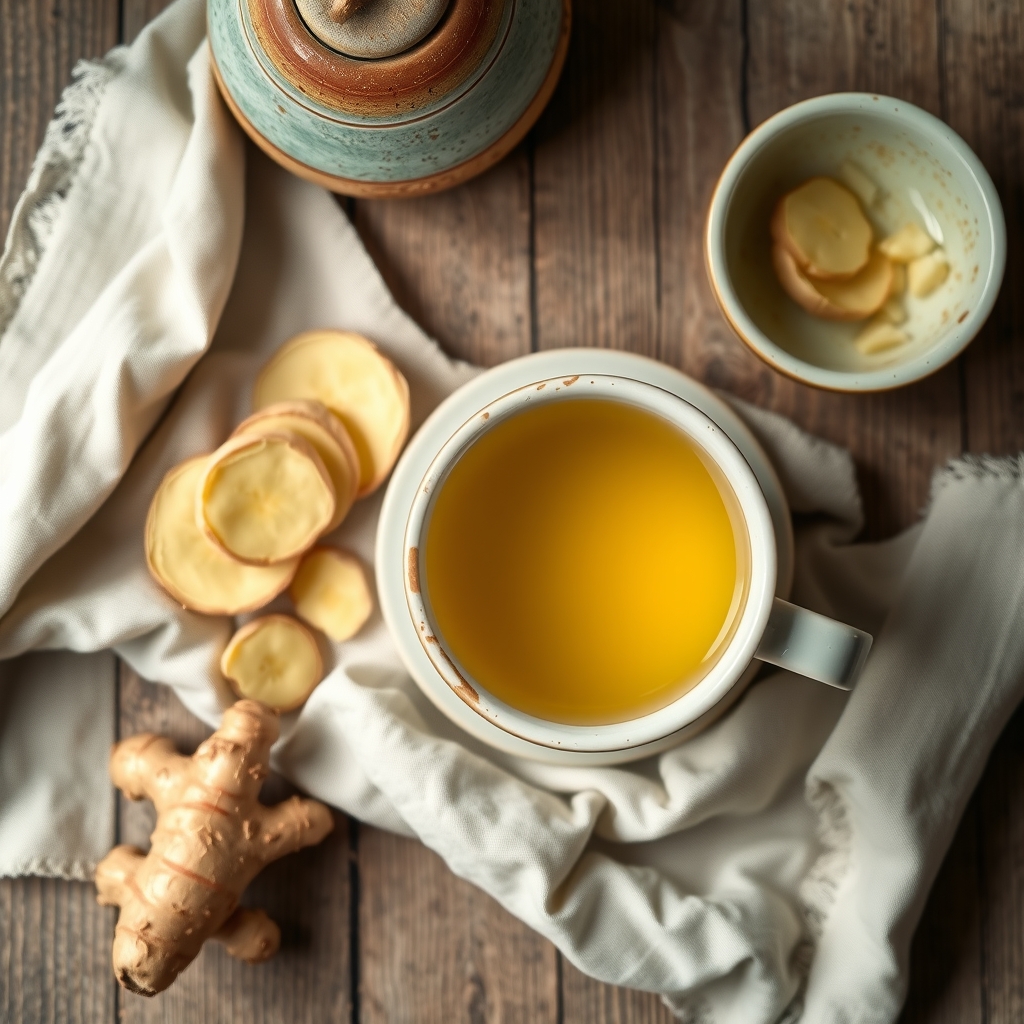
Fresh Ginger Breakfast Tea
You need
- fresh ginger root, washed and thinly sliced2 to 3 cm (about 1 inch)
- water300 ml (1 1/4 cups)
- thin slice of lemon, optional1
Method
- Put the ginger slices and water in a small pan.
- Bring to a boil, then lower the heat and simmer gently for 8 to 10 minutes.
- Turn off the heat and taste. Simmer a few minutes longer if you want a stronger flavor.
- Strain into a mug, add a slice of lemon if you like, and let it cool to a comfortable sipping temperature.
- Sip it slowly with or just after your meal.
Tips
- There is no need to peel young, thin-skinned ginger. Just wash it well.
- Grating the ginger instead of slicing it gives a stronger, spicier tea in less time.
- Keep it unsweetened if your aim is a calm end to a meal. A little honey is fine for adults if you prefer it.
What the evidence says
The main study was a small pilot trial published in 2012 in the journal Metabolism. Ten overweight men had breakfast on two different days, once with 2 g of ginger powder stirred into hot water and once without. After the ginger breakfast, they reported less hunger and expected to eat less, with a trend toward feeling fuller. The ginger did not change blood sugar, insulin or other blood markers that were measured.
This is a useful early signal, but it is very limited. Only ten people took part, all were men, the effect was measured on single mornings, and hunger was based on how the men rated their own feelings. The authors themselves said more studies are needed. Memorial Sloan Kettering Cancer Center notes that ginger may promote feelings of satiety, based on this pilot study, but makes no weight-loss claim.
So the honest summary is that ginger might help a little with feeling full after a meal, but the evidence is thin. It is not a way to control weight, and it should not replace regular, balanced meals.
Making ginger part of a calm meal habit
If you enjoy ginger, a warm, unsweetened cup with breakfast or after lunch can be a pleasant ritual. Sipping something warm slowly can help you take a pause at the end of a meal, whatever the tea is.
Fresh ginger tea is milder and more aromatic than ginger powder. Start with a gentle cup and see how your stomach feels before making it stronger. Some people find strong ginger causes heartburn.
Questions people ask
Does ginger help you lose weight?
There is no good evidence that it does. One small pilot study found less hunger after a ginger breakfast drink, but that is not the same as weight loss.
Is ground ginger as good as fresh?
The study used ginger powder in hot water. Fresh ginger gives a milder, fresher flavor. Either is fine as a drink in normal kitchen amounts.
When is the best time to drink it?
In the study it was taken with breakfast. Many people simply enjoy a cup with or after a meal. Avoid it late in a meal if it gives you heartburn.
Sources
- Ginger: Usefulness and Safety — NCCIH
- Ginger (About Herbs) — Memorial Sloan Kettering Cancer Center
- Ginger consumption enhances the thermic effect of food and promotes feelings of satiety without affecting metabolic and hormonal parameters in overweight men: a pilot study — Metabolism (via PubMed Central)
This article is for general information only and is not medical advice. Herbs can interact with medicines and health conditions. Talk to a doctor or pharmacist before trying a herbal remedy, especially if you are pregnant, breastfeeding, giving it to a child, or taking any medication.