Chia Seed Water and Fullness: How to Make It Safely
Chia seeds turn water into a soft gel that many people find filling. The key safety rule is simple: always soak them first. Here is how, plus an honest look at what chia can and cannot do.
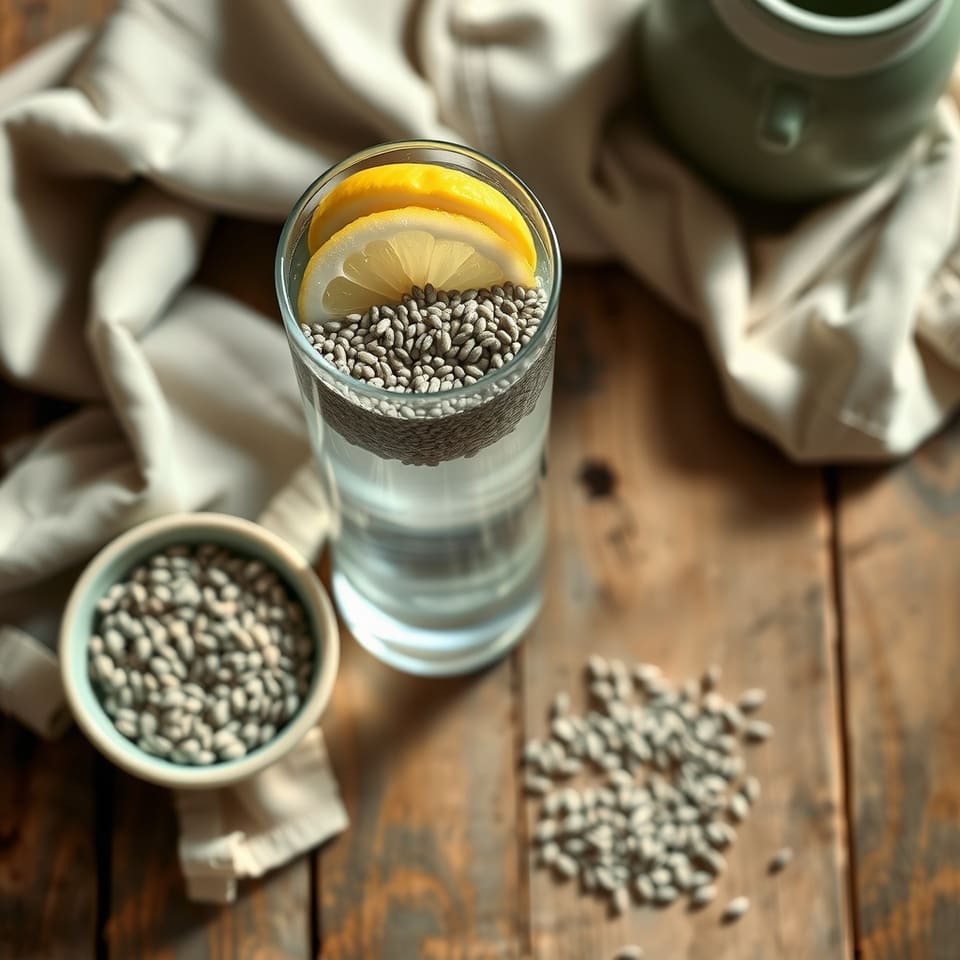
Chia seed water is simple: a spoonful of tiny seeds stirred into water and left to swell. The seeds form a soft, jelly-like coating, and the drink feels surprisingly substantial.
Because of that, it is often shared online as a way to feel full. Chia is a nutritious food, but it is not a weight-loss trick. And the one thing you must get right is soaking the seeds properly before you drink them. This guide shows you how.
Why chia seeds feel filling
Chia seeds are rich in fiber. Harvard Health Publishing notes that about 28 g (1 oz), or two to three tablespoons, provides roughly 9.8 g of dietary fiber. They are also a plant source of an omega-3 fat called ALA.
When chia meets liquid, it forms a gel. Harvard Health notes that this gel-like substance may increase your feeling of fullness. This matches what is known about fiber in general: Mayo Clinic says high-fiber foods tend to be more filling than low-fiber foods, so you may stay satisfied longer.
Soaked Chia Seed Water with Lemon
You need
- chia seeds (start with 1 tsp if you are new to them)1 tsp to 1 tbsp
- cool water250 ml (1 cup)
- squeeze or slice of lemon, optional1
Method
- Pour the water into a glass or jar first, then sprinkle in the chia seeds.
- Stir well for about 30 seconds so the seeds do not clump together.
- Leave to stand for 5 minutes, then stir again to break up any clumps.
- Let it soak for at least 15 to 20 more minutes, until every seed is swollen and surrounded by clear gel. You can also soak it in the fridge overnight.
- Stir once more, add lemon if you like, and drink slowly. If the drink is too thick, add more water.
Tips
- If you still see hard, dry seeds, it needs longer. Soaked seeds should look plump with a clear halo of gel.
- Drink a glass of plain water as well during the day. Fiber needs fluid to work well.
- You can make a thicker version with milk or a plant drink and eat it with a spoon, like a pudding.
What the evidence says
The idea that chia helps you feel full makes sense, but direct proof is limited. A randomized study in overweight adults, published in the journal Nutrition Research in 2009, found that adding chia seeds to the diet did not lead to weight loss or change disease risk factors.
So chia water is best seen as a way to add fiber and fluid to your day. It may help some people feel more satisfied, but it is not a way to lose weight, and this page makes no such promise.
Why you must soak them first
Dry chia seeds can absorb many times their own weight in liquid and swell into a thick gel. That is fine in a glass. It is not fine if the seeds swell after you swallow them, on their way down your throat.
For that reason, never eat a spoonful of dry chia seeds and then wash it down with water. Always let the seeds soak until they are fully swollen and coated in gel before you drink them, and stir well so they do not form clumps.
Mayo Clinic also notes that fiber works best when it absorbs water, and that adding too much fiber too quickly can lead to gas, bloating and cramping. Start with a small amount and build up slowly over a few weeks.
Questions people ask
How long should chia seeds soak?
At least 15 to 20 minutes, stirring once or twice, until every seed is swollen and coated in gel. Overnight in the fridge works too.
Will chia water help me lose weight?
There is no good evidence that it will. A study in overweight adults found chia seeds did not lead to weight loss. It is simply a way to add fiber.
How much chia can I have a day?
Start with about 1 teaspoon and build up slowly. Harvard Health uses a serving of about two to three tablespoons, which provides plenty of fiber.
Sources
- Chia seed benefits: What you need to know — Harvard Health Publishing
- Dietary fiber: Essential for a healthy diet — Mayo Clinic
- Chia seed does not promote weight loss or alter disease risk factors in overweight adults — Nutrition Research (via PubMed)
This article is for general information only and is not medical advice. Herbs can interact with medicines and health conditions. Talk to a doctor or pharmacist before trying a herbal remedy, especially if you are pregnant, breastfeeding, giving it to a child, or taking any medication.