Black Seed Oil for Hair: Claims, Evidence and Safety
Black seed oil, pressed from the tiny seeds of Nigella sativa, is one of the most talked-about hair oils online. The evidence for hair is thin, and the main known risk is a skin reaction. Here is a calm look at both, and a cautious way to try it.
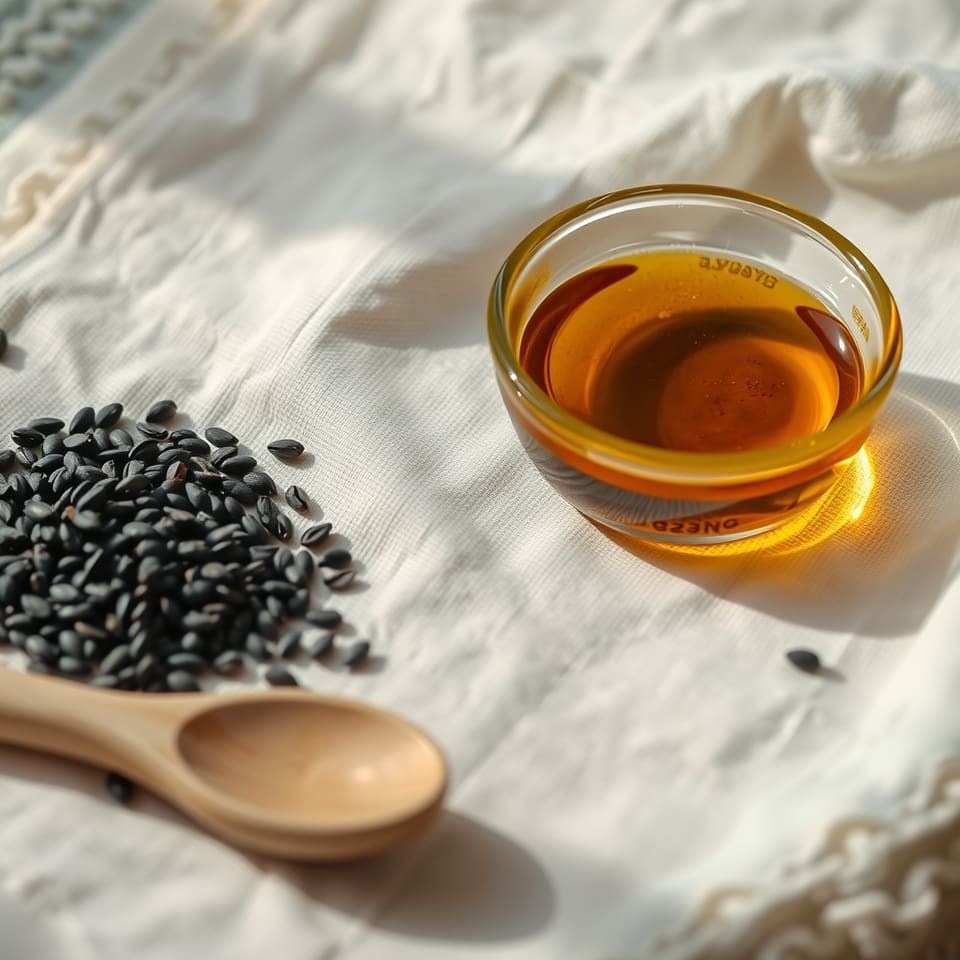
Black seed has many names. You may see it sold as black cumin, black caraway, nigella or kalonji. The small, matte black seeds are used as a spice, and both the seeds and the oil pressed from them have a long history in traditional medicine.
Lately, black seed oil has become a favorite in hair care videos, where it is often described as a natural way to stop hair loss or grow hair faster. Before you rub it into your scalp, it is worth knowing how little of that has been tested, and that this oil is better known in medical reports for causing skin reactions than for growing hair.
Why people use it
Black seed contains a compound called thymoquinone, which has been studied for possible antioxidant and anti-inflammatory effects. A large 2021 review in the journal Nutrients described many possible benefits being explored, from metabolic health to digestion. It is easy to see how that reputation spread to hair.
The seed itself is a familiar food. The US National Institutes of Health liver injury database, LiverTox, notes that black cumin is used as a spice and is generally recognized as safe in food amounts. Using a food oil on your hair feels low risk, which adds to its appeal.
Diluted Black Seed Oil Pre-Wash
You need
- black seed oil1 tsp (5 ml)
- plain, unscented vegetable oil such as sunflower oil1 tbsp (15 ml)
- small clean bowl1
Method
- Do a patch test first. Mix a few drops of the blend, dab it on the inside of your forearm and wait 48 hours. Do not continue if you see redness, itching or a rash.
- Stir the two oils together in the bowl. There is no tested dilution for hair, so this weaker mix is a cautious starting point rather than a proven formula.
- On dry hair, work the oil mainly into the lengths and ends, using only a little near the roots.
- Leave it on for 20 to 30 minutes. Do not sleep in it the first few times.
- Shampoo well, applying the shampoo to your scalp, and rinse thoroughly so no oil remains on the skin.
- Use it no more than once a week, and stop at once if your scalp itches, burns or turns red.
Tips
- Black seed oil has a strong, peppery smell. The milder carrier oil also softens the scent.
- Store the bottle closed, away from heat and light, and throw it out if it smells rancid.
- Cover your shoulders with an old towel. Dark oils can mark fabric.
What the evidence says
The research on black seed is mostly about eating it or taking it as a supplement, not about hair. The 2021 Nutrients review concluded that, despite promising research, black cumin and thymoquinone are still far from clinical use. LiverTox states that black cumin products have not been approved by the FDA as a therapy for any disease, and that the evidence for clinical benefit is not very convincing.
Memorial Sloan Kettering Cancer Center keeps a detailed summary of black seed research. On the skin, it lists small studies of the oil or a gel for breast pain, knee pain and skin irritation from radiation therapy. It does not list hair growth among the uses with human evidence. We did not find good-quality human trials showing that black seed oil grows hair or stops hair loss.
Honest summary: black seed oil may feel nice as a conditioning oil on the lengths of your hair, but any claim that it treats hair loss is not supported by solid evidence. If your hair is thinning, a diagnosis matters more than any oil. The American Academy of Dermatology (AAD) says the earlier treatment for hair loss starts, the more likely you are to see regrowth.
The main risk: skin reactions
This is the part most hair videos leave out. Memorial Sloan Kettering lists contact dermatitis, an itchy, red skin rash, as a reported side effect of putting black seed oil on the skin, and notes that applying pure oil has caused allergic reactions. In one reported case, a woman developed a serious whole-body reaction after applying the oil and needed treatment with steroids. LiverTox also lists rash and hypersensitivity reactions as rare but potentially severe events.
Reactions like these are uncommon, but your scalp is a large area of skin, and oils tend to stay on it for hours. That is why a patch test and a diluted mix are sensible if you want to try it.
Questions people ask
Does black seed oil grow hair?
There is no solid evidence that it does. Most research on black seed looks at eating it or taking supplements, and hair growth is not among the uses backed by good human studies.
Is black seed oil the same as black sesame or cumin oil?
No. Black seed comes from Nigella sativa, a different plant. Check the label for that name, since common names such as black cumin can be confusing.
Can I use it if I have dandruff?
It is not a proven dandruff treatment, and none of the research we reviewed supports it for flakes. If flaking bothers you, a dermatologist can recommend a treatment with proven results.
Sources
- Nigella Sativa (About Herbs) — Memorial Sloan Kettering Cancer Center
- Black Cumin Seed (LiverTox) — National Institute of Diabetes and Digestive and Kidney Diseases (NCBI Bookshelf)
- Black Cumin (Nigella sativa L.): A Comprehensive Review on Phytochemistry, Health Benefits, Molecular Pharmacology, and Safety — Nutrients (PubMed)
- Hair loss: Diagnosis and treatment — American Academy of Dermatology
This article is for general information only and is not medical advice. Herbs can interact with medicines and health conditions. Talk to a doctor or pharmacist before trying a herbal remedy, especially if you are pregnant, breastfeeding, giving it to a child, or taking any medication.