Amla for Hair: What We Know and What We Don't
Amla has been used in hair oils, shampoos and masks for generations. The research behind it is thin, but if you want to try it, here is an honest look at the evidence, a simple mask and the safety steps that matter.
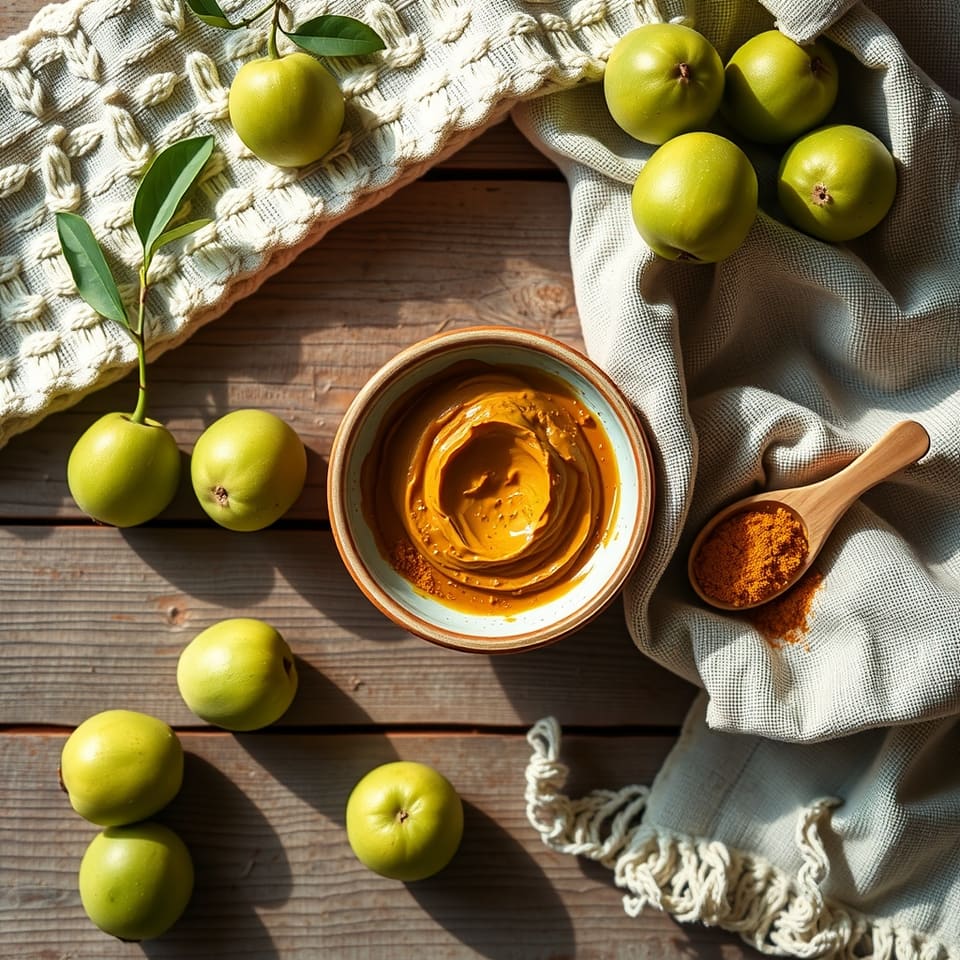
Amla, the fruit of the Phyllanthus emblica tree, has a long history in traditional hair care. You will find it in hair oils, powders and shampoos, and in countless online claims that it thickens hair, stops hair fall and prevents gray hair.
Some of that comes from long tradition, and some from a small amount of research. Before you buy into the promises, it helps to know what is actually known, and why the cause of your hair loss matters more than any single ingredient.
Why people use amla on hair
A 2020 clinical paper on a hair serum summarizes the traditional background: amla powder has long been used as a hair tonic and in shampoos, and to help prevent premature graying. The same authors describe amla as an inhibitor of 5-alpha reductase, the enzyme that turns testosterone into DHT, a hormone linked to pattern hair loss.
That idea comes from earlier studies the authors cite, not from new results in their own trial. A proposed mechanism explains why researchers are interested, but it does not show that amla on your scalp, or in your diet, changes how your hair grows.
Simple Amla Powder Hair Mask
You need
- amla powder2 tbsp
- warm water, added a little at a time3 to 4 tbsp
- plain yogurt, optional, for a creamier paste1 tbsp
- old towel to protect your clothes1
Method
- Do a patch test first: dab a little paste on your inner arm, leave it for 48 hours, and only use the mask if there is no redness, itching or swelling.
- In a small bowl, stir the amla powder with warm water until you have a smooth paste like thick yogurt. Stir in the yogurt if using.
- Comb your hair, put the towel around your shoulders and apply the paste to your scalp and hair in sections.
- Leave it on for 15 to 20 minutes. Do not let it run near your eyes.
- Rinse thoroughly with lukewarm water until no grains are left, then wash and condition as usual.
Tips
- Some people find powder masks leave hair feeling dry, so follow with your usual conditioner.
- Make only as much as you need and use it straight away rather than storing it.
What the evidence says
Few good human studies have tested amla on its own. One clinical paper, published in 2020, tested a leave-in serum that contained amla along with several other ingredients. Forty-two adults with hair fall applied it every night for 90 days, and the researchers reported higher hair density and less hair fall compared with the start of the study.
There are big limits. There was no comparison group, everyone knew they were using the serum, the study was small and short, and it was funded by the companies the authors work for. Because the serum had many ingredients, it cannot show what amla did on its own. The authors themselves call for larger comparative studies.
So the honest summary is that amla has a strong tradition and some early, low-quality evidence. It may be a pleasant part of a hair care routine, but there is no reliable proof that it regrows hair or reverses graying.
First, find out why your hair is thinning
The American Academy of Dermatology says it is normal to shed about 50 to 100 hairs a day. Heavier shedding often follows a trigger such as childbirth, major stress, a high fever, surgery or losing a lot of weight, and usually settles within six to nine months.
True hair loss is different. Hereditary hair loss, immune conditions, some medicines, tight hairstyles and harsh hair products can all stop hair from growing. The AAD stresses that effective treatment begins with finding the cause, and that starting treatment sooner generally gives a better outlook. Supplements such as biotin, iron or zinc are only advised when a blood test shows you are low.
Questions people ask
Does amla stop gray hair?
It is traditionally used for this, but there is no good evidence that amla reverses or prevents gray hair in people.
Is amla oil better than amla powder?
There is no research comparing them. Both are traditional, and the choice is mostly about texture and how your hair feels afterwards.
How often can I use an amla mask?
There is no studied schedule. Once a week is a reasonable start if your patch test was clear, cutting back if your hair or scalp feels dry.
Sources
- Clinical Study to Evaluate the Efficacy and Safety of a Hair Serum Product in Healthy Adult Male and Female Volunteers with Hair Fall — Clinical, Cosmetic and Investigational Dermatology (PMC)
- Do you have hair loss or hair shedding? — American Academy of Dermatology
- Hair loss: Diagnosis and treatment — American Academy of Dermatology
This article is for general information only and is not medical advice. Herbs can interact with medicines and health conditions. Talk to a doctor or pharmacist before trying a herbal remedy, especially if you are pregnant, breastfeeding, giving it to a child, or taking any medication.