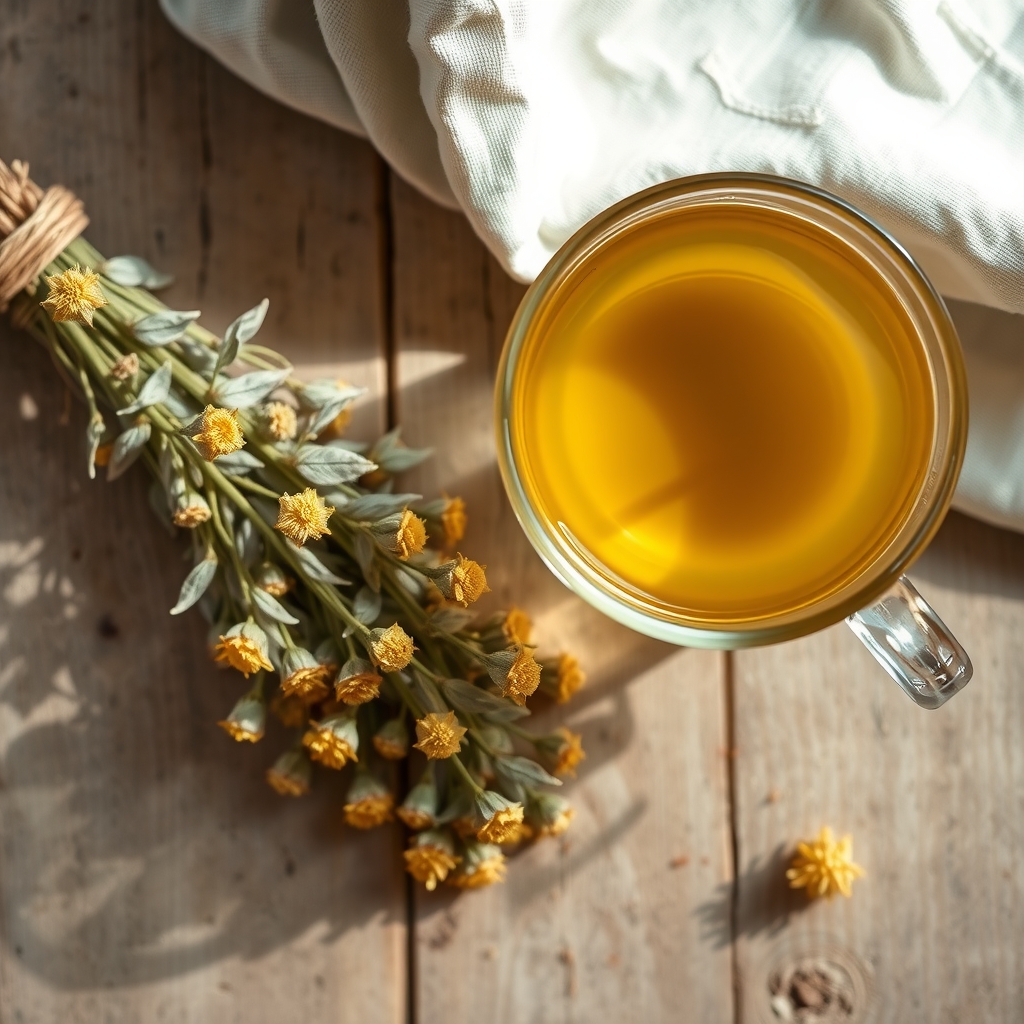
Yarrow Tea: Tradition and Who Should Avoid It
Yarrow is a feathery-leaved meadow plant with flat clusters of white flowers. Its bitter tea has a long history for appetite and mild tummy troubles, but it is not for everyone.
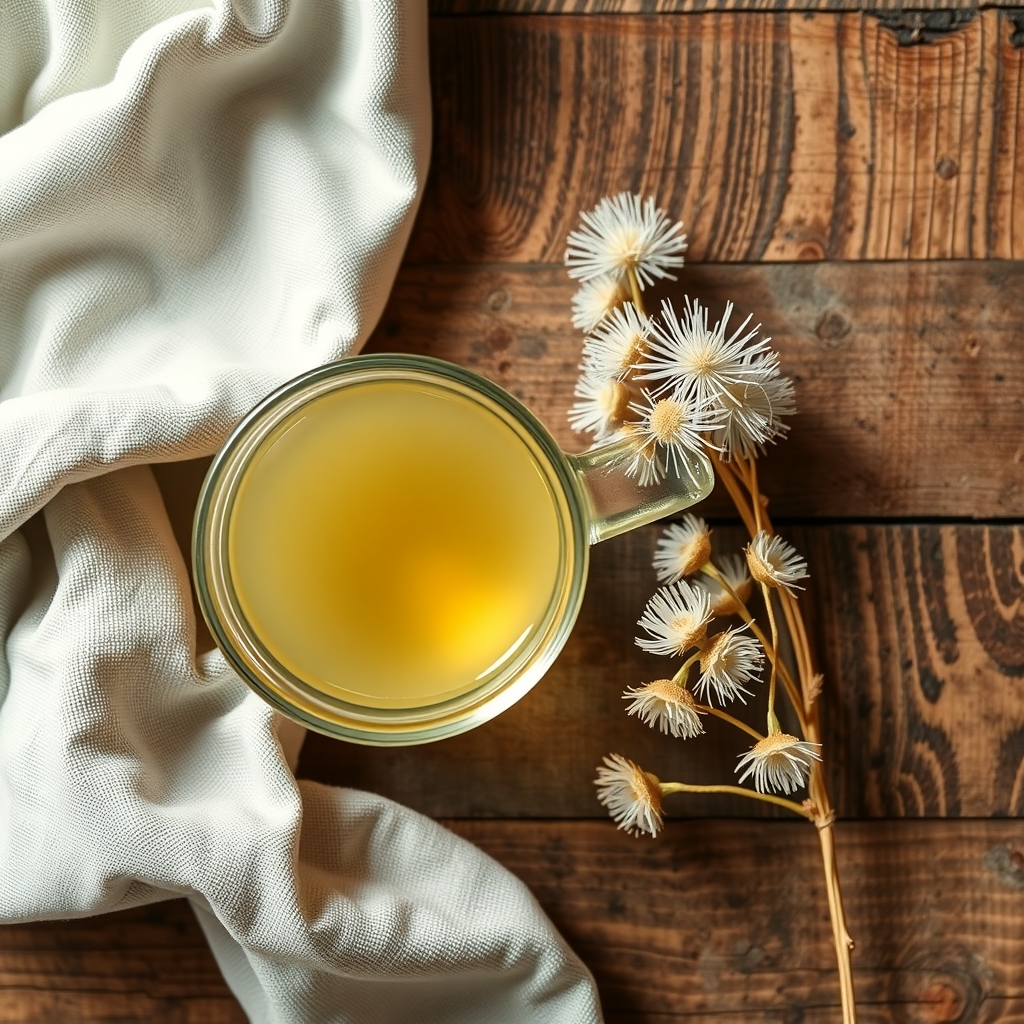
Yarrow (Achillea millefolium) grows along roadsides, meadows and garden edges across much of the world. Its finely divided leaves and umbrella-shaped clusters of tiny white flowers make it easy to spot, and it has been part of European folk medicine for centuries.
As a tea, yarrow is fragrant and quite bitter. This guide explains what it is traditionally used for, how much the evidence supports it, how to brew it, and the groups of people who should leave it alone.
Traditional uses
The European Medicines Agency, which reviews herbal medicines for the EU, recognizes yarrow as a traditional herbal medicine for a few everyday complaints in adults and teenagers over 12. These are a temporary loss of appetite, mild digestive problems such as bloating and gas, and minor cramps that come with periods.
The tea is usually taken between meals. Yarrow infusion is also used on the skin for small, superficial wounds, but this guide focuses on drinking it.
Simple Yarrow Tea
You need
- freshly boiled water200 ml (a generous 3/4 cup)
- dried yarrow flowers and leavesabout 2 g (1 heaped tablespoon)
- honey, optional1 teaspoon
Method
- Put the dried yarrow in a cup or small teapot.
- Pour over the freshly boiled water and cover to hold in the aroma.
- Steep for 5 to 10 minutes. The longer it steeps, the more bitter it becomes.
- Strain, let it cool until comfortably warm, and sweeten with a little honey if you find it too bitter.
- Drink it between meals.
Tips
- A few leaves of mint or a slice of orange peel soften the bitterness.
- Start with a short steep to find a strength you like.
What the evidence says
The European recognition is based on traditional use, not on proof from clinical trials. The agency found clinical evidence insufficient, but judged the effects plausible and noted the herb has been used safely in this way for at least 30 years.
Laboratory studies have shown that yarrow can relax muscle spasms and has anti-inflammatory and antibacterial activity. Effects in a test tube do not always carry over to people. So yarrow tea may offer some comfort for mild symptoms, but evidence is limited and it should not replace medical advice.
How much and for how long
For appetite and digestive complaints, the European monograph describes 1.5 to 4 g of dried yarrow in 150 to 250 ml of boiling water, three or four times a day between meals. For period cramps, it describes a smaller amount, 1 to 2 g in 250 ml, two or three times a day.
Keep it short. If digestive symptoms last more than two weeks, or period cramps go on longer than a week, stop and see a doctor.
Buying and picking yarrow
The safest choice is dried yarrow sold as a food or herbal tea. Unless you are an experienced forager, avoid picking wild plants you cannot identify with certainty.
If you grow your own, harvest the flowering tops on a dry day and dry them fully before storing them in an airtight jar.
Questions people ask
What does yarrow tea taste like?
It is herbal, slightly floral and distinctly bitter. A short steep and a little honey or mint make it easier to drink.
Can I drink yarrow tea every day?
The European monograph describes up to three or four cups a day for short periods. If symptoms last more than two weeks, stop and see a doctor rather than continuing.
I am allergic to daisies. Can I drink yarrow?
It is best to avoid it. Yarrow belongs to the same daisy family, and people allergic to plants in this family should not use it.
Sources
- Millefolii herba - herbal medicinal product — European Medicines Agency
- European Union herbal monograph on Achillea millefolium L., herba — European Medicines Agency
- Yarrow herb: summary for the public — European Medicines Agency
- Are You Considering a Complementary Health Approach? — NCCIH
This article is for general information only and is not medical advice. Herbs can interact with medicines and health conditions. Talk to a doctor or pharmacist before trying a herbal remedy, especially if you are pregnant, breastfeeding, giving it to a child, or taking any medication.