Tea Water Temperature Guide for Every Kind of Tea
Boiling water can make delicate green tea bitter, while water that is too cool can leave herbal tea weak and less safe. Here is a clear temperature guide for every cup, with simple tricks for getting it right without special equipment.
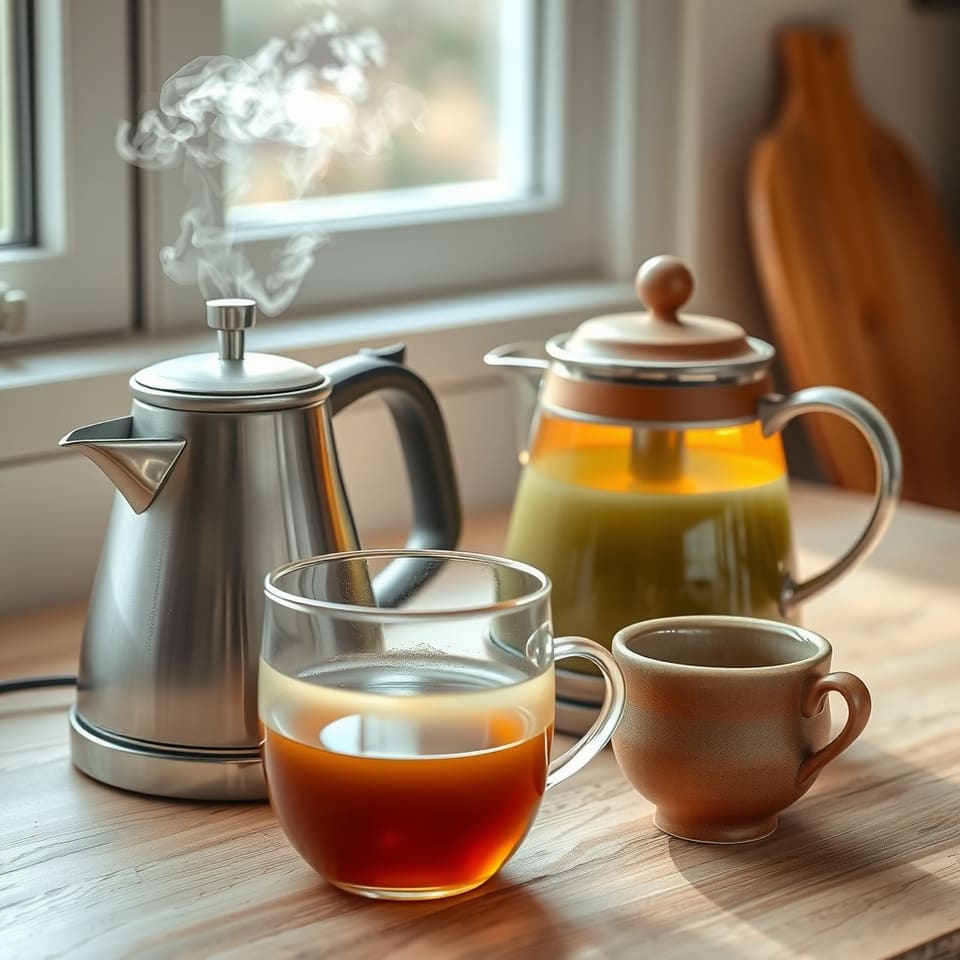
Tea drinkers in Japan, China, Morocco, Britain and Turkey all have strong opinions about how hot the water should be. They are right to care. The temperature of the water changes how a tea tastes, how strong it gets and, for herbal infusions, how safe it is.
The good news is that you do not need a special kettle. Once you know the rough ranges, a minute or two of waiting is often all it takes.
The temperature guide
These are common starting points used by tea makers. Adjust to your taste, and shorten the steeping time if a cup turns bitter.
Green tea: about 70 to 80 °C (160 to 175 °F), steeped for 2 to 3 minutes. Hotter water tends to pull out more bitterness from delicate leaves.
White tea: about 75 to 85 °C (165 to 185 °F), for 3 to 5 minutes.
Oolong tea: about 85 to 95 °C (185 to 205 °F), for 3 to 5 minutes.
Black tea: about 90 °C (195 °F) up to just off the boil, for 3 to 5 minutes. Iowa State University Extension gives 195 °F (about 90 °C) for 3 to 5 minutes as its guide for brewing tea.
Herbal and fruit infusions: water at a full rolling boil, steeped for at least 5 minutes, covered. More on why below.
How to judge it without a thermometer
Boil the kettle, then leave the lid open and wait. Freshly boiled water left in an open kettle cools gradually, so a few minutes of waiting is a simple way to get green or white tea water. The exact time depends on your kettle and how full it is, so a cheap kitchen thermometer is worth using once to learn your own kettle.
Another quick trick is to pour a little cold water into the cup first, then add the hot water. As a rough guide, one part cold tap water to three parts boiling water lands near 80 °C (175 °F), which suits most green teas.
For black and herbal teas, simply pour as soon as the kettle clicks off, and cover the cup to keep the heat in.
What the evidence says
For herbal teas, temperature is about safety as well as flavor. Germany's Federal Institute for Risk Assessment (BfR) explains that dried plants can carry bacteria, yeasts and moulds, and occasionally harmful bacteria such as salmonella. It advises always using water at a rolling boil and steeping for at least five minutes, because only proper heating reliably kills these germs.
The BfR adds that hot-water dispensers, which often deliver water at around 80 to 85 °C, are not suitable for herbal teas. This matters most for small children and people who are ill. The advice applies to loose herbs and tea bags alike.
Once tea is brewed, how hot you drink it also matters. The International Agency for Research on Cancer has classed very hot drinks as a probable cause of cancer of the esophagus. This is about drinking at scalding temperatures, not about tea itself, so let your cup cool before you sip.
Questions people ask
Can I use boiling water for green tea?
You can, but it often makes green tea taste bitter and harsh. Let the water cool for a few minutes first, or add a splash of cold water to the cup.
Is water from a hot-water dispenser fine for herbal tea?
The BfR says no. These dispensers usually give water at about 80 to 85 °C, which is not hot enough to reliably kill germs that can be present on dried herbs.
How long should I wait before drinking my tea?
Wait until it feels warm rather than scalding on your lips. A few minutes after steeping is usually enough, and adding a little milk or cold water speeds it up.
Sources
- Boiling water a must for herbal teas — German Federal Institute for Risk Assessment (BfR)
- Celebrating iced tea — Iowa State University Extension and Outreach (AnswerLine)
- IARC Monographs Volume 116: Evaluation of drinking coffee, mate, and very hot beverages — International Agency for Research on Cancer (WHO)
- Burns and scalds — NHS
This article is for general information only and is not medical advice. Herbs can interact with medicines and health conditions. Talk to a doctor or pharmacist before trying a herbal remedy, especially if you are pregnant, breastfeeding, giving it to a child, or taking any medication.