Tea Tree Oil for Spots: Dilution and Safety
Tea tree oil is one of the most popular home options for spots, but it is strong, it must be diluted and it is toxic if swallowed. Here is what the evidence shows and how to use it as safely as possible.
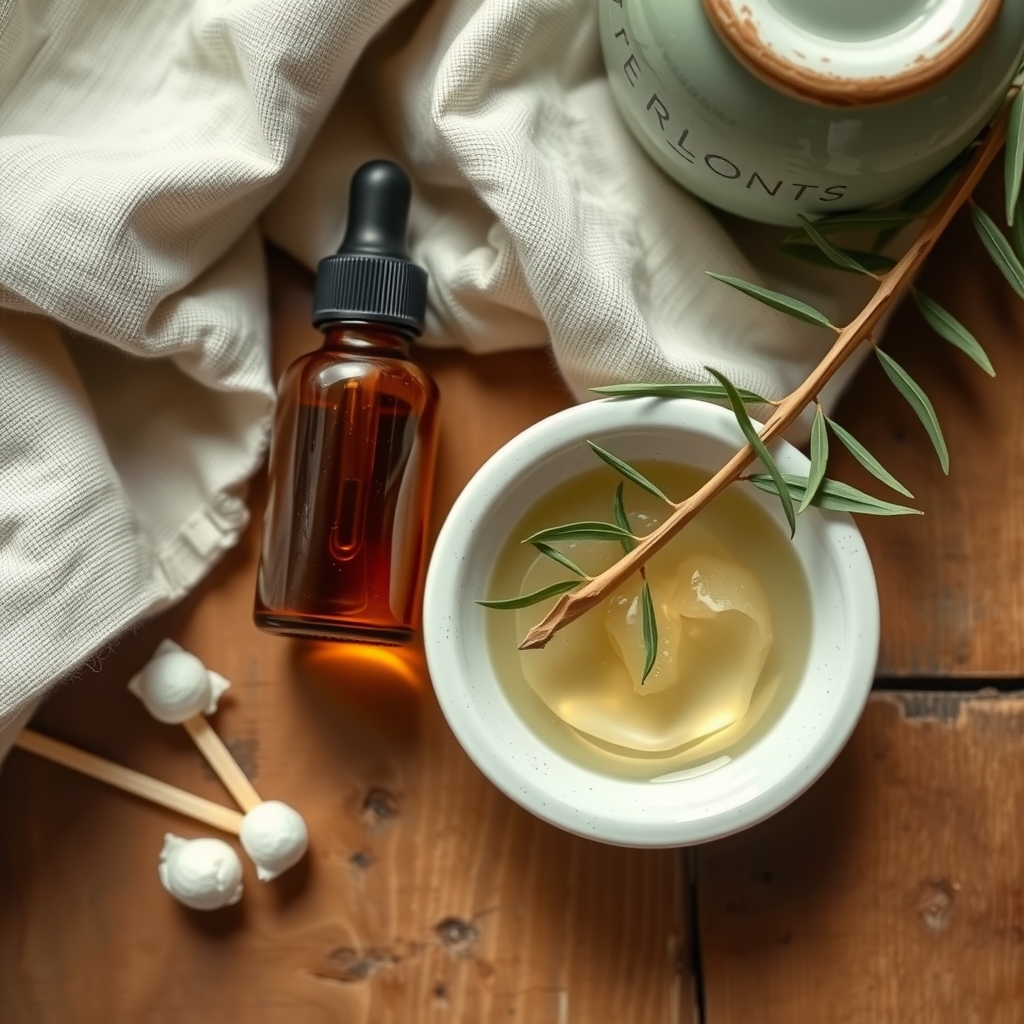
Tea tree oil comes from the leaves of an Australian tree, Melaleuca alternifolia. It has a sharp, medicinal smell and is widely used on spots and blemishes as a home remedy.
There is a little research behind this, but tea tree oil is a concentrated essential oil, not a gentle kitchen ingredient. Used neat, it can irritate skin, and taken by mouth it can be dangerous. This guide covers what the studies found, how to dilute it, how to patch test it, and the safety rules that matter most.
What the evidence says
The US National Center for Complementary and Integrative Health says research on tea tree oil for acne is limited. A small amount of evidence suggests it might help, but more is needed before firm conclusions can be drawn.
Mayo Clinic notes that research suggests a gel containing 5 percent tea tree oil might help relieve acne, and that it may irritate skin less than benzoyl peroxide but may work more slowly. Memorial Sloan Kettering Cancer Center describes a small, older study finding tea tree oil was as effective as benzoyl peroxide for acne, but says additional study is needed.
In short, tea tree oil may help mild spots a little, slowly, at a low strength. It is not a proven acne treatment, and it will not clear a spot overnight.
Never swallow it, and keep it away from children
NCCIH states plainly that tea tree oil should not be swallowed. Taking it by mouth has caused serious effects including confusion, unsteadiness, inability to walk and coma. Mayo Clinic and Memorial Sloan Kettering give the same warning.
Store the bottle closed, upright and out of reach and sight of children. Do not use it in or near your mouth, and never add it to drinks or food.
Step by step: diluting and patch testing
Step 1: Never put undiluted tea tree oil on your skin. The studies above used products of about 5 percent strength, and a stronger mix is not better: irritation, itching, stinging, burning, dryness and allergic rashes are the most common problems.
Step 2: To make roughly a 5 percent mix, add 0.5 ml of tea tree oil, about 10 drops, to 10 ml (2 tsp) of a plain, fragrance-free gel or moisturizer, and stir well. Drop sizes vary, so this is approximate. Make a small amount and label it.
Step 3: Patch test before using it on your face. Dab a little of the diluted mix on the inside of your forearm twice a day for several days. If you notice redness, itching or a rash, do not use it.
Step 4: If the test is clear, wash your face gently, then use a clean cotton bud to dab a tiny amount only onto individual spots, once or twice a day. Avoid the eyes, lips and broken skin.
Step 5: Give it time. If there is no change after a few weeks, or your skin becomes irritated, stop.
Gentle skin care matters more
The American Academy of Dermatology advises washing your face no more than twice a day and after sweating, using a gentle, alcohol-free cleanser with your fingertips, and avoiding harsh scrubs, toners and astringents. Most important, do not pick, pop or squeeze spots, which makes them last longer and raises the risk of scars and dark marks.
NCCIH adds that tea tree oil is more likely to irritate skin if it is old or has been exposed to heat, light or air, so keep the bottle tightly closed and away from sunlight.
Questions people ask
Can I put tea tree oil straight on a spot?
No. Undiluted tea tree oil is more likely to irritate or burn your skin. Dilute it to about 5 percent and patch test first.
Is tea tree oil as good as benzoyl peroxide?
One small, older study found similar results, but the overall evidence is limited and tea tree oil seems to work more slowly. A pharmacist or dermatologist can help you choose a proven acne treatment.
How long does tea tree oil take to work on spots?
If it helps at all, expect gradual change over weeks, not overnight. Stop if your skin becomes irritated or nothing changes after a few weeks.
Sources
- Tea Tree Oil — NCCIH
- Tea tree oil — Mayo Clinic
- Tea Tree Oil — Memorial Sloan Kettering Cancer Center
- Acne: Tips for managing — American Academy of Dermatology
This article is for general information only and is not medical advice. Herbs can interact with medicines and health conditions. Talk to a doctor or pharmacist before trying a herbal remedy, especially if you are pregnant, breastfeeding, giving it to a child, or taking any medication.