Aloe Vera Gel for Minor Sunburn
Cool, clear aloe gel is a favorite after too much sun. Here is how to use it on mild sunburn, and how to tell when a burn needs more than home care.
You stayed out a little too long and now your shoulders are pink, warm and tender. For mild sunburn, the first job is to cool the skin and keep it comfortable while it recovers, which usually takes up to a week.
Aloe vera gel is one of the most popular after-sun options, whether from a houseplant leaf or a plain gel. It is gentle and soothing for many people, but it has limits, and some burns need a doctor rather than a plant.
Why people use aloe on sunburn
The clear gel from the inner aloe leaf feels cool and light on hot skin. Dermatologists at the American Academy of Dermatology suggest a moisturizer containing aloe vera or soy to help soothe sunburned skin, applied while the skin is still slightly damp after a cool shower.
Aloe is only one part of good sunburn care. Get out of the sun, cool the skin with a cool shower, bath or damp cloth, drink extra water, and keep the burned area covered from the sun until it has healed.
Fresh Aloe Gel for Sunburned Skin
You need
- aloe vera leaf from a houseplant, or plain aloe gel with no added fragrance, alcohol or numbing ingredients1 thick, mature
- clean bowl and spoon1
Method
- First cool your skin with a cool shower or a damp cloth for several minutes, then gently pat it almost dry.
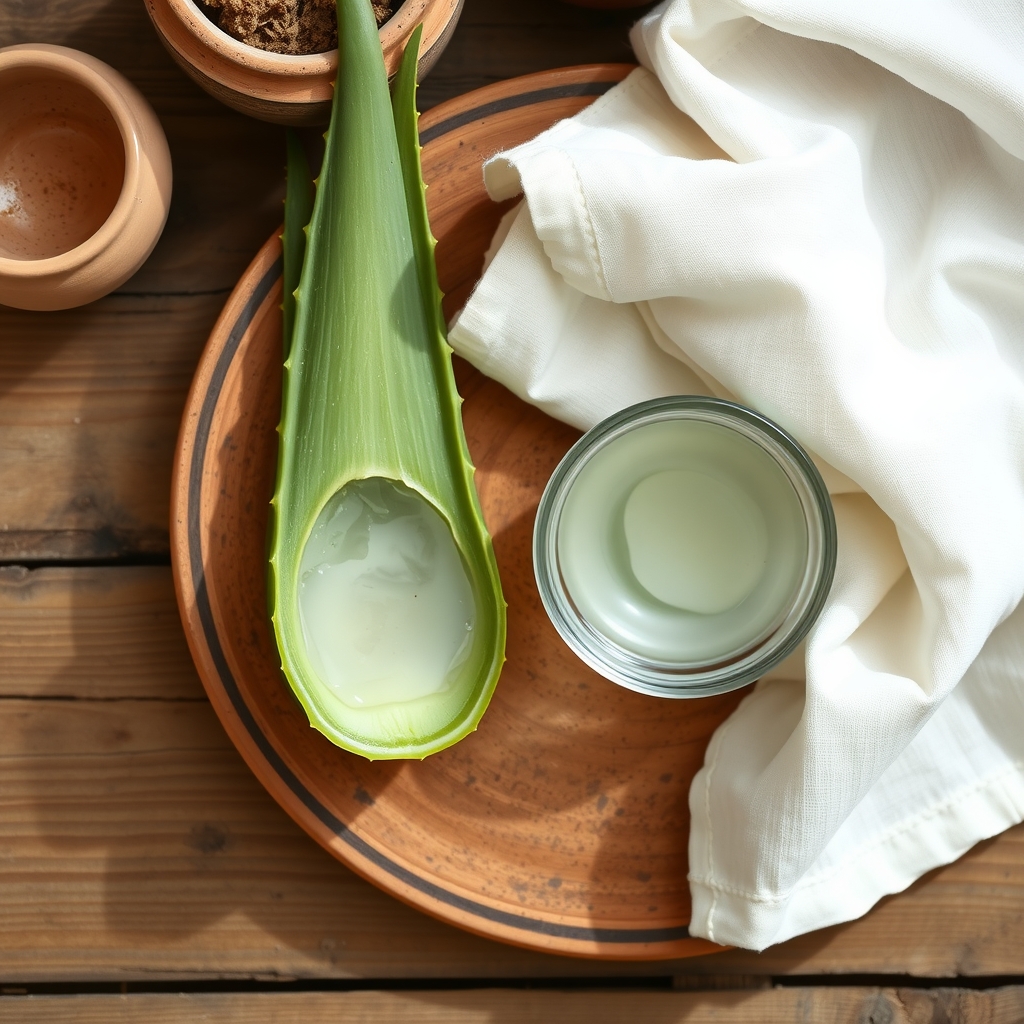
- Cut a leaf from near the base of the plant and stand it upright in a cup for 10 minutes so the yellow sap drains out.
- Rinse the leaf, trim off the spiky edges, and slice away the green skin to expose the clear inner gel.
- Scoop the clear gel into a clean bowl, avoiding any yellow or green bits from the outer layer.
- Test a small dab on unburned skin first. If there is no stinging or rash after 15 minutes, smooth a thin layer over the sunburn.
- Reapply a few times a day while the skin feels hot or tight.
Tips
- Keep leftover fresh gel covered in the fridge and use it within a day or two. Chilled gel feels extra soothing.
- Wear loose, soft clothing over the burn and keep it out of the sun until it has fully healed.
- Do not put ice or ice packs directly on sunburn.
What the evidence says
NCCIH reports that clinical research suggests aloe gel applied to the skin may speed burn healing and reduce burn-related pain. It does not single out sunburn, and the studies are not large, so the evidence is promising rather than conclusive.
Aloe gel on the skin is generally well tolerated, though some people get burning, itching or a rash. Taking aloe by mouth is a very different matter. Aloe latex, which comes from the outer layer of the leaf, can cause cramps and diarrhea, and oral aloe leaf extracts have been linked to liver problems. Use aloe on the outside only.
When sunburn is more than a minor burn
Blisters mean a deeper, second-degree burn. Do not pop them. Keep them clean and protected, and get medical advice.
Get an urgent appointment if your skin is blistered or swollen, or you have a very high temperature, chills, dizziness, extreme tiredness, nausea, headache or muscle cramps. These can signal heat exhaustion. Heatstroke is an emergency.
Babies and young children with sunburn should be checked by a doctor or nurse. Any burn that is very large or deep, or on the face or genitals, needs emergency care.
Questions people ask
Is fresh aloe from the plant better than gel?
Either can work. Fresh gel is pure but must be separated carefully from the yellow sap. A plain gel without fragrance, alcohol or numbing ingredients is a convenient alternative.
How long does mild sunburn take to settle?
Mild sunburn usually improves within about 7 days. Peeling skin is part of normal healing, so try not to pick or scratch it.
Does aloe protect me from getting burned?
No. Aloe is for comfort afterward, not sun protection. Use shade, clothing, a hat and broad-spectrum sunscreen of SPF 30 or higher.
Sources
- How to treat sunburn — American Academy of Dermatology
- Aloe Vera: Usefulness and Safety — NCCIH
- Sunburn — NHS
- Burns and scalds — NHS
This article is for general information only and is not medical advice. Herbs can interact with medicines and health conditions. Talk to a doctor or pharmacist before trying a herbal remedy, especially if you are pregnant, breastfeeding, giving it to a child, or taking any medication.