Calendula Infusion as a Gentle Skin Wash
A cooled infusion of dried calendula flowers is a traditional, low-fuss wash for minor skin irritation. Here is how to make it, how strong the evidence is, and who should skip it.
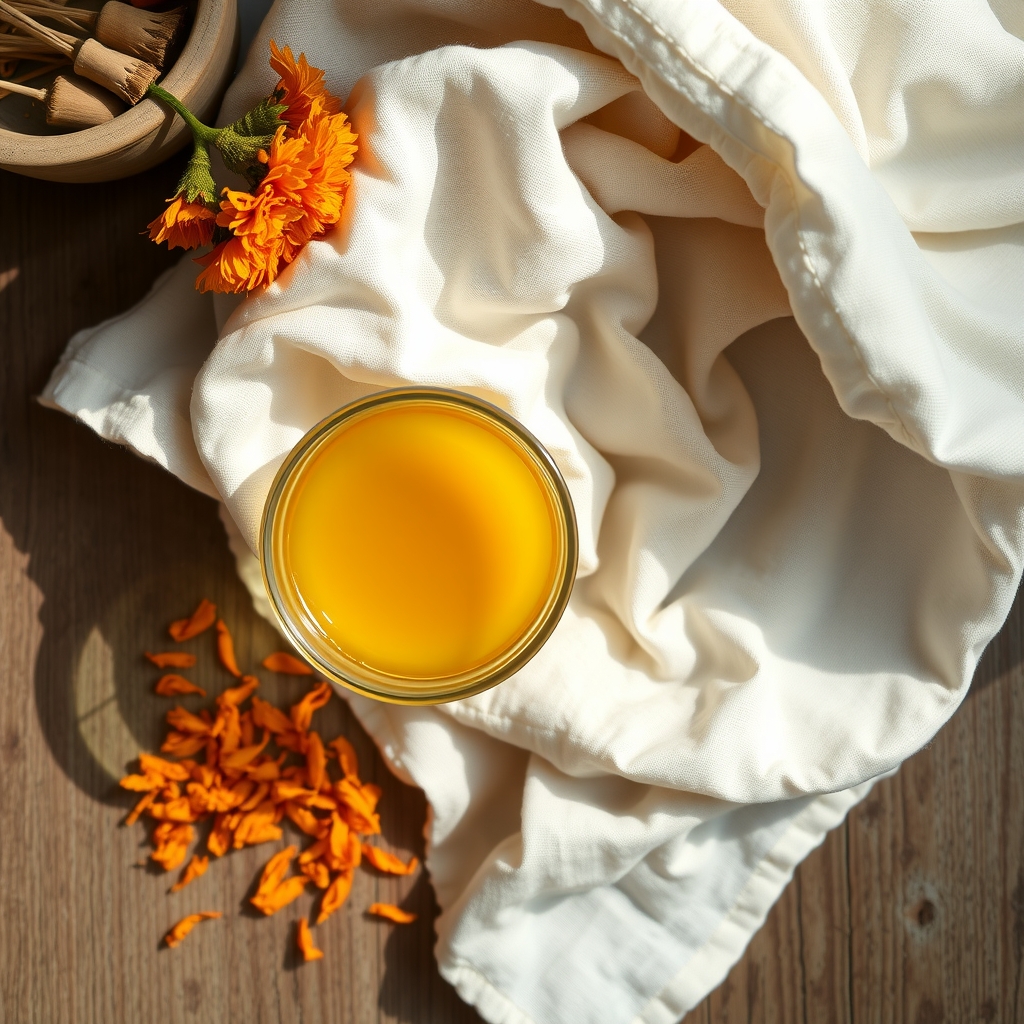
Calendula, also called pot marigold, has bright orange and yellow flowers that have been used on the skin for a very long time. Steeped in hot water and cooled, the dried flowers make a pale golden infusion that some people like to use as a gentle wash or soak for small patches of irritated skin.
It is a simple kitchen preparation, but it is not right for everyone. Calendula belongs to the daisy family, and allergic skin reactions do happen. This guide walks you through a basic wash, what the research really shows, and the cautions to check before anything touches your skin.
Why people use it
The European Medicines Agency recognizes calendula flower as a traditional herbal remedy for easing the symptoms of minor skin inflammation, such as mild sunburn, and to support the healing of small, minor wounds. That status is based on long-standing use, not on strong clinical trials.
The agency describes using a warm infusion of the flowers to soak a dressing, which is laid on the skin for 30 to 60 minutes, two to four times a day. A homemade wash follows the same idea: you make a light infusion, let it cool, and apply it with a clean cloth.
Simple Calendula Skin Wash
You need
- freshly boiled water150 ml (2/3 cup)
- dried calendula flowers (Calendula officinalis, pot marigold)1 to 2 g (about 1 to 2 tablespoons)
Method
- Wash your hands and use a clean heatproof bowl or jug.
- Put the dried flowers in the bowl and pour over the freshly boiled water. Cover and steep for 10 to 15 minutes.
- Strain through a fine sieve or a clean cloth, pressing the flowers gently.
- Let the infusion cool until it feels lukewarm or cool on the inside of your wrist, never hot.
- Do a patch test first: dab a little on a small area of the inner arm and wait 24 hours to check for redness or itching.
- If there is no reaction, soak a clean cotton cloth or gauze in the wash and hold it gently on the irritated area for a few minutes, or up to 30 minutes as a compress.
- Pat the skin dry with a clean towel and discard any leftover wash.
Tips
- Make a fresh batch each time rather than keeping it for days.
- Check the label: pot marigold is Calendula officinalis. French and African marigolds sold as bedding plants are a different plant.
- Use it only on unbroken skin or very small, clean grazes, never on deep cuts, burns that blister or anything that looks infected.
- Keep it away from your eyes.
What the evidence says
Evidence for calendula on the skin is modest. Memorial Sloan Kettering Cancer Center reports that some studies suggest calendula preparations used ahead of time may help with skin irritation from radiation therapy, but it also says larger studies are needed to confirm this.
Lab and animal studies show anti-inflammatory and antimicrobial activity, but those results do not prove that a homemade wash will help your skin. Most uses for cuts, burns and irritated skin are still described as traditional or purported rather than proven.
The honest summary: a calendula wash may be a soothing option for a small area of minor irritation, but it is not a treatment for a skin condition, an infection or a serious wound.
Know the difference from contact dermatitis
Ironically, irritated skin can sometimes be caused by what you put on it. The NHS explains that contact dermatitis is an itchy, dry, cracked or blistered rash triggered by touching a substance, either an irritant such as soap or an allergen. Symptoms usually appear within hours or days of contact.
If your skin gets redder, itchier or more blistered after using calendula, you may be reacting to the plant itself. Rinse the area with plain water, stop using it, and keep to a simple fragrance-free moisturizer. The NHS recommends using emollients often and avoiding whatever is triggering the reaction.
Questions people ask
Is calendula the same as the marigolds in my garden?
Not always. Calendula is pot marigold, Calendula officinalis. The French and African marigolds often sold as bedding plants belong to a different genus, so check the botanical name before you use any flowers on your skin.
How often can I use a calendula wash?
Traditional guidance describes applying a soaked dressing two to four times a day for 30 to 60 minutes. If you do not see improvement within a week, or the skin gets worse, stop and see a doctor.
Can I use calendula on my child's skin?
Calendula skin preparations are not recommended for children under 6 because there is not enough safety data. For older children, do a patch test first and talk to your pediatrician if they have allergies or eczema.
Sources
- European Union herbal monograph on Calendula officinalis L., flos — European Medicines Agency
- Calendula — Memorial Sloan Kettering Cancer Center
- Contact dermatitis — NHS
This article is for general information only and is not medical advice. Herbs can interact with medicines and health conditions. Talk to a doctor or pharmacist before trying a herbal remedy, especially if you are pregnant, breastfeeding, giving it to a child, or taking any medication.