Sugar and Olive Oil Lip Scrub: Gentle Recipe
A pinch of sugar and a few drops of olive oil can lift loose flakes from dry lips. It is a small treat, not a cure for chapped lips, and the real work is done by a good balm afterward.
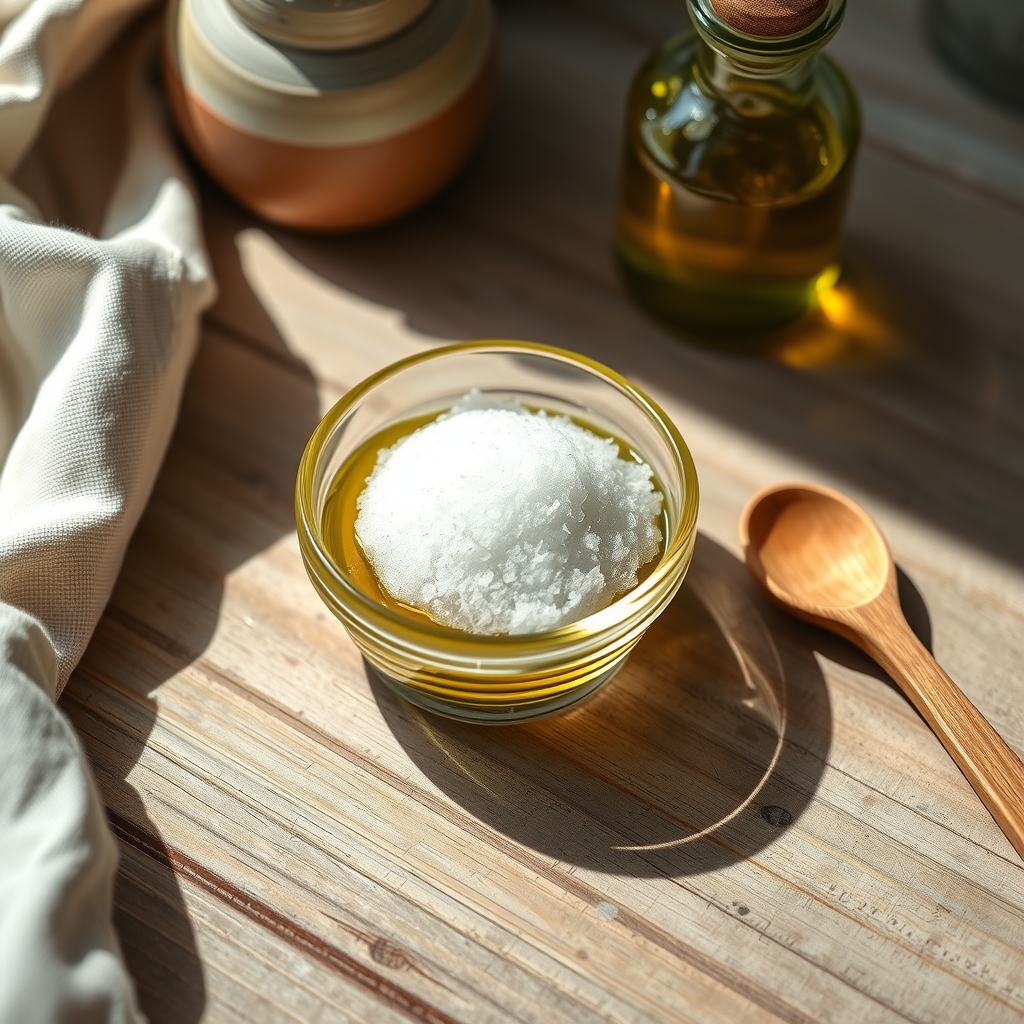
When your lips are dry and flaky, it is tempting to pick at the loose bits. A soft sugar and olive oil scrub is a kinder way to lift them, and it takes two ingredients from the kitchen.
This guide shows you how to make one, but it also explains why a scrub is optional. The lip care that dermatologists recommend is mostly about protecting your lips and leaving them alone, and that matters far more than any scrub.
Why people use it
Sugar crystals are small and dissolve in moisture, so they feel softer on the lips than many other scrubbing ingredients. Olive oil helps the sugar glide and makes the mixture easy to spread.
People mostly use a lip scrub for the feel: lips look smoother for a while and lipstick or balm goes on more evenly afterward. That is a cosmetic benefit, and a modest one.
Plain Sugar and Olive Oil Lip Scrub
You need
- fine white or caster sugar1 tsp
- olive oil1/2 tsp
Method
- Wash your hands well. Mix the sugar and olive oil in a small clean dish until it looks like wet sand.
- Check your lips first. If they are cracked, bleeding, sunburned or you have a cold sore, do not use the scrub.
- With a clean fingertip, dab a little onto your lips.
- Rub in tiny, very light circles for about 15 to 30 seconds. Do not press.
- Wipe off with a soft, damp cloth or rinse with lukewarm water.
- Straight away, apply a fragrance-free lip balm or a thin layer of white petroleum jelly.
Tips
- Once a week at most is plenty. Lips do not need regular scrubbing.
- Make a small amount fresh each time rather than keeping a jar that fingers keep dipping into.
- Do not share your lip scrub. The NHS advises against sharing lip balms because they can spread germs, and a scrub is no different.
What the evidence says
There are no studies on homemade sugar lip scrubs. It is worth knowing that the dry and chapped lip advice from the American Academy of Dermatology (AAD), the NHS and Cleveland Clinic does not mention scrubs at all. What they recommend instead is simple: stop licking, biting or picking your lips, apply a gentle, fragrance-free balm several times a day and at bedtime, use a lip balm with sun protection outdoors, and drink plenty of water.
The AAD notes that for very dry, cracked lips, a thick ointment such as white petroleum jelly seals in water longer than waxes or oils. So olive oil in a scrub is fine for a quick rub, but it is not the best thing to leave on your lips afterward.
The AAD's general advice on exfoliation also applies here: never exfoliate over open cuts or sunburn, and scrubbing too hard or too often leads to red, irritated skin. Lips are thin and delicate, so a scrub should be very gentle and occasional, if you use one at all.
What to leave out
Many lip scrub recipes add lemon, cinnamon, peppermint or other flavorings and scents. The AAD lists flavorings such as cinnamon, citrus, mint and peppermint, as well as fragrance, menthol, camphor and eucalyptus, as ingredients that can irritate lips. Keep your scrub plain.
The AAD also points out that a product which burns, stings or tingles is irritating your lips, not working harder. If your scrub stings, rinse it off and stop.
Questions people ask
Will a lip scrub heal chapped lips?
No. It can lift loose flakes, but healing comes from a gentle balm or ointment used several times a day, sun protection outdoors and not licking or picking your lips. Dermatologists say most chapped lips improve within 2 to 3 weeks of that care.
Can I use honey or brown sugar instead?
Brown sugar works but has slightly larger, rougher crystals, so be extra gentle. A little honey can be stirred in for a stickier paste, but rinse it off well afterward. Keep it plain otherwise.
Is olive oil a good lip balm?
It feels nice, but dermatologists point out that a thick ointment such as white petroleum jelly seals in moisture longer than oils or waxes. Use the oil for the scrub, then follow with a proper balm.
Sources
- 7 dermatologists' tips for healing dry, chapped lips — American Academy of Dermatology
- Sore or dry lips — NHS
- Chapped Lips (Cheilitis): Causes, Treatment and Prevention — Cleveland Clinic
- How to safely exfoliate at home — American Academy of Dermatology
This article is for general information only and is not medical advice. Herbs can interact with medicines and health conditions. Talk to a doctor or pharmacist before trying a herbal remedy, especially if you are pregnant, breastfeeding, giving it to a child, or taking any medication.