Spearmint Tea: How It Differs From Peppermint
Spearmint is the softer, sweeter cousin of peppermint. Here is how to tell them apart, how to brew a good cup, and what the small amount of research really shows.
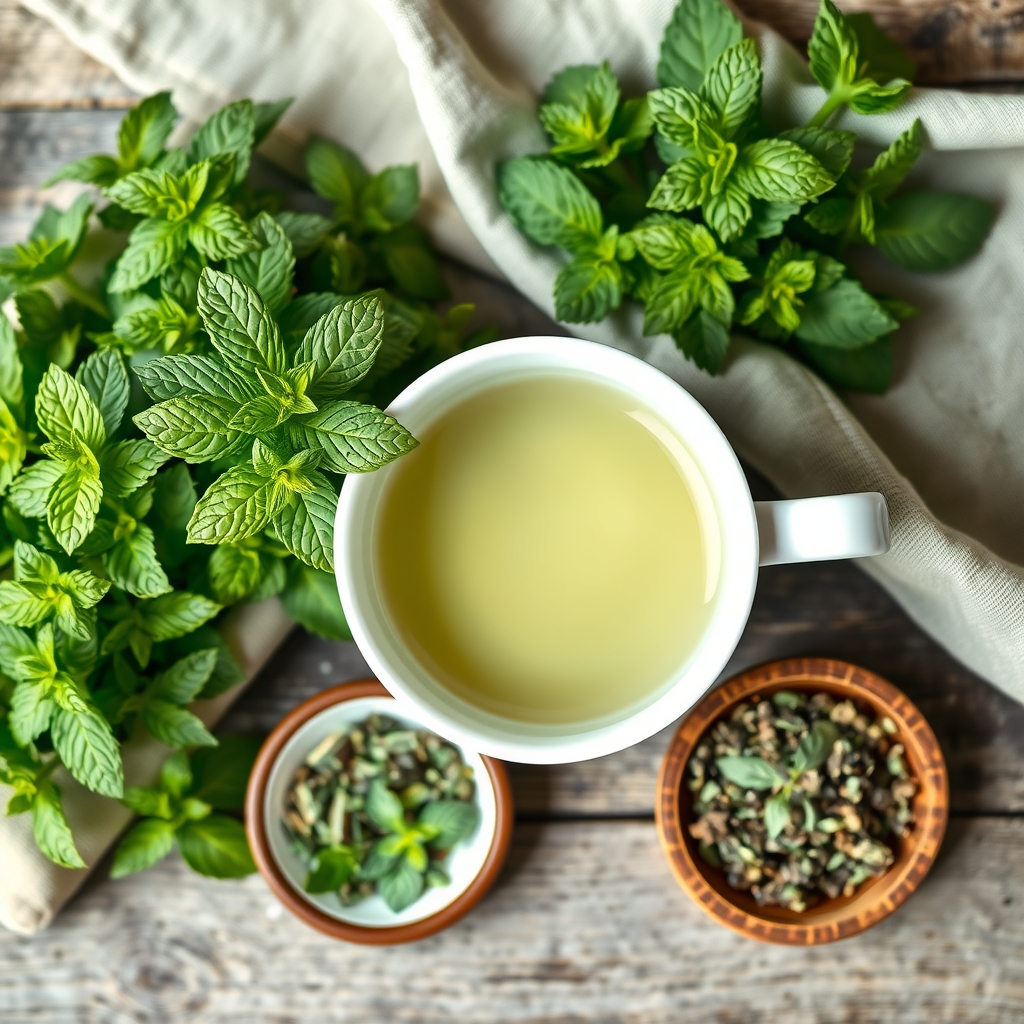
If you have ever grown mint in a garden pot, there is a good chance it was spearmint. It is the mint most cooks reach for in salads, sauces and summer drinks, and it makes a gentle, slightly sweet tea.
Many people use the words spearmint and peppermint as if they were the same thing. They are related, but they taste different and they are not interchangeable in a recipe. This guide explains the difference, shows you how to brew spearmint well, and gives you an honest picture of the evidence.
Spearmint and peppermint: telling them apart
Peppermint is actually a cross between two mints. NCCIH describes it as a natural hybrid of water mint and spearmint. So spearmint is one of peppermint's parents, not a cousin.
In the cup, the difference is easy to notice. Peppermint has a strong, cooling bite that seems to fill your nose. Spearmint is rounder and sweeter, with less of that icy rush. Many people who find peppermint too sharp enjoy spearmint, and it blends well with other herbs or a slice of lemon.
In the garden, spearmint usually has bright green, pointed, crinkled leaves on green stems. Peppermint leaves tend to be darker, sometimes with purple-tinged stems. The surest test is to rub a leaf and smell it.
Fresh Spearmint Tea
You need
- water, just off the boil250 ml (1 cup)
- fresh spearmint sprigs, or 1 to 2 tsp dried spearmint8 to 10
- thin slice of lemon, optional1
Method
- Rinse the fresh sprigs well under cold water and shake them dry.
- Gently crush the leaves between your palms and put them in a mug or teapot.
- Pour the hot water over the leaves and cover the mug with a saucer so the aroma stays in.
- Steep for 5 to 7 minutes. Taste after 5 minutes and steep longer if you want it stronger.
- Strain or lift out the leaves, add a lemon slice if you like, and let it cool to a comfortable temperature.
Tips
- Spearmint tea is lovely cold. Brew it double strength, cool it, then pour it over ice.
- Pick the leaves from the top of the stems, where they are youngest and most tender.
- Avoid boiling the leaves hard in a pan, which can make the tea taste flat and grassy.
What the evidence says
Research on spearmint is thin. A 2021 review of spearmint's traditional uses and chemistry found it has long been used for colds, coughs, fever and digestive complaints. The studies it summarized were mostly lab and animal work on extracts and oils, and the authors called for proper human clinical trials and more safety research.
One area that has drawn attention is hormones. A small study looked at spearmint tea and androgen levels in women with hirsutism, which means unwanted hair growth linked to male-type hormones. Findings like this are early and come from very few people. They are not a reason to use spearmint as a treatment, but they are a reason to be thoughtful if you are pregnant or on hormone therapy.
Peppermint has more research behind it, but mostly as enteric-coated oil capsules for irritable bowel syndrome. NCCIH says there is not enough evidence to know whether peppermint leaf helps any condition. The same caution applies to spearmint: enjoy it as a pleasant drink.
Fresh or dried
Fresh spearmint gives a bright, grassy cup. Use a generous handful of leaves and tear or bruise them lightly before steeping so they release their flavor.
Dried spearmint is more concentrated, so you need less. Store it in a sealed jar away from light and heat, and use it within a year for the best flavor.
Questions people ask
Can I use spearmint instead of peppermint in a recipe?
Yes, but expect a softer, sweeter flavor with less cooling bite. Use a little more spearmint if you want a stronger taste.
Does spearmint tea have caffeine?
No. Plain spearmint tea is caffeine free. Blends that mix mint with green or black tea do contain caffeine, so check what you are buying.
Will spearmint tea balance my hormones?
There is not enough evidence to say that. The human studies are small and short. If you are worried about your hormones, talk to your doctor rather than relying on a tea.
Sources
- Peppermint Oil: Usefulness and Safety — NCCIH
- The traditional uses, phytochemistry and pharmacology of spearmint (Mentha spicata L.): A review — Journal of Ethnopharmacology (PubMed)
- Effect of spearmint (Mentha spicata Labiatae) teas on androgen levels in women with hirsutism — Phytotherapy Research (PubMed)
- Are You Considering a Complementary Health Approach? — NCCIH
This article is for general information only and is not medical advice. Herbs can interact with medicines and health conditions. Talk to a doctor or pharmacist before trying a herbal remedy, especially if you are pregnant, breastfeeding, giving it to a child, or taking any medication.