Soumada: The Almond Syrup Drink of the Greek Islands
Soumada is a sweet almond syrup stirred into ice-cold water, a milky, fragrant drink served at island weddings and on hot afternoons. Here is a home recipe, its Mediterranean cousins, and two safety points you should not skip.
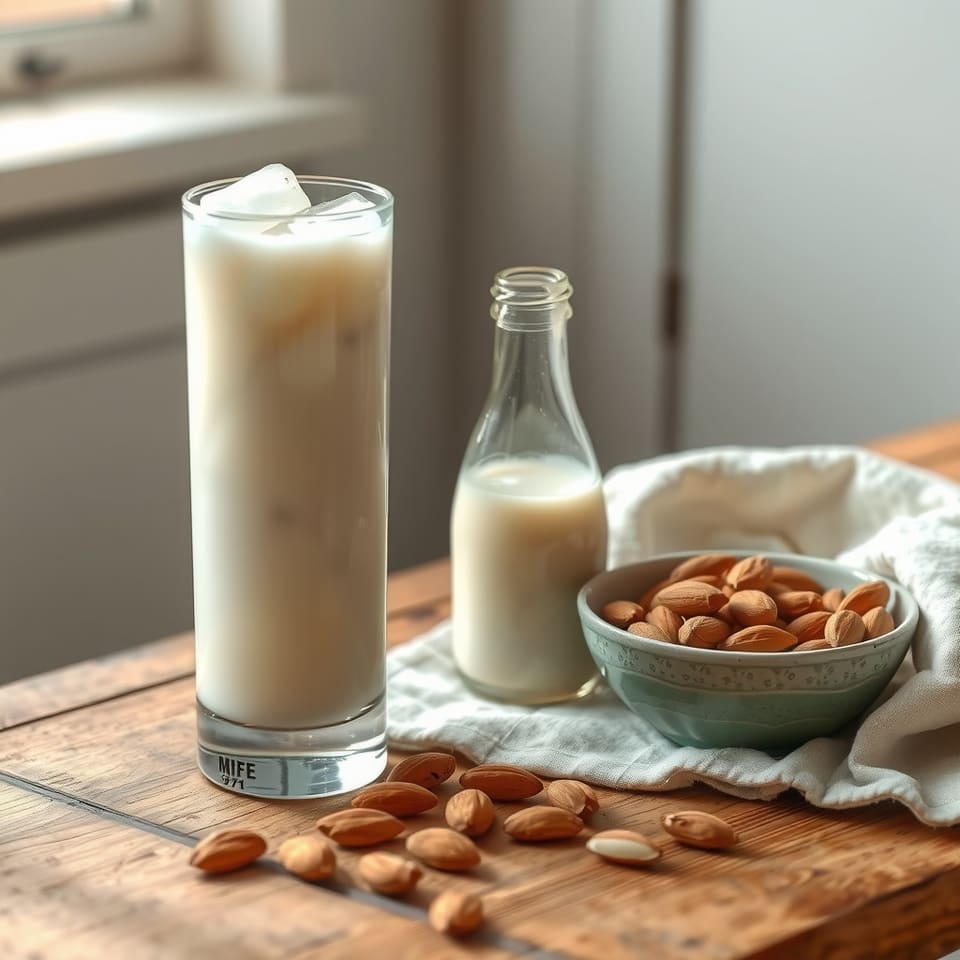
Almonds have been turned into drinks all around the Mediterranean for centuries. In France and much of Europe, orgeat is an almond syrup used in drinks. In Spain, horchata de almendras is a chilled almond milk, and in Sicily and Puglia, latte di mandorla is a summer classic. In Greece, especially on Crete and other islands, and in Cyprus, the local version is soumada: a thick, sweet almond syrup that turns milky white when you stir it into cold water.
Soumada has long been a drink of hospitality, often offered to guests at weddings and celebrations. Making it at home takes a little patience but very few ingredients. Before you start, there are two safety points to know: one about bitter almonds and one about nut allergy.
What makes soumada different
Most almond drinks are thin, fresh almond milks. Soumada is concentrated. The almonds are soaked, ground and squeezed to make a rich almond milk, which is then cooked with sugar into a syrup. A small amount goes into each glass, and the rest keeps in the fridge.
The flavor is soft and creamy, with a gentle marzipan note. Some traditional recipes add a few bitter almonds to make that note stronger. This recipe leaves them out and uses a little orange blossom water or lemon peel for fragrance instead. The reason is below.
Homemade Soumada (Almond Syrup Drink)
You need
- blanched sweet almonds, without skins200 g (1 1/2 cups)
- water, for soaking and blending500 ml (2 cups)
- sugar300 g (1 1/2 cups)
- strip of lemon peel, optional1
- orange blossom water or rose water, optional1 tsp
- soumada syrup, to serve30 ml (2 tbsp) per glass
- ice-cold water, with ice200 ml (about 3/4 cup) per glass
Method
- Soak the almonds in the 500 ml of water in the fridge for at least 4 hours or overnight.
- Blend the almonds and their soaking water for 2 to 3 minutes until very smooth.
- Pour into a sieve lined with clean muslin or a thin cotton cloth set over a bowl. Gather the cloth and squeeze firmly to get out as much almond milk as you can.
- Pour the almond milk into a heavy pan, add the sugar and lemon peel, and warm over low heat, stirring, until the sugar dissolves.
- Simmer very gently for about 5 minutes, stirring often. Watch closely, as it can foam up and boil over.
- Remove from the heat, take out the lemon peel and let the syrup cool. Stir in the orange blossom or rose water.
- Pour into a clean bottle, close and refrigerate. Shake before using.
- To serve, stir 30 ml (2 tbsp) of syrup into 200 ml of ice-cold water in a tall glass with ice.
Tips
- Do not throw away the almond pulp left in the cloth. Spread it on a tray to dry in a low oven and use it in cakes, cookies or granola.
- Because it is made with fresh almond milk, treat the syrup as a fresh food: keep it in the fridge, make small batches and use it within a few days. Throw it away if it smells sour.
What the evidence says
Bitter almonds are not the same as the sweet almonds sold for eating. Germany's Federal Institute for Risk Assessment (BfR) explains that bitter almonds and bitter apricot kernels contain cyanogenic glycosides, including amygdalin, which can release toxic cyanide. Small amounts are largely dealt with by the body, but larger amounts can cause acute poisoning. The BfR advises adults to eat no more than one bitter almond a day, ideally none, and says children should not eat them at all.
Because a batch of syrup is shared among many glasses and many people, including children, it is simplest and safest to make soumada with sweet almonds only.
The second fact is about sugar. Soumada is a syrup, so most of what you drink is sugar. The NHS counts sugars in syrups as free sugars and advises adults to have no more than 30 g a day, with lower limits for children. With the recipe below, a 30 ml (2 tbsp) serving contains roughly 15 g of added sugar, about half of an adult's daily limit. Enjoy it as an occasional treat rather than an everyday drink.
Almonds and nut allergy
Almonds are tree nuts, and Cleveland Clinic lists them among the most common tree nut allergens. Tree nut allergy can cause anaphylaxis, a severe reaction that can affect breathing and blood pressure. People with a known allergy are advised to carry an epinephrine auto-injector and use it at the first signs of a severe reaction.
If you serve soumada at a party, tell guests it is made from almonds and keep it apart from other drinks. Almond also hides in marzipan, nougat, pralines and nut extracts, so take care with almond sweets served alongside it.
Questions people ask
Is soumada the same as orgeat?
They are close cousins. Both are sweet almond syrups. Orgeat is usually thinner and often flavored with orange blossom water, while soumada is usually thicker and milkier.
Can I make soumada with store-bought almond milk?
You can, but it will taste much lighter than soumada made from soaked, freshly squeezed almonds, which gives the rich flavor the drink is known for.
Is coconut safe if I am allergic to almonds?
Cleveland Clinic notes that coconut is a fruit, not a tree nut, and is not considered a major allergen in the US. Still, check with your allergist before trying new foods.
Sources
- Tree Nut Allergy — Cleveland Clinic
- Preparing (green) smoothies: what should be considered? — German Federal Institute for Risk Assessment (BfR)
- How does sugar in our diet affect our health? — NHS
- Amygdalin (About Herbs) — Memorial Sloan Kettering Cancer Center
This article is for general information only and is not medical advice. Herbs can interact with medicines and health conditions. Talk to a doctor or pharmacist before trying a herbal remedy, especially if you are pregnant, breastfeeding, giving it to a child, or taking any medication.