Kombucha Safety at Home: Jars, Mold and Acidity
Kombucha is easy to brew and fun to experiment with, but it is a living, acidic drink. A few simple rules about jars, cleanliness, acidity and amounts make the difference between a good batch and a risky one.
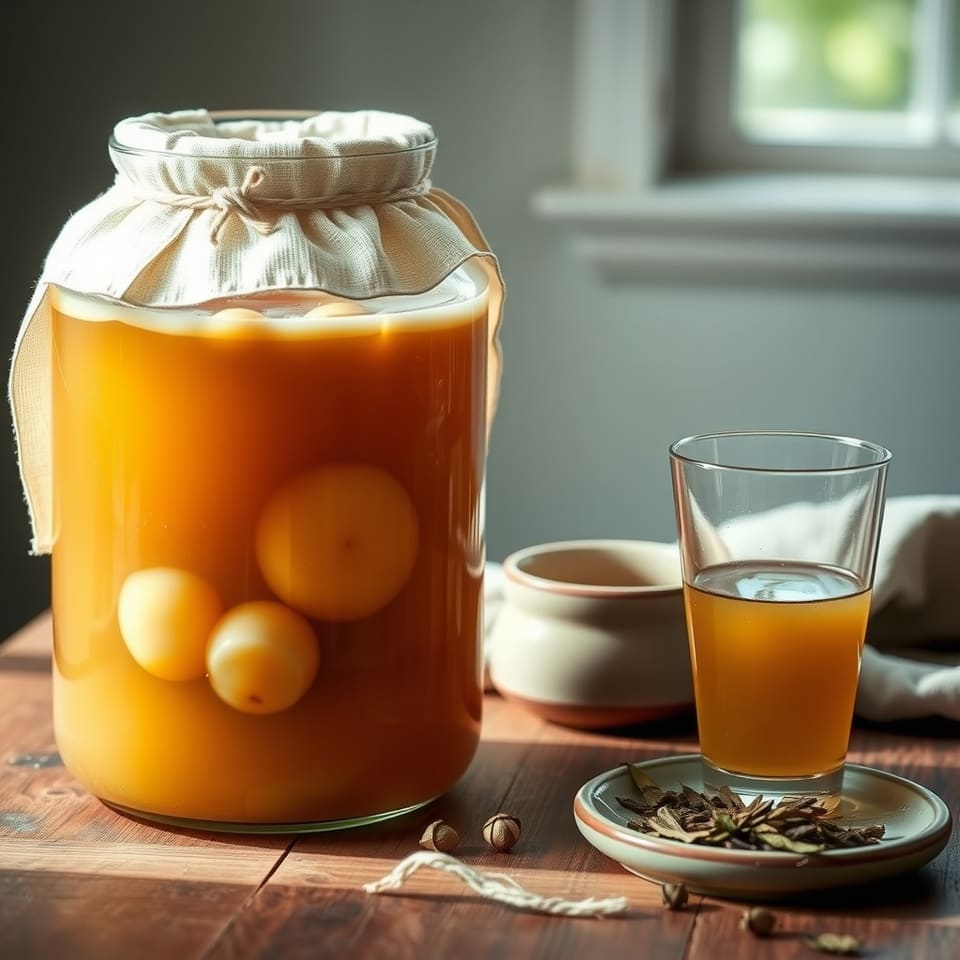
Kombucha is sweetened tea, usually black or green, fermented by a rubbery disc of yeast and bacteria often called a SCOBY. Over a week or so it turns tangy, lightly fizzy and much less sweet. Many people now brew it in their kitchens from a culture a friend has passed on.
Home brewing can be done safely, but the safety guides keep returning to the same few risks: the wrong container, poor hygiene, a brew that is not acidic enough, and drinking a lot of it. This guide walks through each one.
Why acidity is your main safety net
In the jar, yeasts turn sugar into a little alcohol, and acetic acid bacteria turn much of that alcohol into acid. A University of Georgia Extension guide explains that the brew becomes steadily more acidic, and that this acidity is what helps keep harmful bacteria from growing.
That is also why a splash of finished kombucha goes into every new batch. Colorado State University advises at least 250 ml (1 cup) of starter liquid per 3.8 liters (1 gallon), because it lowers the pH quickly. The same guide says finished kombucha should be below pH 4.2 but not lower than 2.5. If it has not dropped to 4.2 within seven days, the culture may be contaminated or the room too cool. Inexpensive pH strips let you check.
Containers, cleanliness and mold
Never brew or store kombucha in glazed ceramic pots, earthenware or lead crystal. Because the drink is acidic, it can draw lead and other metals out of the glaze. Mayo Clinic links ceramic pots with lead in the glaze to lead poisoning, and the CDC advises against both ceramic and lead crystal. Use food-safe glass, plastic or stainless steel instead.
Wash your hands and equipment well. Cover the jar with a tightly woven cloth, not loose cheesecloth, held on with a rubber band. Learn what mold looks like: dry, fuzzy patches, white or colored, on the culture or the surface of the liquid. If you see that, throw away both the liquid and the culture and clean everything thoroughly. Colorado State warns that a toxic mold, Aspergillus, can contaminate cultures.
What the evidence says
Kombucha is often promoted for everything from digestion to immunity. Mayo Clinic says there is not enough proof that it has the health benefits some people claim, and there are few good human studies. Harms have been reported, including stomach upset, infections and allergic reactions.
The most serious report came from Iowa in 1995, described by the CDC. Two women who had drunk home-brewed kombucha daily for about two months became severely ill with acidosis, and one died. Investigators did not prove the tea caused the illnesses, and over a hundred other people using cultures from the same source were well. Still, one of the women had just tripled her daily amount and doubled the brewing time. The CDC noted kombucha may contain up to 1.5 percent alcohol and that about 120 ml (4 oz) a day may not harm healthy people, while the risks of larger amounts are unknown.
A safer brewing checklist
1. Follow a tested recipe from a reliable source, as the University of Georgia advises, rather than guessing amounts. 2. Brew the tea with water hotter than 74 °C (165 °F) and let it cool before adding the culture. 3. Add at least 250 ml (1 cup) of starter liquid per 3.8 liters (1 gallon). 4. Ferment at about 22 to 29 °C (72 to 84 °F), out of direct sunlight, for 7 to 10 days. 5. Check the pH: below 4.2, but not below 2.5. 6. Discard any batch with fuzzy mold. 7. If you bottle it for fizz, remember that yeast keeps working in a closed bottle, adding pressure and some alcohol.
Questions people ask
Is store-bought kombucha safer than homemade?
It is more predictable. In the US, kombucha sold as nonalcoholic must stay below 0.5 percent alcohol, even after shipping, and the CDC reported that the FDA found no harmful organisms at the commercial producers it checked. Mayo Clinic advises that if you drink kombucha, it should come from a trusted source.
Can I brew kombucha longer to make it stronger?
It becomes more acidic over time, and University of Georgia notes that too much acidity raises its own concerns. Most guides suggest 7 to 10 days, and the pH should not drop below 2.5.
Does home-brewed kombucha contain alcohol?
Yes, a little. The CDC measured 0.7 to 1.3 percent in the Iowa samples and says kombucha can reach up to 1.5 percent. Colorado State notes that yeast can keep adding fizz and alcohol after the drink is sealed in bottles.
Sources
- What's the Word on Homemade Kombucha? — University of Georgia Cooperative Extension
- Kombucha — Colorado State University Food Safety
- Unexplained Severe Illness Possibly Associated with Consumption of Kombucha Tea, Iowa, 1995 — CDC (MMWR)
- What is kombucha tea? Does it have any health benefits? — Mayo Clinic
This article is for general information only and is not medical advice. Herbs can interact with medicines and health conditions. Talk to a doctor or pharmacist before trying a herbal remedy, especially if you are pregnant, breastfeeding, giving it to a child, or taking any medication.