Sideritis Species Guide: Which Mountain Tea Is Which?
Mountain tea is not one plant but several closely related Sideritis species from the mountains of the Balkans and the Mediterranean. Here is how to tell them apart, why wild stands need care, and what to look for when you buy.
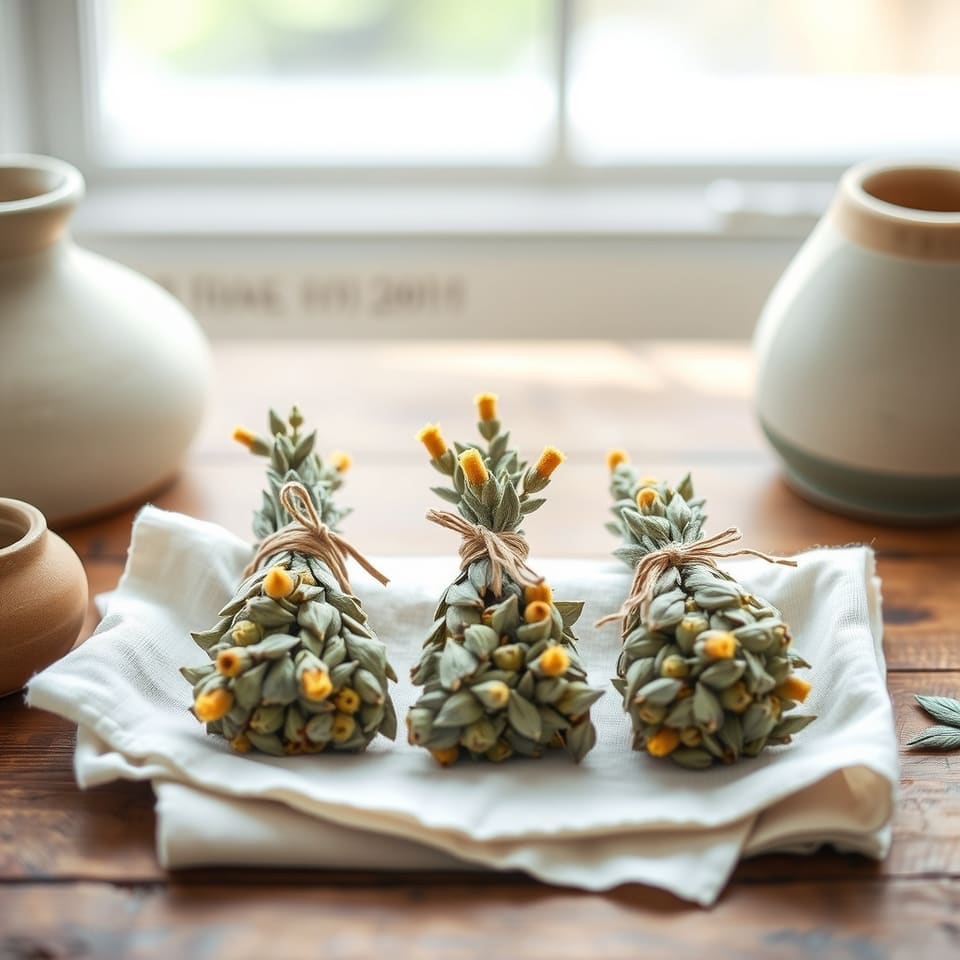
Pick up a bundle labelled mountain tea at a market and you might be holding one of several different plants. They all belong to Sideritis, a genus in the mint family, and they look alike: silvery, often furry leaves and spikes of small yellow flowers.
This guide is about the plants themselves. It covers the species most often brewed as mountain tea, where each one grows, how they differ, why some wild populations are under pressure, and how to buy with care. For brewing basics, see our Greek mountain tea guide.
The main species used as mountain tea
The European Medicines Agency (EMA) has assessed four species together as one herbal substance: Sideritis scardica, Sideritis raeseri, Sideritis syriaca and Sideritis clandestina. What is used is the dried, cut, above-ground part of the plant, gathered when it flowers.
Sideritis scardica is the most widely traded. According to the EMA assessment report, it grows on mountain rocks from northern Greece, including Mount Olympus and Pelion, across Albania, North Macedonia, Bulgaria, Serbia and Turkey. Local names include Olympus tea and Pirin tea. A field study in northern Greece found it on mountains between about 1,050 and 2,040 m (3,450 and 6,700 ft).
Sideritis raeseri grows in the mountains of mainland Greece, such as Parnassos and Velouchi, and gives its name to the local tea of those mountains. A review of this species notes that its dried flowering tops are brewed as mountain tea in Balkan folk medicine.
Sideritis syriaca is the Cretan malotira. It grows wild on Crete and is also cultivated there, and its wider range stretches across mountain rocks from Sicily to Crimea. Sideritis clandestina is found only in the southern Peloponnese, on mountains such as Taygetos.
Other species are used locally too. In Cyprus, for example, Sideritis cypria grows on the rocky cliffs of the Kyrenia Mountains. It is not one of the four species covered by the EMA assessment.
What the evidence says
The species differ in chemistry. The EMA report notes that the small amount of essential oil in S. scardica is mainly made up of pinenes and carvacrol, while S. raeseri oil is richer in sesquiterpenes, a different group of aroma compounds. EMA also notes that another study described both oils differently, so the picture is not settled. All four share flavonoids and other plant polyphenols.
What these differences mean for your health is unknown. EMA recognizes all four together as a traditional herbal medicine for relief of cough with a cold and mild stomach and gut discomfort in adults. This is based on long use, not on clinical trials, and EMA found no clinical studies at the time of its assessment. No species has been shown to work better than another.
Most other research is laboratory work. The review on S. raeseri describes antioxidant and other effects in lab tests, which do not show what a cup of tea does in people.
Protection and wild harvesting
Much mountain tea is still picked in the wild. EMA reports that only some species are cultivated, mainly in Greece and Bulgaria, although the cultivated area is growing. In Bulgaria, Pirin tea is covered by the country's Medicinal Plants Act.
S. scardica is listed as near threatened on the IUCN Red List. Researchers who studied it in northern Greece report that the forest service sets yearly collection rules, but that illegal picking, including pulling up whole plants by the roots, together with climate change and grazing, has left some populations badly fragmented. Sideritis cypria is listed as vulnerable.
If you pick your own, learn the local rules first, never take the roots, and leave most of the plants untouched so they can set seed. Traditionally only the flowering stem tips are cut, between June and September, and dried in the shade.
Buying tips, step by step
Step 1: Look for the Latin species name on the label, not just mountain tea. If the seller cannot tell you the species, ask where and how it was grown.
Step 2: Choose cultivated mountain tea, or a seller who can tell you it was harvested legally. Cultivation takes pressure off wild stands.
Step 3: Check the bundle. You want dried stems with leaves and flower spikes, as these are the parts that are traditionally used. Avoid anything damp, musty or with roots attached.
Step 4: Store it in a sealed jar away from light and heat.
Step 5: Brew it as EMA describes for adults: 2 to 4 g of the dried herb in 150 to 200 ml (about 2/3 to 7/8 cup) of boiling water, two to three times a day.
Questions people ask
Which Sideritis species makes the best tea?
There is no evidence that one species is better for health. EMA assessed the four main species together. Taste is personal, so try more than one and see which you prefer.
Is malotira the same as mountain tea?
Malotira is the Cretan name for Sideritis syriaca, one of the four species EMA groups together as mountain tea.
Can I pick mountain tea on a hike?
Only if local rules allow it. Wild S. scardica is near threatened and illegal picking has harmed some populations. Never pull up roots, and buying cultivated tea is the gentler choice.
Sources
- Assessment report on Sideritis scardica, S. clandestina, S. raeseri, S. syriaca, herba — European Medicines Agency
- Traditional uses, chemical composition and biological activities of Sideritis raeseri — Journal of the Science of Food and Agriculture (PubMed)
- Abundance and Phenotypic Diversity of the Medicinal Sideritis scardica in Northern Greece — Sustainability (MDPI), peer-reviewed
- The Real Dirt: Sideritis cypria — University of California Agriculture and Natural Resources
This article is for general information only and is not medical advice. Herbs can interact with medicines and health conditions. Talk to a doctor or pharmacist before trying a herbal remedy, especially if you are pregnant, breastfeeding, giving it to a child, or taking any medication.