Cistus Tea (Rockrose): A Mediterranean Herb Guide
Rockroses cover dry hillsides around the Mediterranean, and their leaves make a pleasant, slightly resinous tea. It is often called a super tea for colds. Here is what the studies really show, and how to make a good cup.
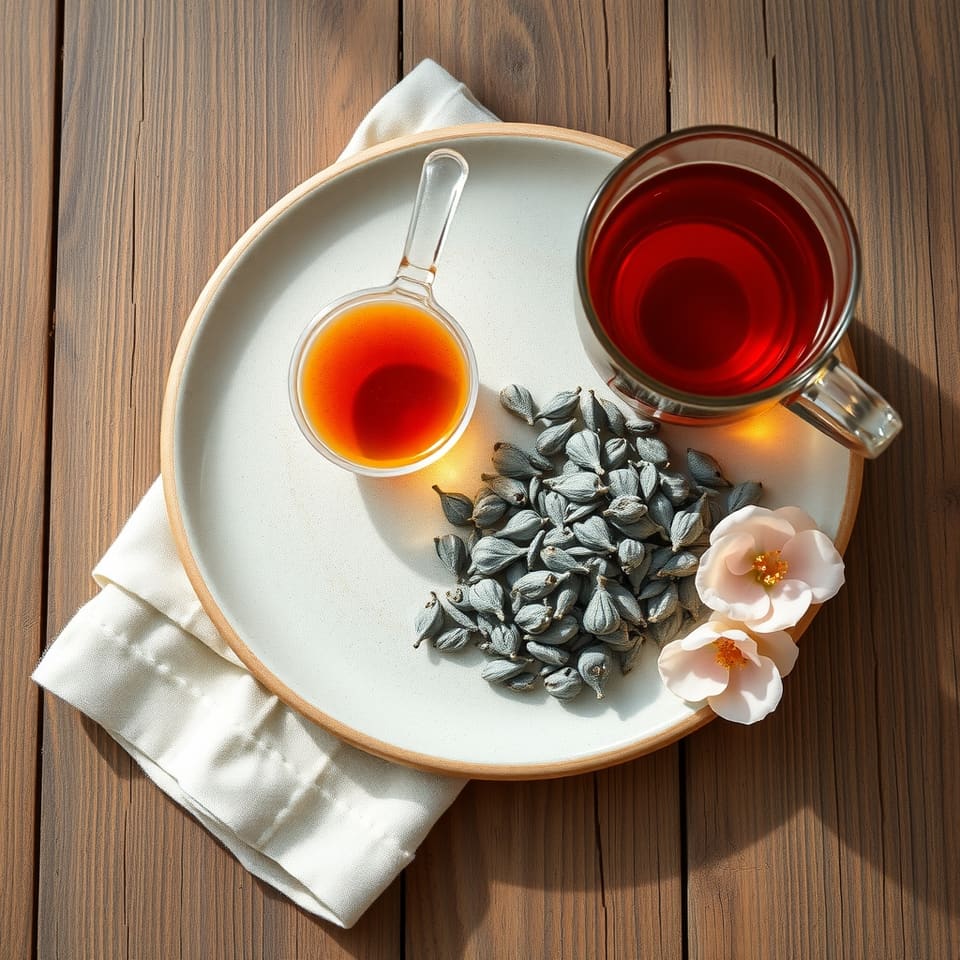
In late spring, the dry hills around the Mediterranean light up with the crinkled pink and white flowers of rockroses. These tough, sun-loving shrubs belong to the genus Cistus, and their gray-green leaves have a warm, slightly sticky, resinous scent.
In recent years, cistus tea has become popular in health food shops far beyond the Mediterranean, often with big promises attached. It is a lovely cup, but the science behind it is thinner than the labels suggest.
Meet the rockrose
There are several species of Cistus. Many cistus teas are made from Cistus incanus, sometimes written Cistus x incanus, a shrub of the Mediterranean region.
The tea is made from the dried leaves and flowering tops. Keep in mind that the studies below tested cistus extracts, not a home-brewed cup.
Simple Cistus Tea
You need
- dried cistus leaves and flowering tops1 to 2 tsp
- water, just off the boil250 ml (1 cup)
- thin slice of lemon, optional1
- honey, optional1 tsp
Method
- Put the dried cistus in a teapot or a mug with an infuser.
- Pour over the hot water and cover to keep in the aroma.
- Steep for 5 to 8 minutes. A shorter steep gives a lighter, less astringent cup.
- Strain, then add lemon or honey to taste.
- Let it cool a little before drinking.
Tips
- The flavor is mild, slightly bitter and a little resinous. A strip of orange peel or a sprig of mint softens it.
- Cistus tea is also good cold. Make it double strength, let it cool, and pour it over ice.
- Store dried leaves in an airtight jar away from heat and light.
What the evidence says
Cistus leaves are rich in polyphenols, including tannins called ellagitannins. In lab studies, cistus extracts have shown activity against certain bacteria and viruses. One recent study, for example, tested a cistus extract and its main compounds against viruses and bacteria grown in cells. Results like these explain the research interest, but cells in a dish are very different from a person with a cold.
Evidence in people is very limited. A randomized, placebo-controlled study published in 2009 tested a cistus extract product, called CYSTUS052, in people with upper respiratory infections. A single study of one specific product is not enough to show that a home cup of cistus tea will prevent or shorten a cold.
A short Polish overview from 2018 even called cistus the queen of teas, listing antioxidant, antiviral, antibacterial and immune effects and recommending it as a daily drink. That article is enthusiastic, but it is an overview, not a clinical trial. The fair summary is that cistus is an interesting, pleasant herbal tea with promising lab results and very little proof of health effects in people.
Is it safe?
Cistus is widely sold as an everyday herbal tea, but there is little published safety research on it. We found no good studies on its use during pregnancy or breastfeeding, in children, or alongside medicines.
That does not mean it is dangerous. It means that, as with any herbal tea, moderate amounts are the sensible choice, and anyone with a health condition or on regular medicine should check with a pharmacist first.
Questions people ask
Does cistus tea help with colds?
Lab studies show activity against some viruses, and one 2009 study tested an extract product in people with respiratory infections. That is not enough to say the tea helps, so treat it as a comforting warm drink.
Can I drink cistus tea during pregnancy?
We found no studies on cistus in pregnancy or breastfeeding. Until there is better safety information, choose a herbal tea that has been studied, and ask your doctor or midwife.
Does cistus tea contain caffeine?
Pure cistus tea is not made from the tea plant, so it does not contain the caffeine found in black or green tea. Check the label of blends, which sometimes mix in green tea.
Sources
- Cistus incanus (CYSTUS052) for treating patients with infection of the upper respiratory tract. A prospective, randomised, placebo-controlled clinical study (Antiviral Research, 2009) — PubMed, NIH
- Cistus incanus: a natural source of antimicrobial metabolites — PubMed, NIH
- Cistus - queen of teas (Polski Merkuriusz Lekarski, 2018) — PubMed, NIH
- Common cold — NHS
This article is for general information only and is not medical advice. Herbs can interact with medicines and health conditions. Talk to a doctor or pharmacist before trying a herbal remedy, especially if you are pregnant, breastfeeding, giving it to a child, or taking any medication.