Sage Tea to Drink: How Much Is Too Much
A cup of sage tea is an old European habit after heavy meals. It is also one of the few kitchen herbs where the amount really matters, because of a compound called thujone.
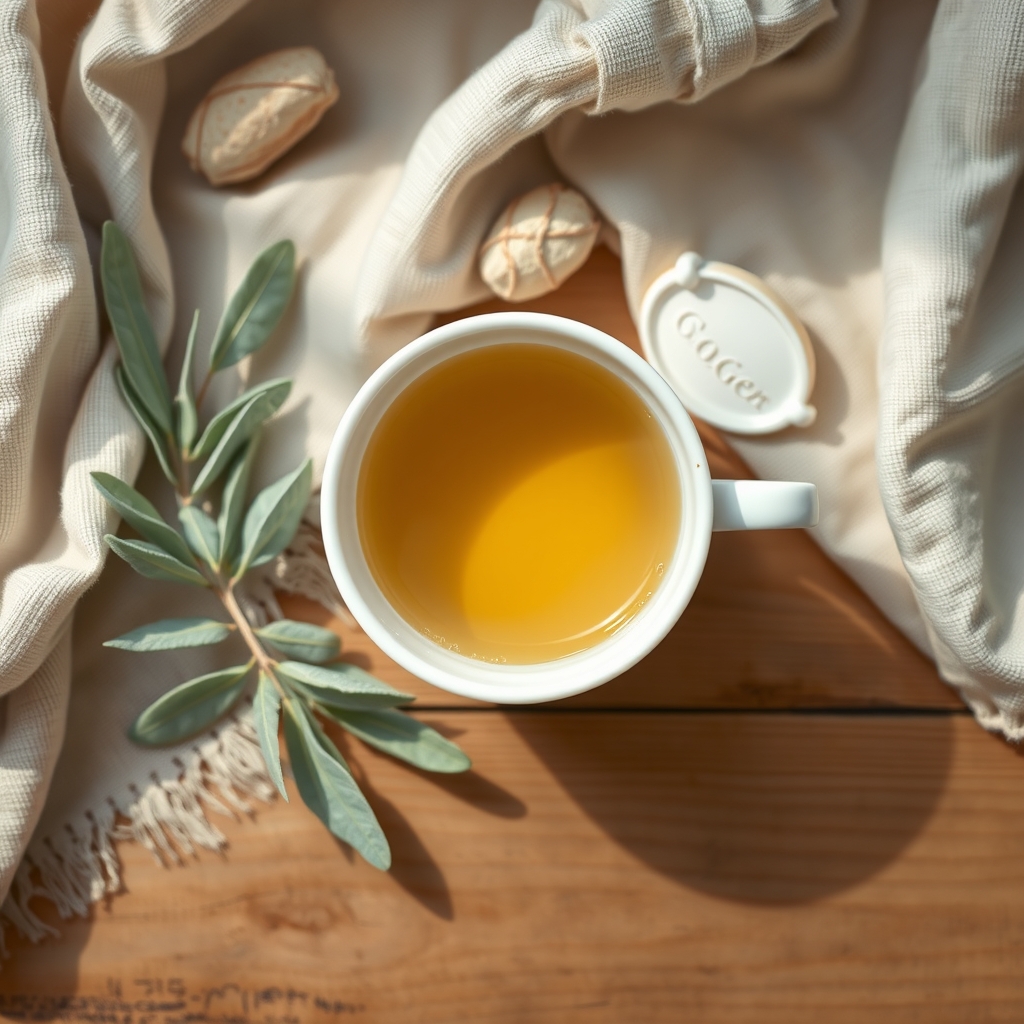
Common sage (Salvia officinalis) is best known for stuffing and brown-butter pasta, but in many European homes it is also brewed as a tea. People reach for it after a rich meal or to calm sweating.
Sage is likely safe in the amounts used in food. When you drink it as a tea, though, you take in more, and sage contains thujone, a compound that can be toxic in large amounts. This guide is about drinking sage tea: how much, how often, for how long, and who should avoid it.
Why people drink sage tea
The European Medicines Agency recognizes sage leaf as a traditional herbal medicine taken by mouth for two purposes in adults. The first is relief of mild indigestion, such as heartburn and bloating. The second is relief of excessive sweating.
In the US, sage is also marketed as a dietary supplement for menopause symptoms, memory and cholesterol.
Sage Tea for Drinking
You need
- freshly boiled water150 ml (2/3 cup)
- dried sage leaf, crumbled, or 4 to 5 fresh leaves1 to 2 g (1 to 2 teaspoons)
- lemon, optional1 thin slice
Method
- Put the sage in a cup or small teapot.
- Pour over the freshly boiled water and cover.
- Steep for 5 to 10 minutes, then strain. Do not leave the leaves sitting in the cup.
- Let it cool until comfortably warm. Add lemon if you like and sip slowly after a meal.
Tips
- Measure your sage rather than adding handfuls. More leaves means more thujone.
- Keep to three cups a day at most and take breaks rather than drinking it every day for months.
What the evidence says
The European recognition rests on long-standing use, not on strong clinical trials. The US National Center for Complementary and Integrative Health says research on sage is limited and firm conclusions cannot be drawn.
A few small studies suggest sage may reduce how often menopausal hot flashes happen, and a few suggest it may help memory or attention in healthy people. These studies are small, and none show that a cup of sage tea treats any condition.
Thujone: why the amount matters
Thujone is a natural compound in common sage. In high doses it affects the nervous system, and the most prominent sign of poisoning is seizures. The amount in sage leaves varies, which is why European rules require herbal medicines containing thujone to state the thujone level for each batch.
European experts concluded that a daily intake in the range of 3 to 7 mg of thujone does not raise special concerns for adults. You cannot measure that at home, so the practical answer is to stick to the amounts described below and not to brew extra-strong tea or drink it all day.
Sage essential oil is a different matter. It is far more concentrated, and European regulators concluded that its benefits do not outweigh its risks. Never take it by mouth.
How much and for how long
For mild indigestion, the European herbal monograph describes 1 to 2 g of dried sage leaf in 150 ml of boiling water, up to three times a day. If symptoms last more than two weeks, see a doctor.
For excessive sweating, it describes 2 g in 150 ml of boiling water. Longer use is possible for this purpose, but if there is no improvement within six weeks, get medical advice. NCCIH notes that larger amounts of sage have been used safely in studies lasting up to eight weeks, and that high doses or long-term use may be unsafe.
Questions people ask
Is it safe to drink sage tea every day?
For indigestion, the European monograph describes up to three cups a day, with a doctor visit if symptoms last beyond two weeks. Because of thujone, avoid drinking strong sage tea every day for long periods.
Does sage tea help with hot flashes?
A few small studies suggest sage may reduce how often hot flashes happen, but research is limited. Talk to your doctor about troublesome menopause symptoms.
Is drinking sage tea the same as gargling with it?
No. A sage gargle for a sore throat is spat out, so you swallow very little. When you drink the tea you swallow everything in the cup, which is why the amounts here matter.
Sources
- European Union herbal monograph on Salvia officinalis L., folium — European Medicines Agency
- Public statement on the use of herbal medicinal products containing thujone — European Medicines Agency
- Sage: Usefulness and Safety — NCCIH
This article is for general information only and is not medical advice. Herbs can interact with medicines and health conditions. Talk to a doctor or pharmacist before trying a herbal remedy, especially if you are pregnant, breastfeeding, giving it to a child, or taking any medication.