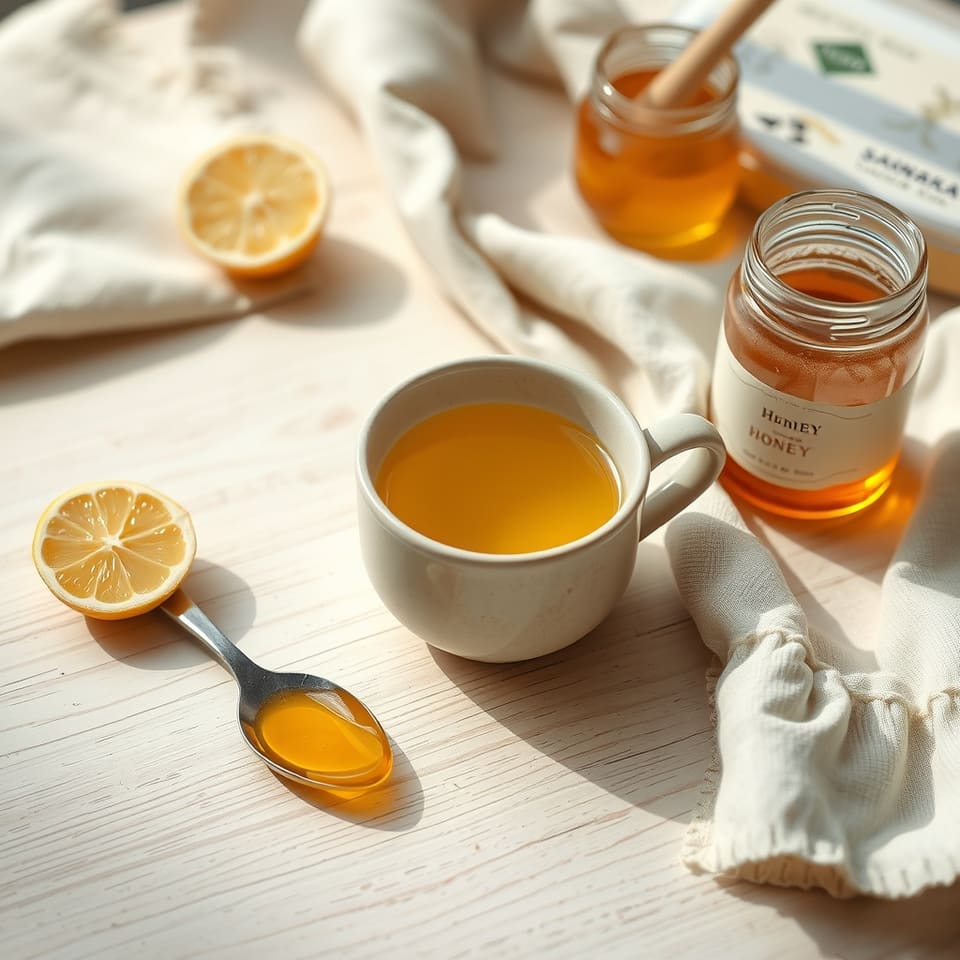
Sage Tea with Honey for a Sore Throat
Sage and honey is a winter pairing in many herb gardens and kitchens. Here is a balanced cup for a sore throat, with honest notes on the evidence and on why sage is a herb to use in measured amounts.
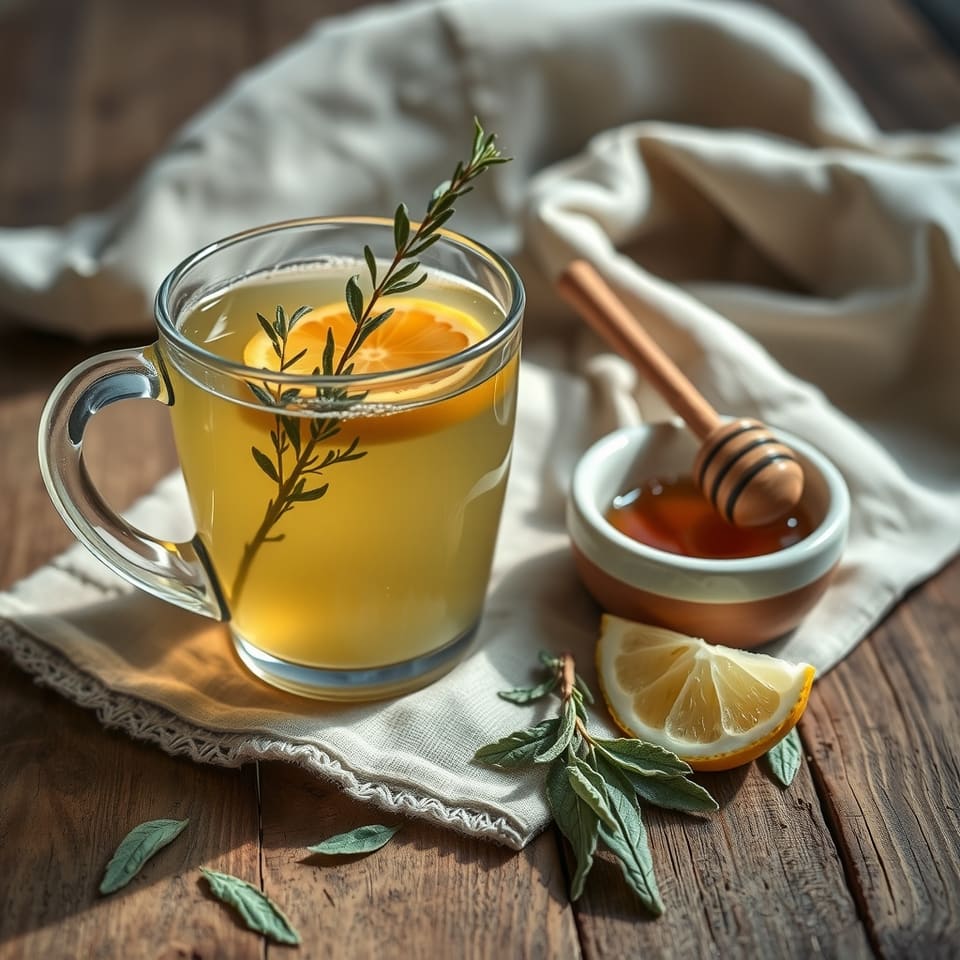
Common sage, with its soft silver-green leaves, grows wild on the dry hills of southern Europe and is now kept in gardens and pots all over the world. Its Latin name, Salvia, comes from a word meaning to heal or to be well, and sage tea for a sore throat is a household tradition from Germany to the Balkans and beyond.
Adding honey softens sage's slightly bitter, resinous taste and makes the cup more soothing to swallow. This recipe keeps the sage to a sensible amount, because sage is one of those herbs where more is not better.
Why sage and honey for a sore throat
The European Medicines Agency (EMA) recognizes sage leaf as a traditional herbal medicine for relief of inflammations in the mouth or throat. In that use, the tea is mainly used as a gargle or mouth rinse. Sipping the same tea slowly brings it into contact with the throat in a similar way.
Honey adds sweetness and a coating feel. The NHS suggests a hot lemon and honey drink to soothe a sore throat, and drinking plenty of fluids is part of its standard self-care advice.
Sage Tea with Honey
You need
- water, freshly boiled150 ml (2/3 cup)
- dried sage leaves, or 4 to 6 fresh leaves1 to 2 g (about 1 level to 1 heaped tsp)
- honey (not for babies under 12 months)1 tsp
- lemon, optional1 slice
Method
- Put the sage in a cup or small teapot and pour over the freshly boiled water.
- Cover and steep for 5 to 10 minutes. A longer steep gives a stronger, more bitter tea.
- Strain out the leaves and let the tea cool until it is comfortably warm.
- Stir in the honey and add the lemon slice if you like.
- Sip slowly. You can hold each mouthful at the back of your throat for a moment before swallowing.
Tips
- Have no more than three cups a day, and stop after a few days if your throat is better.
- Fresh garden sage is milder than dried. Rub the leaves between your fingers before steeping to release more flavor.
- If you prefer to gargle, let the tea cool to lukewarm, gargle, and spit it out. Gargling and drinking at the same time can add up to more sage than you mean to take.
What the evidence says
The EMA's recognition is based on long-standing use for at least 30 years, not on strong clinical trials. Its experts concluded that the trial data were not good enough to call sage a well-established treatment.
The best-known trial, from 2006, tested a sage spray in 286 adults with an acute sore throat. A 15% spray eased throat pain better than a placebo, but weaker and stronger sprays did not, so the results are mixed. A spray is also not the same as a cup of tea. NCCIH, the US government's center for complementary health, says only small amounts of research have been done on sage, so firm conclusions are not possible.
The honest picture: sage and honey tea is a pleasant, traditional way to look after a sore throat while it heals. Most sore throats get better on their own within a week.
How much sage is sensible
Common sage contains thujone, a natural compound that NCCIH says can be toxic in large amounts. The EMA report notes that one should not exceed the recommended amounts of sage leaf, and it records seizures in a newborn and a young child who were given sage oil.
For drinking, the EMA describes 1 to 2 g of dried sage leaf in 150 ml of boiling water, up to three times a day. For gargling, it describes 2.5 g in 100 ml, three times a day. This recipe stays within the drinking amount. Keep to a few days of use, and see a doctor if your throat is no better after a week.
Questions people ask
Can I use culinary sage from the spice rack?
Yes, dried common sage from the spice rack is the same herb. Use the lower end of the amount, as it can be strong.
How many cups of sage tea a day is safe?
European guidance for drinking describes up to three cups a day, each made with 1 to 2 g of dried leaf. Keep it to a short period.
Is sage tea better than a salt water gargle?
Neither has strong trial evidence. The NHS suggests warm salt water gargles for adults. Sage tea is a traditional alternative or extra, as long as you keep to sensible amounts.
Sources
- Assessment report on Salvia officinalis L., folium and aetheroleum (Revision 1) — European Medicines Agency
- Sage: Usefulness and Safety — NCCIH
- Sore throat — NHS
- Common cold — NHS
This article is for general information only and is not medical advice. Herbs can interact with medicines and health conditions. Talk to a doctor or pharmacist before trying a herbal remedy, especially if you are pregnant, breastfeeding, giving it to a child, or taking any medication.