Rosehip Seed Oil for Dry Skin: How to Use It
Rosehip seed oil is a light plant oil rich in linoleic acid. It can be a pleasant extra step for dry skin, as long as you patch test first and keep your expectations realistic.
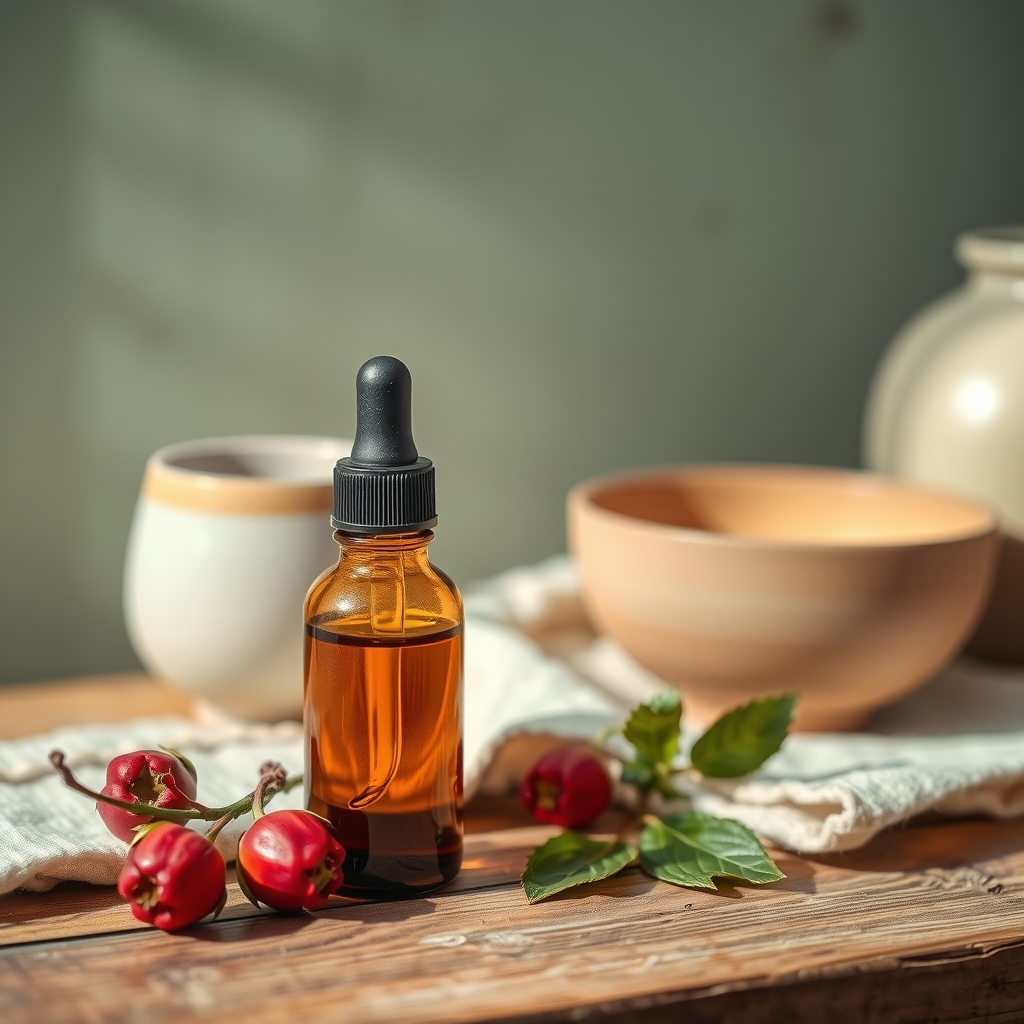
Rose hips are the small red fruits left on wild rose bushes after the flowers fade. Pressing their seeds gives a golden oil that has become a favorite in natural skin care.
If your skin feels tight and dry, a few drops of this oil can be part of a simple routine. But it is not a miracle. Here is what it contains, what the research shows, how to use it and how to test it safely before it goes on your face.
What rosehip seed oil is
Rosehip seed oil is a fixed plant oil, pressed from the seeds of the dog rose (Rosa canina). It is not an essential oil, which is a very different, highly concentrated product.
A 2018 review of plant oils for skin reports that rosehip seed oil is mostly unsaturated fats. Its main fat is linoleic acid, followed by alpha-linolenic acid and a smaller share of oleic acid. It also contains natural antioxidants such as tocopherols and carotenoids.
Rosehip Seed Oil Moisturizing Step
You need
- pure, unscented rosehip seed oil2-3 drops
- your usual fragrance-free moisturizing cream (optional)1 small amount
Method
- Wash with a gentle cleanser and warm water, then pat your skin dry with a clean towel, leaving it slightly damp.
- Warm 2 to 3 drops of oil between clean fingertips.
- Press it gently onto dry areas, or mix it into a small amount of your fragrance-free cream first.
- Use it once a day, in the evening, until you know how your skin responds.
Tips
- Applying a moisturizer while your skin is still damp after washing helps it work better, according to the AAD.
- Choose a plain oil with no added fragrance or essential oils.
- Plant oils rich in unsaturated fats can spoil. Keep the bottle closed, cool and out of the light, and throw it away if it smells sharp or rancid.
Why people use it for dry skin
Plant oils on the skin can act as a light seal that slows down water loss from the surface. The same review notes that linoleic acid supports the skin's water barrier, while oils high in oleic acid, such as olive oil, can weaken that barrier with repeated use.
That makes linoleic-rich oils like rosehip seed oil a reasonable choice for people who want to use a plant oil. The American Academy of Dermatology (AAD) suggests looking for moisturizers with ingredients such as jojoba oil, glycerin or mineral oil, and choosing creams or ointments over thin lotions.
What the evidence says
Direct evidence for rosehip seed oil is limited. The 2018 review could point to only one study, in which rosehip seed oil used together with vitamin supplements gave promising results in some kinds of inflammatory dermatitis. Details were few.
The reviewers suggest that its unsaturated fats and antioxidants may help protect against inflammation and oxidative stress, but that is a theory based on what the oil contains, not proof from well-run trials.
So rosehip seed oil may help dry skin feel softer as part of a moisturizing routine. There is no good evidence that it fixes scars, wrinkles or skin conditions, and it will not give you glowing skin overnight.
Patch test first
The AAD recommends testing any new skin product before using it on your face. Put a coin-sized amount on the inside of your arm or the crook of your elbow, where it will not be rubbed off, twice a day for 7 to 10 days.
If you notice redness, itching or swelling, gently wash it off and do not use it again. A cool compress or a little petroleum jelly can calm the spot. If there is no reaction after 7 to 10 days, you can start using it in your routine.
Questions people ask
Is rosehip seed oil the same as rose essential oil?
No. Rosehip seed oil is a fixed oil pressed from the seeds of the fruit. Rose essential oil is distilled from the petals and is highly concentrated. Never use essential oils undiluted on skin.
Will rosehip seed oil fade my scars or wrinkles?
There is no good evidence for that. The research on rosehip seed oil is very limited, so think of it as a moisturizer, not a treatment.
Can I use it if I have eczema?
Talk to your doctor or dermatologist first. Eczema-prone skin reacts easily, and evidence for rosehip seed oil is too thin to recommend it as a treatment. If you do try it, patch test carefully.
Sources
- Anti-Inflammatory and Skin Barrier Repair Effects of Topical Application of Some Plant Oils — International Journal of Molecular Sciences (via PubMed Central)
- Dermatologists' top tips for relieving dry skin — American Academy of Dermatology
- How to test skin care products — American Academy of Dermatology
This article is for general information only and is not medical advice. Herbs can interact with medicines and health conditions. Talk to a doctor or pharmacist before trying a herbal remedy, especially if you are pregnant, breastfeeding, giving it to a child, or taking any medication.