Rose Hip Tea and Vitamin C: What to Know
Rose hips are the bright red fruits that follow the rose flower, and they are famously rich in vitamin C. Here is how to brew a tangy cup, and what the research really shows.
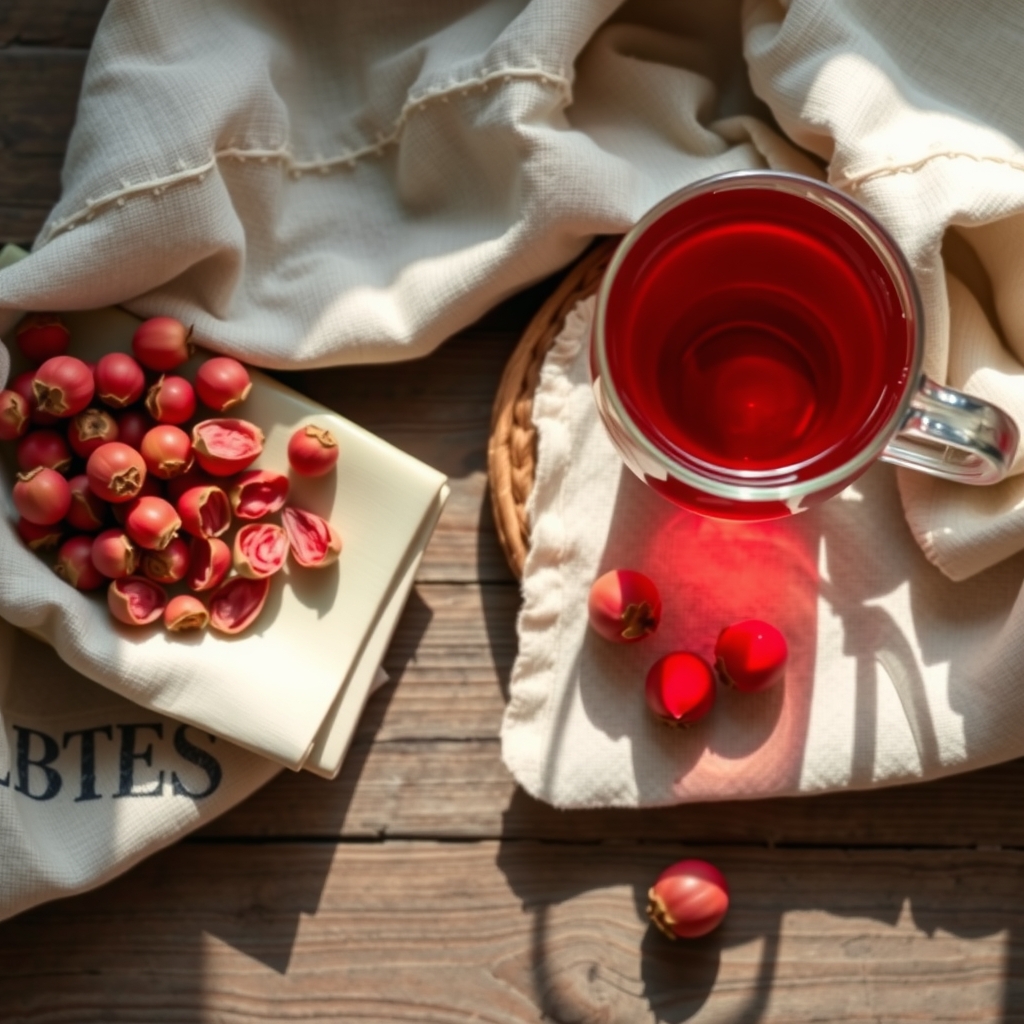
After wild roses finish flowering, they leave behind small, glossy, red or orange fruits called hips. In autumn the hedgerows are full of them, and across northern and central Europe they have long been dried for tea, jam, and syrup.
Rose hip tea is tart, fruity, and a lovely ruby color. It is also one of the best-known plant sources of vitamin C. Here is how to brew it, what that vitamin C content really means for your cup, and what studies have found.
Rose hips and vitamin C
Rose hips really are rich in vitamin C. In the US Department of Agriculture nutrient database, one cup (127 g) of wild rose hips contains about 541 mg of vitamin C. For comparison, a cup of orange sections has around 96 mg.
Adults need far less than that each day. The NIH Office of Dietary Supplements sets the recommended amount at 90 mg for men and 75 mg for women, with smokers needing an extra 35 mg.
Simple Rose Hip Tea
You need
- dried cut rose hips, or 2 tablespoons fresh hips, halved1 tablespoon (about 5 g)
- freshly boiled water250 ml (1 cup)
- honey, for adults and children over 12 months only1 teaspoon (optional)
Method
- Lightly crush the dried rose hips with the back of a spoon to help them release flavor.
- Put them in a teapot or mug and pour over the hot water.
- Cover and steep for 10 to 15 minutes. Rose hips are tough, so they need longer than leaf teas.
- Strain through a fine sieve lined with a paper filter or thin cloth to catch any hairs.
- Sweeten lightly if you like and drink warm, or chill for an iced tea.
Tips
- For a stronger, deeper red brew, simmer the hips gently in a small pan for 10 minutes, then strain.
- Rose hip pairs well with hibiscus, apple slices, or a cinnamon stick.
- Store dried hips in a sealed jar in a cool, dark place, and use within a year.
What the evidence says
A cup of tea is not the same as eating the fruit. Vitamin C dissolves in water and is sensitive to heat, so cooking and long storage reduce it. A tea made from dried hips will contain only part of the fruit's original vitamin C, and nobody has a reliable figure for a home-brewed cup.
Vitamin C is often linked with colds, but the Office of Dietary Supplements says regular vitamin C did not lower the risk of catching a cold in the general population. Taking it after symptoms start did not shorten colds either.
Most clinical research on rose hips has tested a standardized rose hip powder for osteoarthritis, not tea. A meta-analysis of three trials with 306 people found that 5 g of powder a day reduced pain by a small to moderate amount. However, reviewers noted that all three trials were funded by the manufacturer and that the evidence base is small, so the conclusion may not be reliable. Larger, longer trials are needed.
Choosing and preparing rose hips
Dried, cut rose hips are sold as a loose tea. If you forage, pick firm, deep-red hips from roses you can identify, away from roads and from plants that may have been sprayed. Wild dog roses are the traditional choice.
Rose hips contain tiny seeds with fine, scratchy hairs. Brewing whole or cut hips and straining through a fine sieve or paper filter keeps those hairs out of your cup.
Questions people ask
Does rose hip tea have caffeine?
No. Rose hip tea is made from fruit, not from the tea plant, so it is naturally caffeine-free.
Will rose hip tea stop me catching colds?
There is no good evidence of that. Studies of vitamin C in the general population found it did not lower the chance of getting a cold.
Can I use rose hips from my garden roses?
Only if you know exactly what the plant is and that it has not been treated with sprays not meant for food plants. Many garden roses produce small or few hips.
Sources
- Vitamin C: Fact Sheet for Health Professionals — NIH Office of Dietary Supplements
- USDA National Nutrient Database for Standard Reference: Vitamin C content of selected foods — NIH Office of Dietary Supplements
- Does the hip powder of Rosa canina (rosehip) reduce pain in osteoarthritis patients: a meta-analysis of randomized controlled trials — Database of Abstracts of Reviews of Effects, NCBI Bookshelf
This article is for general information only and is not medical advice. Herbs can interact with medicines and health conditions. Talk to a doctor or pharmacist before trying a herbal remedy, especially if you are pregnant, breastfeeding, giving it to a child, or taking any medication.