Parsley Tea: Traditional Diuretic Use and Cautions
Fresh parsley makes a bright, green tea that folk medicine has long used to increase urine. The science is mostly from animals, and there are real cautions, especially in pregnancy.
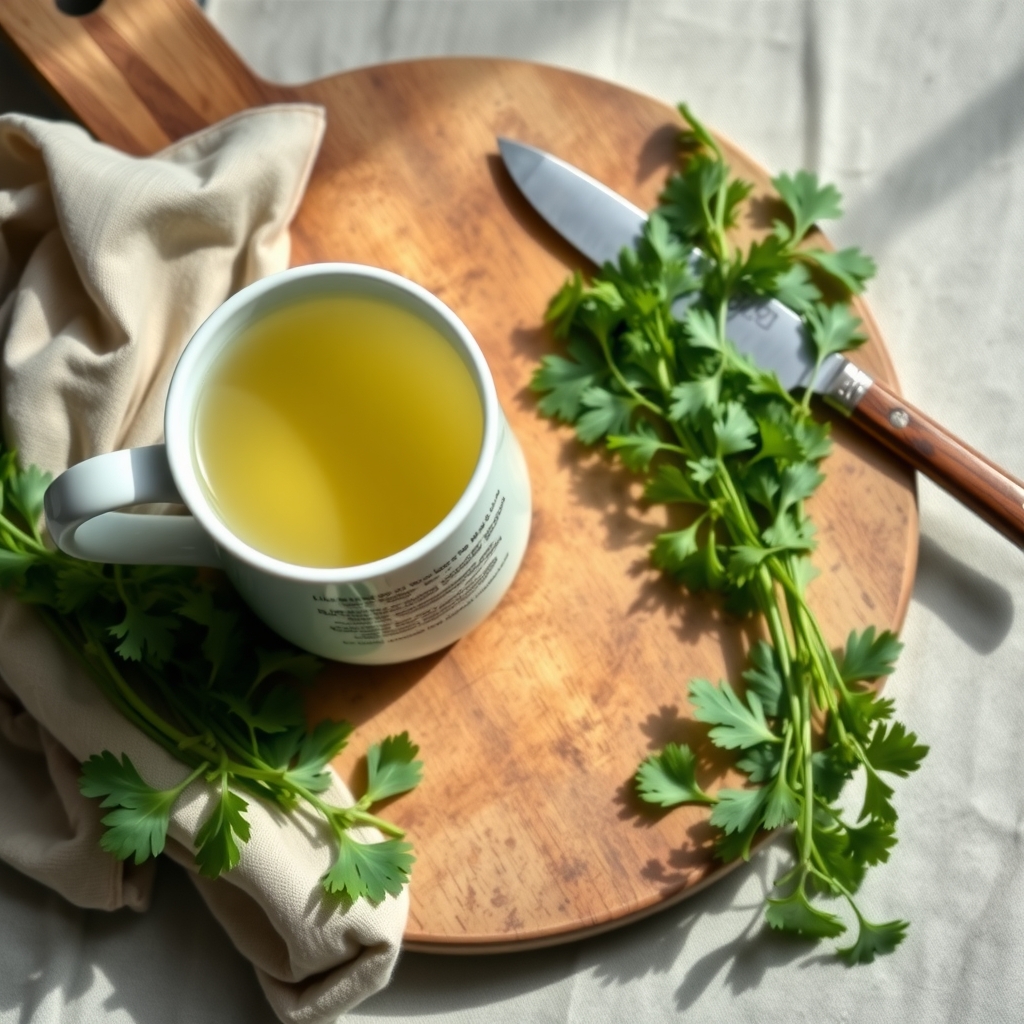
Parsley is so familiar as a garnish that it is easy to forget it has a long history as a folk remedy. In many traditions, a tea of fresh leaves was used to make people pass more urine, and it is still shared online as a natural water tea.
Parsley tea is pleasant, fresh and grassy, a little like a mild green broth. But there is little research in people, and parsley contains active compounds that call for care, especially in pregnancy. This guide covers what is known, how to make a gentle leaf tea, and who should avoid it.
Why people drink parsley tea
Parsley has been used in folk medicine as a diuretic, meaning something that increases the amount of urine you pass. People still turn to it for mild puffiness or simply as a fresh, caffeine-free drink.
Parsley is also used in some cultures by breastfeeding mothers, either to increase or to reduce milk supply. LactMed, the US National Library of Medicine's database on medicines and breastfeeding, says there are no valid clinical trials to support either use.
Fresh Parsley Leaf Tea
You need
- water, just off the boil250 ml (1 cup)
- fresh flat-leaf or curly parsley leaves and thin stems, rinsed1 small handful (about 10 g / 1/3 oz)
- thin slice of lemon, optional1
Method
- Rinse the parsley well and roughly chop or tear it.
- Put it in a mug or small teapot and pour the hot water over it.
- Cover and steep for 5 to 8 minutes.
- Strain, add the lemon if you like, and let it cool to a comfortable temperature.
Tips
- Use the leaves and thin stems only. Do not use parsley seed or root for tea at home.
- Drink it earlier in the day so extra trips to the bathroom do not disturb your sleep.
- Keep it occasional. One cup now and then is a very different thing from strong tea several times a day.
What the evidence says
The best known study is from 2002 and was done in rats, not people. Rats given an extract of parsley seed as their drinking fluid passed significantly more urine over 24 hours than rats given water. The researchers suggested parsley acts on a sodium and potassium pump in the kidneys.
This supports the traditional idea that parsley can have a diuretic effect, but results in rats do not tell us how much a cup of leaf tea does in humans, or whether it is safe to use regularly. There are no good human trials of parsley tea for swelling or any other condition.
Increasing urine is also not the same as treating swelling. Puffy ankles have many possible causes, from standing too long to heart or kidney problems, and passing more urine does not address the cause.
Active compounds and pregnancy
LactMed notes that parsley leaf, seed and root contain volatile oils, including apiol and myristicin, which are biologically active. It advises against using parsley essential oil because of the possible toxicity of these compounds.
In the past, concentrated parsley preparations were misused in attempts to end pregnancies, and medical reports describe poisonings from this. For that reason, parsley tea, seeds, root, oil and supplements are best avoided in pregnancy. The amount used to flavor ordinary food is a different matter; parsley as a food is considered safe in the US.
Questions people ask
Can parsley tea help me lose water weight?
It may make you pass a little more urine, based mainly on animal research, but that is not fat loss and any change comes back when you drink normally. It is not a weight-loss tool.
Is it safe to eat parsley while pregnant?
Yes, parsley used as a herb in normal cooking is considered safe as a food. The caution is about strong teas, seeds, root, oil and supplements, which contain more of its active compounds.
Can I use dried parsley instead of fresh?
You can use about 1 to 2 tsp of dried parsley leaf per mug, but the flavor is flatter. Fresh leaves give a brighter, greener tea.
Sources
- Diuretic effect and mechanism of action of parsley — Journal of Ethnopharmacology (PubMed)
- Parsley (Drugs and Lactation Database, LactMed) — National Library of Medicine (NCBI Bookshelf)
- On poisoning with parsley used as an abortifacient — PubMed
- Swollen ankles, feet and legs (oedema) — NHS
- Warfarin — MedlinePlus
This article is for general information only and is not medical advice. Herbs can interact with medicines and health conditions. Talk to a doctor or pharmacist before trying a herbal remedy, especially if you are pregnant, breastfeeding, giving it to a child, or taking any medication.