Musty Wardrobe Smell: Causes and Natural Fixes
A musty smell in a wardrobe is almost always a sign of damp. Herbs can add a fresh scent, but the real fix is drying things out and cleaning away any mold.
You open the wardrobe and there it is: a stale, earthy, slightly damp smell that clings to your clothes. It is a common problem, especially in older homes, cold bedrooms, and wardrobes pushed against outside walls.
That musty odor usually means mold or mildew is growing somewhere, because there is too much moisture. The good news is that small problems are easy to fix at home. This guide explains the causes, the steps that work, and where herbs fit in.
Why wardrobes smell musty
Mold and mildew need moisture to grow. University of Georgia Extension explains that mildew usually starts when relative humidity stays at 60% or higher and the temperature is around 16 °C (60 °F) or above. Musty odors are commonly linked to closets and clothes chests, and mildew often grows on leather and plastic items stored in them.
Wardrobes are a perfect spot: they are closed, dark and have little airflow. Common causes include a wardrobe set against a cold outside wall, clothes put away slightly damp, drying laundry indoors, a nearby leak, or a bedroom with condensation on the windows.
The EPA notes that condensation on windows, walls or pipes is a sign of high humidity. If you see it in your bedroom, the wardrobe smell and the damp are probably connected.
Wardrobe Fresh-Air Reset
You need
- warm water1 liter (4 cups)
- mild dish detergent1 tsp
- clean cloths2
- lavender or rosemary sachets, fully dry (optional, for scent)1 or 2
Method
- Empty the wardrobe completely and open the bedroom window.
- Check clothes, shoes, bags and boxes. Wash any washable items that smell musty and dry them fully, outdoors if possible.
- Mix the detergent into the warm water. Wipe all inside surfaces of the wardrobe, including corners and the back panel, scrubbing off any visible spots of mold.
- Wipe again with a cloth dampened in clean water, then dry with a dry cloth.
- Leave the doors open for several hours, or overnight, until everything is completely dry.
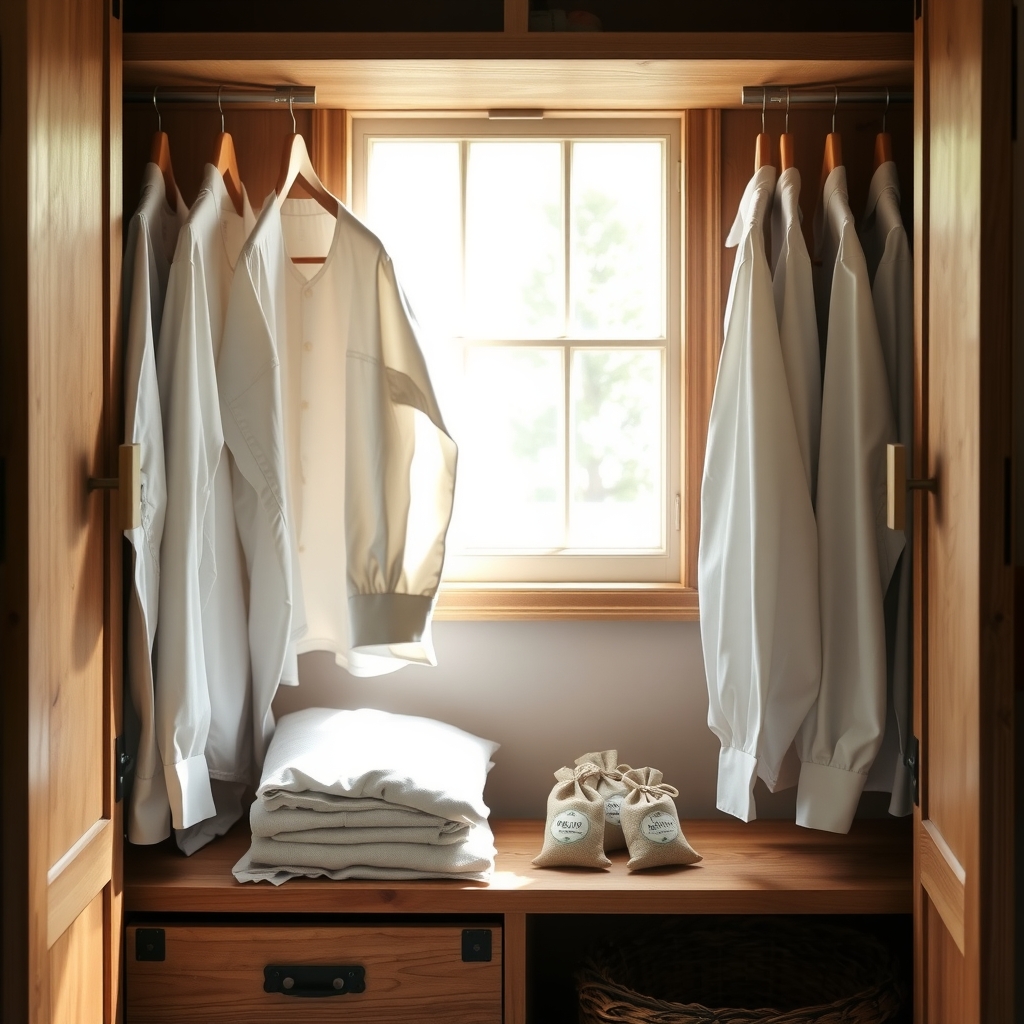
- Put back only clean, dry items, leaving space between them. Add a dry herb sachet if you like the scent.
Tips
- Wear gloves and keep the window open while cleaning. If you have asthma or mold allergy, ask someone else to do it.
- If the smell returns within weeks, look for the moisture source: a cold wall, a leak, or condensation in the room.
- Replace herb sachets every few months, and throw out any that feel damp or smell musty.
What the evidence says
The approach backed by the EPA and CDC is clear: control moisture and clean away mold. The EPA advises keeping indoor humidity below 60%, ideally between 30% and 50%, and the CDC recommends keeping it at or below 50%. A small, inexpensive humidity meter can tell you where you stand.
Killing mold is not enough. The EPA points out that dead mold can still trigger allergies, so it needs to be physically cleaned off. On hard surfaces, scrub with detergent and water, then dry completely. Porous items that are badly affected may not be fully cleanable.
Herbs such as lavender and rosemary, and popular odor absorbers such as baking soda, can make a wardrobe smell nicer, but there is no good evidence that they remove mold or fix damp. Use them only after the real problem is solved. Herbs are also often said to repel clothes moths, but Utah State University Extension notes that even cedar-lined closets and chests have limited value, and recommends clean clothes in airtight storage instead.
Keeping it from coming back
Leave a gap of a few centimeters between the wardrobe and an outside wall so air can move. Do not overpack the rails; clothes need space.
Only put away clothes that are clean and fully dry. Dry laundry outdoors or in a well-ventilated room, and make sure a clothes dryer vents outside, as the CDC advises.
Open the wardrobe doors for a while each day, and air the bedroom. Use the kitchen and bathroom fans, and run a dehumidifier if the room stays damp. Fix any leak quickly; the EPA says wet areas should be dried within 24 to 48 hours to prevent mold.
Questions people ask
Is the musty smell in my wardrobe dangerous?
For most people a small amount of mildew causes no harm, but mold can trigger allergy and asthma symptoms. Clean it off and fix the damp, especially if anyone in the home has asthma or allergies.
Does baking soda or charcoal fix a musty wardrobe?
They may reduce smells a little, but they do not remove mold or fix damp. Clean the wardrobe, dry everything and lower the humidity first.
Should I test my home for mold?
The CDC does not recommend home mold testing. If you can see or smell mold, clean it and fix the moisture source.
Sources
- A Brief Guide to Mold, Moisture, and Your Home — EPA
- Mold — CDC
- UGA Extension provides tips on removing and preventing mold and mildew — University of Georgia Extension
- Clothes Moths — Utah State University Extension
This article is for general information only and is not medical advice. Herbs can interact with medicines and health conditions. Talk to a doctor or pharmacist before trying a herbal remedy, especially if you are pregnant, breastfeeding, giving it to a child, or taking any medication.