Mushroom Coffee: Myths vs Evidence
Mushroom coffee promises calm focus, better immunity and fewer jitters. The reality is more modest: a little less caffeine in some blends, very little human research, and a few real safety warnings worth knowing.
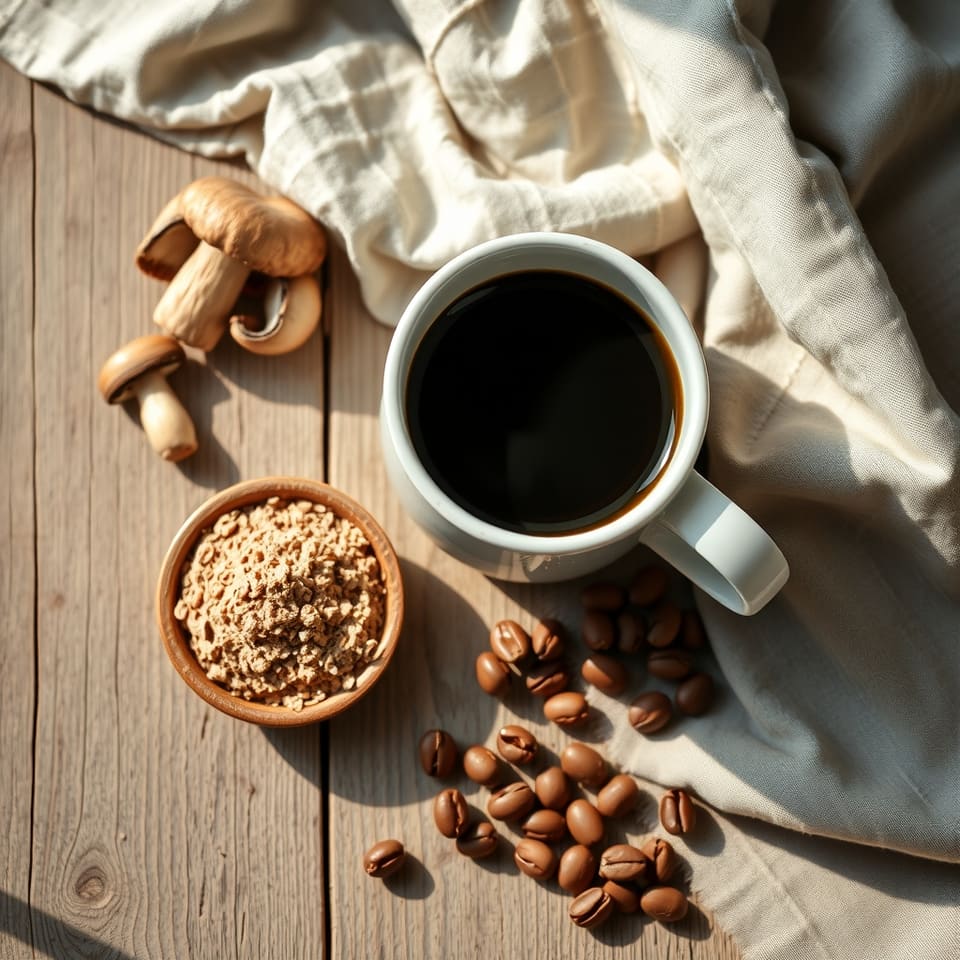
Mushroom coffee is everywhere online, usually sold as a smarter way to start the day. Most products are ground or instant coffee mixed with powdered extracts of mushrooms such as lion's mane, reishi or chaga. Some swap the coffee for cocoa or a coffee substitute.
The marketing tends to promise a lot: sharper focus, a stronger immune system, calm energy without the crash. This guide looks at those claims one by one, using what cancer center and government health sources actually say. It does not recommend any product, and it explains who should skip mushroom supplements altogether.
What is actually in the cup
These mushrooms are not the button mushrooms you cook with. Lion's mane is used in East Asian medical traditions for general health. Reishi has a long history in many Asian countries for energy and general wellbeing. Chaga grows on birch trees in cold climates. In mushroom coffee, they appear as dried powders or extracts.
The amount of mushroom in each serving varies a lot between products, and labels do not always make it clear. What you can usually see is whether the blend contains real coffee and how much, which is what drives the caffeine.
What the evidence says
Myth: it sharpens your brain. Memorial Sloan Kettering Cancer Center lists improving memory, mood and stress among the reasons people take lion's mane, but its patient guide does not point to proof that it works, and notes that some uses have not been studied by doctors at all. There is no good evidence that a spoon of lion's mane in your coffee improves focus.
Myth: it boosts your immune system. People take reishi for immunity, stamina and cholesterol, but MSK's guide does not report results showing how well it works for these. For chaga, MSK states plainly that its safety and effectiveness have yet to be tested in clinical studies. Most of the exciting findings you read about come from cells or animals.
Myth: it has no caffeine. Most blends contain coffee. The FDA lists 113 to 247 mg of caffeine in 355 ml (12 ounces) of brewed coffee. If a product replaces part of the coffee with mushroom powder, a cup will usually contain less caffeine, but not none. That smaller dose may be the real reason some people feel fewer jitters.
Myth: natural means harmless. MSK warns that herbal supplements are stronger than herbs used in cooking and can affect how medicines work. The mushrooms in these drinks carry real cautions, listed below.
Real safety concerns
Chaga: MSK describes case reports of serious kidney damage, called oxalate nephropathy, in people who took chaga powder daily for months. One woman needed dialysis and her kidneys did not recover. MSK also notes chaga may increase bleeding risk with blood thinners such as warfarin, and lab studies suggest it may add to the effect of diabetes medicines.
Reishi: MSK lists nausea, trouble sleeping and liver injury as possible side effects. It can increase bleeding risk, especially with warfarin, and may not be safe with immunosuppressant drugs. Reishi spore powder may raise a cancer marker on blood tests, which can confuse cancer care.
Lion's mane: MSK says it is generally safe in food and tea, with possible stomach discomfort, nausea and skin rash. It advises talking to your health care provider before taking lion's mane supplements.
How to read a mushroom coffee label
Step 1: Find the caffeine. Look for the amount of coffee or caffeine per serving. If it is not listed, assume it behaves like ordinary coffee.
Step 2: Check which mushrooms are in it. If you have kidney disease or take blood thinners, diabetes medicines or immunosuppressants, a product with chaga or reishi is one to discuss with your doctor first.
Step 3: Be wary of big promises. Claims that a drink treats anxiety, prevents illness or boosts immunity go far beyond the evidence.
Step 4: Think about what you really want. If it is less caffeine, a half-decaf blend, a smaller cup or having your coffee earlier in the day does the same job without any mushroom extract.
Questions people ask
Does mushroom coffee taste like mushrooms?
Usually not much. Most blends taste like a slightly earthy, milder coffee. Products made with cocoa or a coffee substitute taste different again.
Is mushroom coffee better for anxiety than regular coffee?
There is no good evidence that the mushrooms calm anxiety. If you feel less jittery, the likely reason is simply less caffeine per cup.
Can I make mushroom coffee at home with cooking mushrooms?
Not in the same way. Button or chestnut mushrooms are different species from the ones these products use. Enjoy culinary mushrooms in food instead.
Sources
- Lion's Mane Mushroom (patient guide) — Memorial Sloan Kettering Cancer Center
- Reishi Mushroom (patient guide) — Memorial Sloan Kettering Cancer Center
- Chaga Mushroom (About Herbs) — Memorial Sloan Kettering Cancer Center
- Spilling the Beans: How Much Caffeine is Too Much? — US Food and Drug Administration
This article is for general information only and is not medical advice. Herbs can interact with medicines and health conditions. Talk to a doctor or pharmacist before trying a herbal remedy, especially if you are pregnant, breastfeeding, giving it to a child, or taking any medication.