Milk Thistle: What the Studies Really Say
Milk thistle is one of the best-known liver supplements, and it is often sold as a detox. Here is what the research actually found, and who should be careful with it.
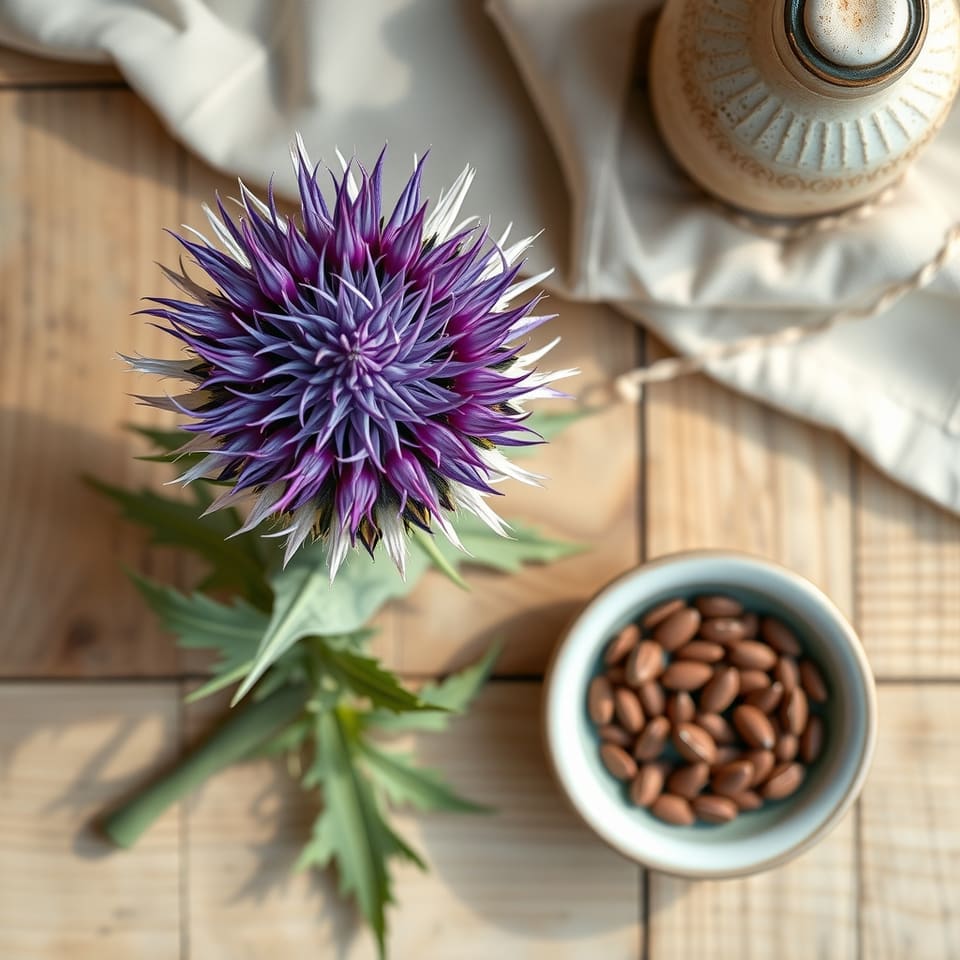
Milk thistle is a tall, spiny plant with purple flowers and white-veined leaves. Its seeds have been used for liver complaints for a very long time, and today it is one of the most popular supplements sold for the liver, often under labels like liver cleanse or liver detox.
Those labels promise a lot. The research is much more modest. This guide explains what milk thistle is, what the studies found, and the real safety points, including allergies and medicine interactions, so you can make a calm, informed decision with your doctor.
What milk thistle is
Milk thistle (Silybum marianum) belongs to the same plant family as daisies and ragweed. It is native to Europe and was brought to North America by early settlers. The part used is the seed, which contains a mixture of compounds called silymarin, the main ingredient studied in research.
Traditionally, people used milk thistle for liver disorders and to increase breast milk. Today it is mostly sold as capsules, tablets and liquid extracts, and promoted for the liver, for blood sugar and for other conditions.
What the evidence says
The National Center for Complementary and Integrative Health (NCCIH) says there is not enough high-quality evidence to reach firm conclusions about milk thistle for any health condition. Trials in liver disease have given results that are conflicting or too limited to be sure.
Two studies funded by NCCIH, one in people with hepatitis C and one in fatty liver disease (NASH), found no benefit from silymarin. Mayo Clinic also describes the research on cirrhosis and hepatitis C as mixed. Memorial Sloan Kettering notes some possible signals in alcohol-related liver disease and cirrhosis, but a large hepatitis C trial did not show a meaningful change in liver enzymes.
A few small studies suggest milk thistle extracts may help blood sugar in type 2 diabetes, but NCCIH notes most were done in a limited number of countries, and Mayo Clinic says more research is needed. In short: milk thistle may have some effects worth studying, but it has not been shown to protect or repair the liver.
The liver detox myth
Products sold as a liver cleanse suggest that your liver needs flushing out with a supplement. But NCCIH reports that reviews found no compelling research showing detox programs remove toxins from the body.
Some cleanse products can even cause harm. NCCIH notes that US regulators have acted against detox products with hidden ingredients or false claims. Memorial Sloan Kettering describes a person on the blood thinner warfarin whose clotting test rose sharply after taking a liver cleanse that contained milk thistle, and returned to normal after stopping it.
Thinking of trying it: step by step
Step 1. Ask yourself why. If you are worried about your liver, the useful first step is a doctor's visit and blood tests, not a supplement.
Step 2. Check your allergies. If ragweed, daisies, marigolds or chrysanthemums give you hay fever or rashes, milk thistle is more likely to cause an allergic reaction.
Step 3. List your medicines. Bring every prescription and supplement to your doctor or pharmacist and ask about interactions, especially for diabetes, warfarin and transplant medicines.
Step 4. If you go ahead, follow the label dose, and stop if you notice stomach upset, itching, a rash or headache. Product quality varies, so tell your doctor exactly what you are taking.
Questions people ask
Does milk thistle detox the liver?
No reliable evidence shows that. Reviews have found no compelling research that detox products remove toxins, and studies of milk thistle in liver disease have given mixed or negative results.
Can I take milk thistle after a heavy night of drinking?
There is no good evidence that it works as a hangover cure or shields your liver from alcohol. Drinking less, and having some alcohol-free days, is the more sensible approach.
Is milk thistle safe?
Taken by mouth, it seems to be well tolerated by most adults. The main concerns are allergies in people sensitive to the daisy family, effects on blood sugar and interactions with some medicines.
Sources
- Milk Thistle — NCCIH
- Milk thistle — Mayo Clinic
- Milk Thistle (About Herbs) — Memorial Sloan Kettering Cancer Center
- Detoxes and Cleanses: What You Need To Know — NCCIH
This article is for general information only and is not medical advice. Herbs can interact with medicines and health conditions. Talk to a doctor or pharmacist before trying a herbal remedy, especially if you are pregnant, breastfeeding, giving it to a child, or taking any medication.