Warming Lemon, Ginger and Turmeric Tea
A golden, gently spicy mug for chilly afternoons. Here is how to brew it from fresh roots, what science can and cannot say about it, and who should be careful.
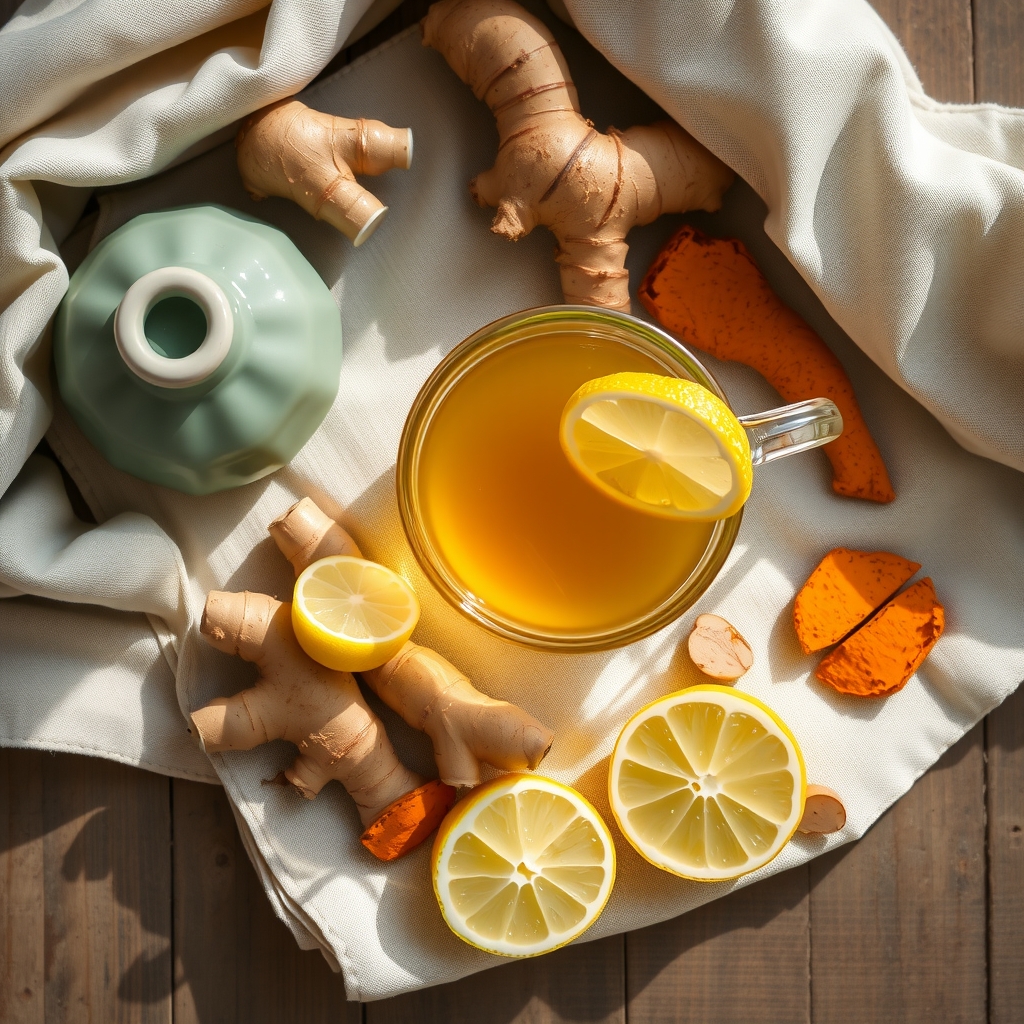
On a gray, cold day, a pan of sliced roots simmering on the stove makes the whole kitchen smell warm. This tea brings together three everyday ingredients: fresh ginger for heat, fresh turmeric for its earthy flavor and sunny color, and lemon to brighten it all up.
Think of it as a cozy alternative to another cup of coffee, not as a medicine. It is caffeine free, easy to make in a small batch, and it gives you a reason to sit down for ten minutes with something hot in your hands. Below you will find the recipe, an honest look at the evidence, and the people who should check with a doctor first.
Why this trio works in a mug
Ginger and turmeric are both rhizomes (underground stems often called roots) from the same plant family, and they behave similarly in a pan. Both release their flavor best when you slice them thin and simmer them, rather than just pouring hot water over them. Ginger brings a peppery warmth you feel at the back of your throat. Turmeric is milder, slightly bitter and very colorful.
Lemon goes in at the end. Adding it off the heat keeps its fresh, sharp taste, which balances the earthiness of the turmeric. A small spoon of honey is optional if you like it softer.
Lemon, Ginger and Turmeric Tea
You need
- water600 ml (2 1/2 cups)
- fresh ginger root, thinly sliced3 cm (1 1/4 inch)
- fresh turmeric root, thinly sliced, or 1/4 tsp ground turmeric2 cm (3/4 inch)
- lemon, half juiced and half sliced1
- honey, optional1 to 2 tsp
Method
- Put the ginger, turmeric and water in a small pan and bring to a boil.
- Lower the heat and simmer gently, partly covered, for 10 minutes.
- Take the pan off the heat and stir in the lemon juice.
- Strain into two mugs and add a lemon slice to each.
- Let it cool for a minute or two, then stir in honey if you like it sweeter.
Tips
- For a milder cup, use less ginger or simmer for only 5 minutes.
- The strained tea keeps in a covered jar in the fridge for up to a day. Reheat gently and add fresh lemon.
- A twist of black pepper is a common addition for flavor. It is optional.
What the evidence says
The honest answer is that research on this exact drink does not exist. What we have are studies of each ingredient, mostly in supplement form and at doses far stronger than a mug of tea.
For turmeric, the U.S. National Center for Complementary and Integrative Health (NCCIH) says there is early evidence that turmeric or curcumin may ease knee pain and stiffness, but overall we do not know enough to say it is beneficial for any health purpose. Higher-quality studies are still needed.
Ginger has a little more behind it. NCCIH notes research suggesting ginger may help with nausea and vomiting in pregnancy, and that ginger supplements may reduce the severity of menstrual cramps. Most studies have not found it helps motion sickness.
A mug of tea holds only a small amount of either root, far less than the supplements used in most studies. So enjoy this tea for its warmth and flavor, and do not expect it to do more than that.
Fresh roots or ground spice?
Fresh roots give the cleanest, brightest flavor. Look for firm pieces with smooth skin. You do not need to peel them, just scrub them well. Fresh turmeric stains fingers, cutting boards and counters, so slice it on a plate you do not mind turning yellow.
If you only have ground spices, use a small pinch of each and stir well, since powders tend to settle at the bottom of the cup. The taste will be flatter and slightly gritty, but still pleasant.
Questions people ask
Is it the same as golden milk?
No. Golden milk is a creamy, milky drink. This is a clear, lemony tea made only with water, so it is lighter and sharper in taste.
How many mugs a day is reasonable?
One or two mugs a day is a sensible food-strength amount for most healthy adults. If you take regular medicines, ask your pharmacist whether ginger or turmeric could affect them.
Will it keep me from getting sick?
There is no good evidence that it does. It is a warm, caffeine-free drink that can help you keep your fluids up, and that is a good thing on its own.
Sources
- Turmeric: Usefulness and Safety — NCCIH
- Ginger: Usefulness and Safety — NCCIH
- Ginger (About Herbs) — Memorial Sloan Kettering Cancer Center
- Turmeric (About Herbs) — Memorial Sloan Kettering Cancer Center
This article is for general information only and is not medical advice. Herbs can interact with medicines and health conditions. Talk to a doctor or pharmacist before trying a herbal remedy, especially if you are pregnant, breastfeeding, giving it to a child, or taking any medication.