Homemade Lavender Linen Water
A fine mist of lavender water makes ironing more pleasant and gives sheets a soft, clean scent. Here is a gentle version made with dried buds, plus a few safety rules for fabric, skin and pets.
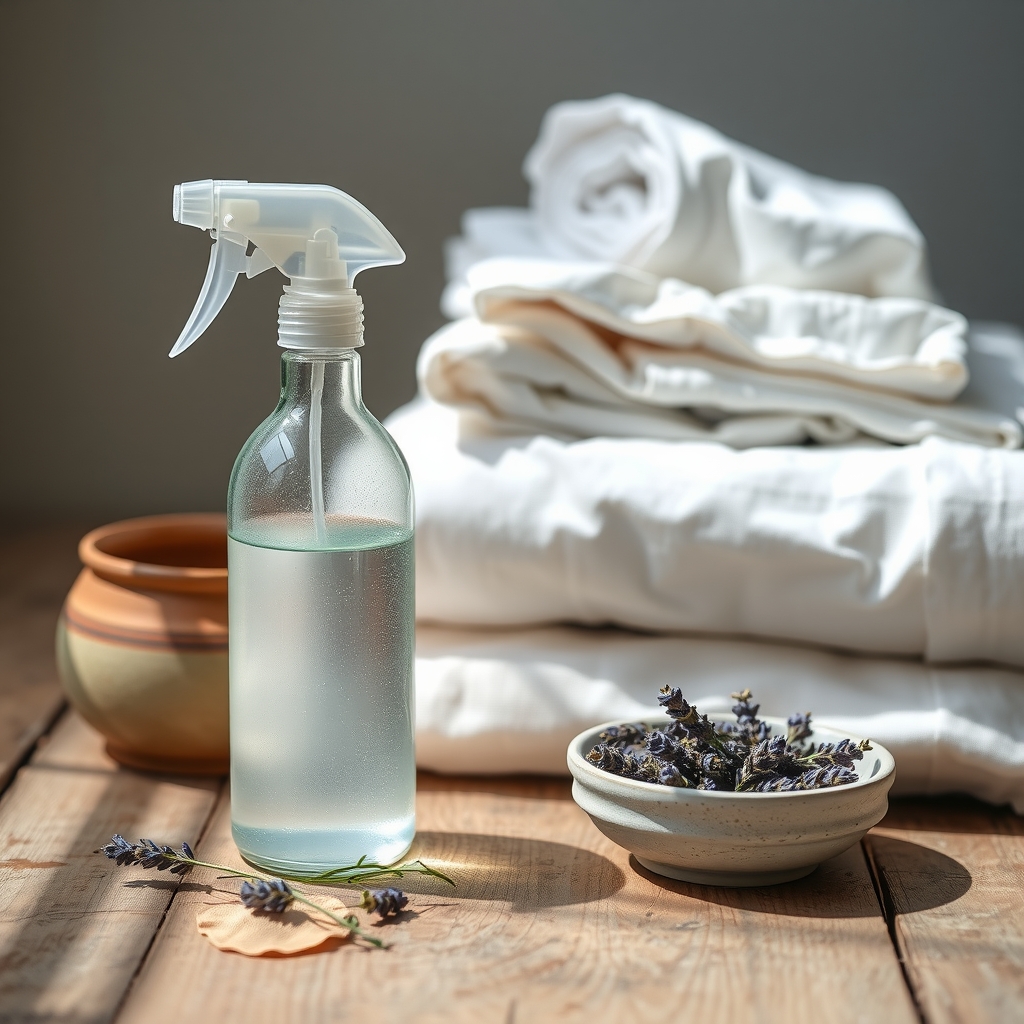
Linen water is simply scented water that you mist onto fabric while ironing or onto bedding before you make the bed. It was a household staple for generations, and it is easy to make at home with dried lavender and water.
Most online recipes rely on lavender essential oil. This version uses an infusion of dried buds instead, which is milder and less likely to stain. You will also find an optional stronger version, and the safety points that matter for sensitive skin, children and pets.
Why people use linen water
A light mist helps dampen cotton and linen so creases iron out more easily, and it leaves a faint scent behind. Many people also like to spray pillowcases and sheets as part of a bedtime routine.
Because you make it yourself, you control how strong it is, and you can leave the scent out of anything that belongs to someone with sensitive skin.
Gentle Lavender Linen Water
You need
- distilled water300 ml (1 1/4 cups)
- dried lavender buds2 tbsp
- vodka or other clear, unflavored high-proof alcohol, to help it keep a little longer1 tbsp (optional)
- clean glass spray bottle1
Method
- Bring the distilled water to a boil, then take it off the heat.
- Stir in the lavender buds, cover and let it steep for 20 to 30 minutes.
- Strain through a fine sieve lined with a coffee filter or clean cloth, so no bits clog the sprayer or mark fabric. Let it cool completely.
- Stir in the alcohol if using, then pour into the spray bottle and label it.
- Test on a hidden spot of fabric. Once it dries without marks, mist lightly onto fabric as you iron, or onto sheets a few minutes before making the bed.
Tips
- Keep it in the fridge and use within about a week. Throw it out if it turns cloudy or smells off.
- Spray it onto fabric, not into your iron's water tank, unless the manufacturer says scented water is fine.
- For a stronger version without pets in the home, mix 5 drops of lavender essential oil into 1 tbsp of alcohol first, then add 250 ml (1 cup) of distilled water. Shake before each use, and test on fabric first.
What the evidence says
As a fabric freshener, linen water does what it promises: it adds a gentle lavender smell that lasts a few hours, longer in a closed linen cupboard. It does not clean, disinfect or remove stains, and it will not hide a smell from bedding that needs washing.
Many people spray lavender on their pillow hoping to sleep better. NCCIH says it is unclear whether lavender aromatherapy helps with sleep, anxiety or stress, although some people report it improves their quality of life. Enjoy the scent, but do not rely on it to fix ongoing sleep problems.
On safety, NCCIH notes that topical lavender products can cause allergic skin reactions in some people, and MedlinePlus lists fragrances as a common cause of allergic contact dermatitis. Bedding touches your skin for hours, so keep the mix light and watch how your skin responds.
Test on fabric first
Plant infusions and oils can leave faint marks on some fabrics. Before you spray a whole sheet or a favorite shirt, mist a hidden spot such as an inside seam or a hem, let it dry fully and check it in daylight.
Be extra careful with silk, rayon, dark colors and anything labeled dry clean only. Spray from about 30 cm (12 inches) away so you get a fine mist, not wet spots.
Children and pets
NCCIH reports a few cases of breast tissue swelling in children who used topical lavender products, though it is unclear whether lavender was the cause. To be cautious, leave babies' and children's bedding unscented.
The ASPCA lists lavender as toxic to dogs, cats and horses, and warns that concentrated essential oils can harm pets, especially if they get on their coat or paws. Do not spray pet beds, let bedding dry before pets lie on it, and skip the essential oil version if you have cats or birds.
Questions people ask
Can I use lavender linen water in my steam iron?
It is safer to mist it onto the fabric instead. Plant material and oils can build up in the tank, so only put it in the iron if the manufacturer allows scented water.
Will a lavender pillow spray help me sleep?
It may make bedtime feel more relaxing, but NCCIH says it is unclear whether lavender aromatherapy helps with sleep. See a doctor for ongoing sleep problems.
How long does homemade linen water last?
The infusion version keeps for about a week in the fridge. Throw it out sooner if it looks cloudy or smells off.
Sources
This article is for general information only and is not medical advice. Herbs can interact with medicines and health conditions. Talk to a doctor or pharmacist before trying a herbal remedy, especially if you are pregnant, breastfeeding, giving it to a child, or taking any medication.