Kanelada: Greek Iced Cinnamon Drink
Kanelada is a cinnamon syrup stirred into ice cold water, a simple summer drink from Greek kitchens. Here is a lighter homemade version, and what to know about cinnamon type and sugar before you make a big jar.
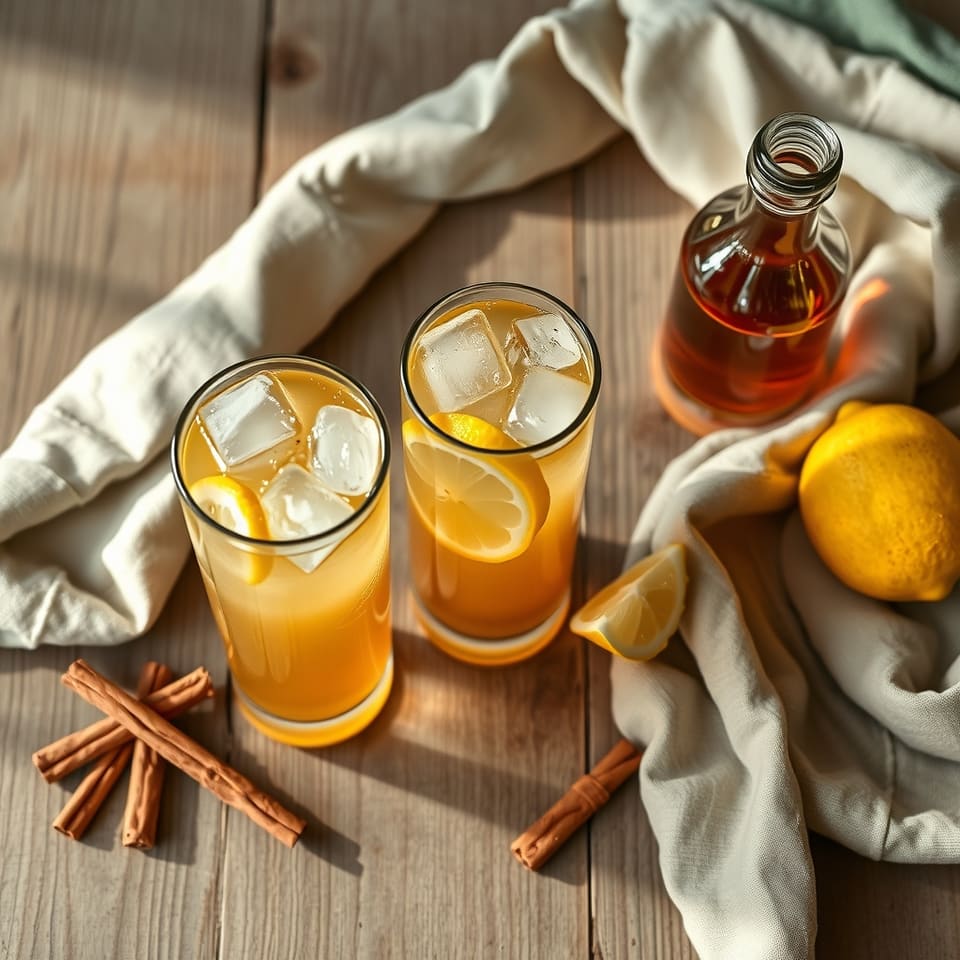
Most cinnamon drinks are hot and wintry. Kanelada is the opposite. It is an old-fashioned Greek summer drink: a sweet cinnamon syrup that you keep in a bottle and stir into a glass of very cold water whenever the afternoon gets hot.
The idea is close to a cordial. The flavor is warm, sweet and gently spicy, which sounds odd for a cooling drink until you try it with plenty of ice. Traditional versions can be very sweet, so this recipe uses less sugar and lets you dilute it to taste. Because a syrup concentrates flavor, the kind of cinnamon you buy matters more than usual.
How kanelada works
You make the syrup once. Cinnamon sticks simmer in water with sugar, the liquid steeps until it is deeply flavored, and then you strain it into a clean bottle. To serve, you pour a little syrup into a glass and fill it with cold still or sparkling water.
Because you mix every glass yourself, you decide how strong and how sweet it is. A splash of lemon brightens it, and a couple of cloves or a strip of orange peel make it more festive.
Lighter Kanelada Syrup
You need
- water500 ml (2 cups)
- Ceylon cinnamon sticks, about 8 cm (3 inches) each4
- sugar120 g (just over 1/2 cup)
- whole cloves, optional2 to 3
- strip of lemon or orange peel, optional1
- ice cubes, cold still or sparkling water, and lemon slicesto serve
Method
- Break the cinnamon sticks in half and put them in a small pan with the water and any cloves or peel.
- Bring to a boil, then lower the heat and simmer gently for 10 minutes.
- Add the sugar and stir until it dissolves completely, then simmer 5 minutes more.
- Take the pan off the heat, cover it and let it steep until completely cool, about 1 hour.
- Strain into a clean glass bottle or jar, close it and refrigerate.
- To serve, pour 30 ml (2 tbsp) of syrup into a tall glass, add ice and fill with about 200 ml (3/4 cup) of cold water. Stir and add a slice of lemon.
Tips
- Keep the syrup in the fridge and use it within about a week. Throw it away if it turns cloudy or smells off.
- For a less sweet glass, start with 20 ml (4 tsp) of syrup and add more only if you need it.
Cassia, Ceylon and coumarin
There are two main kinds of cinnamon. NCCIH, part of the US National Institutes of Health, explains that Ceylon, often called true cinnamon, grows mainly in Sri Lanka, while cassia grows in Southeast Asia and is the most common type sold in North America. Thick, hard, single-layer sticks are usually cassia. Thin, papery sticks with many layers are usually Ceylon.
Cassia contains a natural compound called coumarin. Germany's Federal Institute for Risk Assessment (BfR) sets a tolerable daily intake of 0.1 mg of coumarin per kilogram of body weight. It says a 60 kg adult reaches that limit with about 2 g of cassia cinnamon a day, and a 15 kg child with only about 0.5 g. Ceylon cinnamon contains only low levels.
There is no reliable figure for how much coumarin passes from the sticks into a homemade syrup, so you cannot work out a precise dose per glass. That is why Ceylon sticks are the sensible choice if kanelada is a daily drink at home, especially for children. The BfR itself advises Ceylon for people who use a lot of cinnamon at home, and moderation with cassia.
What the evidence says
Cinnamon is often promoted online for blood sugar or weight. NCCIH says it is unclear whether cinnamon supplements help with diabetes or weight loss, partly because studies often do not say which species was used. A sweetened cinnamon syrup is certainly not a way to manage blood sugar.
On safety, NCCIH says cinnamon is likely safe in the amounts normally used to flavor food. Coumarin, found in cassia, has been linked to liver problems, which may matter for sensitive people such as those with liver disease. The BfR adds that in a small group of especially sensitive people, coumarin given as a medicine for several weeks raised liver values or caused liver inflammation, usually reversible, and that liver damage from eating cinnamon has not been described.
The sugar in the syrup
Any homemade syrup is mostly sugar and water. The NHS advises limiting sugary drinks because they add calories and can damage teeth. This lighter syrup puts roughly 9 g of sugar in each glass, while the CDC notes that a 355 ml (12 ounce) regular soda has about 42 g of added sugar. Stretch it further with sparkling water and more ice.
Questions people ask
Can I use ground cinnamon instead of sticks?
Sticks are better. Ground cinnamon makes a cloudy, gritty syrup, and it is harder to know whether it is cassia or Ceylon, because labels often do not say.
Can I make kanelada without sugar?
You can simmer the sticks in water alone and chill the infusion to drink as a cold cinnamon water. It will be much lighter in flavor, so a squeeze of lemon helps.
Is kanelada served hot or cold?
Traditionally it is a cold summer drink made from syrup and iced water, though you could stir the syrup into hot water in winter.
Sources
- Cinnamon: Usefulness and Safety — NCCIH
- FAQ on coumarin in cinnamon and other foods — German Federal Institute for Risk Assessment (BfR)
- Water, drinks and hydration — NHS
- Rethink Your Drink — CDC
This article is for general information only and is not medical advice. Herbs can interact with medicines and health conditions. Talk to a doctor or pharmacist before trying a herbal remedy, especially if you are pregnant, breastfeeding, giving it to a child, or taking any medication.