Best Honey for Cough: Thyme, Wildflower or Manuka?
Shelves are full of honeys that promise more: thyme, wildflower, buckwheat, manuka. Here is what the research on honey and coughs actually tested, and how to choose a jar without overpaying.
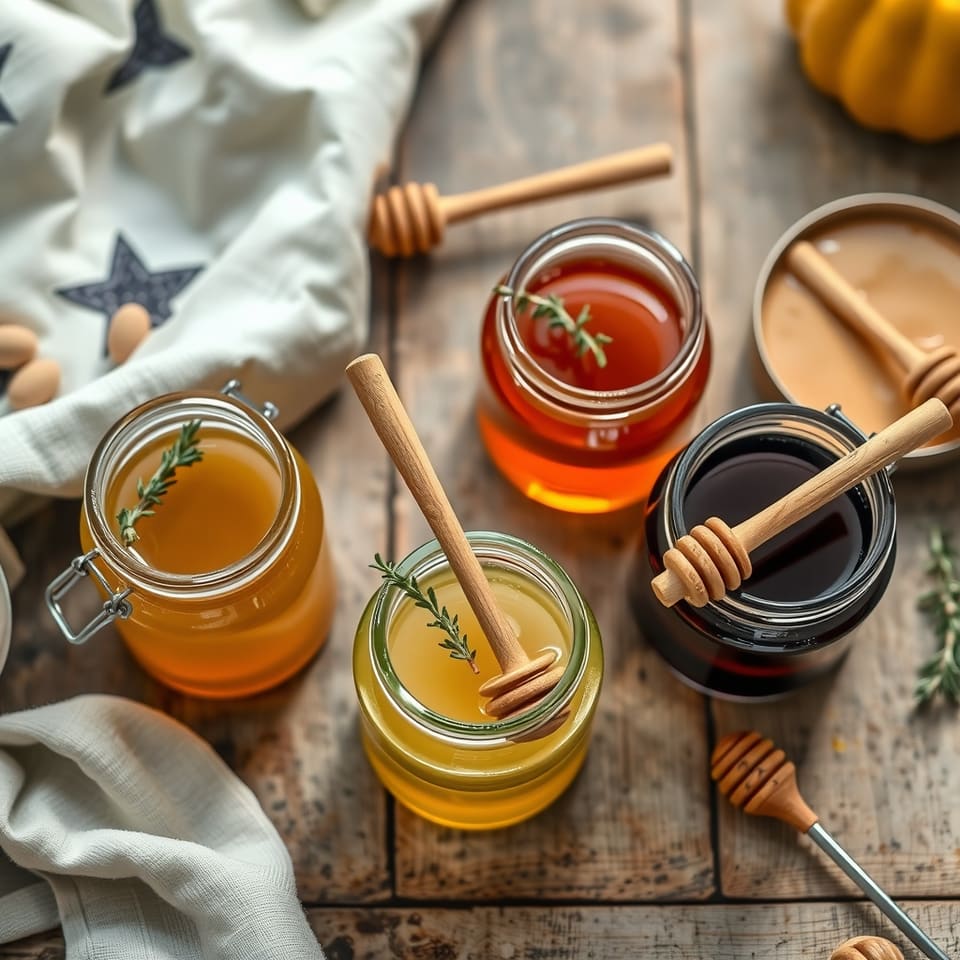
A spoonful of honey for a cough is one of the most widely shared home remedies on earth. What changes from place to place is the honey. Around the Mediterranean it is often thyme honey. In New Zealand it is manuka. In North America and parts of Eastern Europe, dark buckwheat honey has a loyal following, and almost everywhere there is a simple jar of mixed wildflower or blossom honey.
So which one should you reach for? The short answer is that the research supports honey in general, not one special type. The longer answer, below, will help you choose a jar with your eyes open.
What the evidence says about honey and coughs
The best summary comes from a Cochrane review of six randomized trials in 899 children with short-term coughs. The authors found that honey probably eases cough symptoms more than no treatment or a placebo, may work better than the antihistamine diphenhydramine, and may work about as well as the cough medicine dextromethorphan. The certainty of the evidence ranged from moderate to low, most children were treated for only one night, and the benefit was seen for up to about three days.
These studies were done in children aged 1 and older, not in adults. For grown-ups, honey is a reasonable, low-risk thing to try rather than a proven treatment.
Bedtime Honey Spoon for a Cough
You need
- honey, for children aged 1 and over2.5 to 5 ml (1/2 to 1 tsp)
- honey, for teenagers and adults (no dose has been tested in adults)5 to 10 ml (1 to 2 tsp)
- warm water or caffeine-free herbal tea, optional60 ml (1/4 cup)
Method
- About 30 minutes before bed, measure the honey with a proper measuring spoon rather than a table spoon.
- Take it straight from the spoon and let it slide slowly down the throat, or stir it into a little warm, not hot, water or herbal tea.
- For children, sit with them while they take it, and brush their teeth afterward, as you would after any sweet food.
- You can repeat the honey during the day if the cough is bothersome, but keep the total to a few spoonfuls.
Tips
- Mayo Clinic gives 0.5 to 1 teaspoon (2.5 to 5 ml) as the amount of honey for children aged 1 and older.
- If the honey is very thick, dip the spoon in hot water first so it slides off easily.
- Honey is sugar. If you count carbohydrates, include it in your daily total.
Does the type of honey matter?
One well-known trial from 2007, with 105 children aged 2 to 18, used buckwheat honey given as a single dose 30 minutes before bed. Parents rated honey best for relieving nighttime cough and sleep problems, compared with dextromethorphan or no treatment. That is why dark buckwheat honey is often recommended online.
But that study tested buckwheat honey against other treatments, not against other honeys. None of the sources we checked compare thyme, wildflower, buckwheat and manuka head to head for coughs. So there is no good evidence that one type works better than another for a cough. The texture and taste matter more in practice: a thick, strongly flavored honey coats the throat nicely, while a mild one is easier for fussy children.
What about manuka honey?
Manuka honey is made by bees that feed on the manuka bush, and it is usually the most expensive jar on the shelf. Memorial Sloan Kettering Cancer Center explains that it contains a compound called methylglyoxal, which is thought to be behind its antibacterial effects. Most of the research is on manuka applied to the skin, for wounds, and even there the evidence is limited.
Memorial Sloan Kettering does not list cough or sore throat among the uses studied. If you like manuka and can afford it, it is still honey and will soothe just as well. But you do not need it for a cough, and an ordinary jar of local honey is a perfectly good choice.
How to choose a jar
Pick a pure honey that you enjoy the taste of, since you are more likely to take it. Thyme honey has a strong herbal aroma, buckwheat is dark and malty, wildflower varies with the season, and lighter honeys such as acacia are mild and runny.
Check that the ingredients list says only honey. Crystallized honey is still fine to use: warm the jar gently in a bowl of hot water to loosen it.
Questions people ask
Is raw honey better for a cough than regular honey?
There is no evidence that raw honey eases a cough better. Both are still honey, and neither is safe for babies under 12 months.
Is dark honey stronger for coughs?
Dark buckwheat honey was used in a well-known study, but it was not compared with lighter honeys. Choose the one you or your child will happily take.
Can honey replace cough medicine?
For a short-term cough from a cold, honey is a sensible first thing to try from age 1. Studies found it works about as well as some cough medicines, but the evidence is moderate at best.
Sources
- Honey for acute cough in children (Cochrane review) — PubMed, National Library of Medicine
- Effect of honey, dextromethorphan, and no treatment on nocturnal cough and sleep quality for coughing children and their parents — PubMed, National Library of Medicine
- Manuka Honey (About Herbs) — Memorial Sloan Kettering Cancer Center
- Can honey help treat a cough in children? — Mayo Clinic
This article is for general information only and is not medical advice. Herbs can interact with medicines and health conditions. Talk to a doctor or pharmacist before trying a herbal remedy, especially if you are pregnant, breastfeeding, giving it to a child, or taking any medication.