Home Remedy for Nail Fungus: What the Evidence Says
Nail fungus is common, stubborn and slow to clear, and the internet is full of kitchen cures. Here is an honest look at what is known, what is not, and the simple habits that really help.
A thick, yellowed or crumbly toenail is often a fungal nail infection. It is usually not serious, but it can be stubborn. The NHS notes that it can take a long time to clear, and that toenails are affected more often than fingernails.
Online you will find dozens of home remedies, from tea tree oil to vinegar soaks. Here is an honest look at what they can and cannot do, what a pharmacist can offer, and the daily habits that make the biggest difference.
What nail fungus looks like and why it happens
According to the NHS, a fungal nail infection can make the nail brittle, discolored or thicker than usual. It often starts at the edge of the nail and spreads, turning the nail white or yellow. The nail may crumble, and sometimes it lifts off, leaving the skin around it swollen and painful.
Fungi like warm, damp places. The NHS says you are more likely to get a nail infection if your feet are often sweaty or you wear trainers for long periods. Untreated athlete's foot can also spread to the nails.
Not every thick or discolored nail is fungal. Before prescribing tablets, a doctor usually has a small nail sample tested.
Daily Dry-Feet Routine
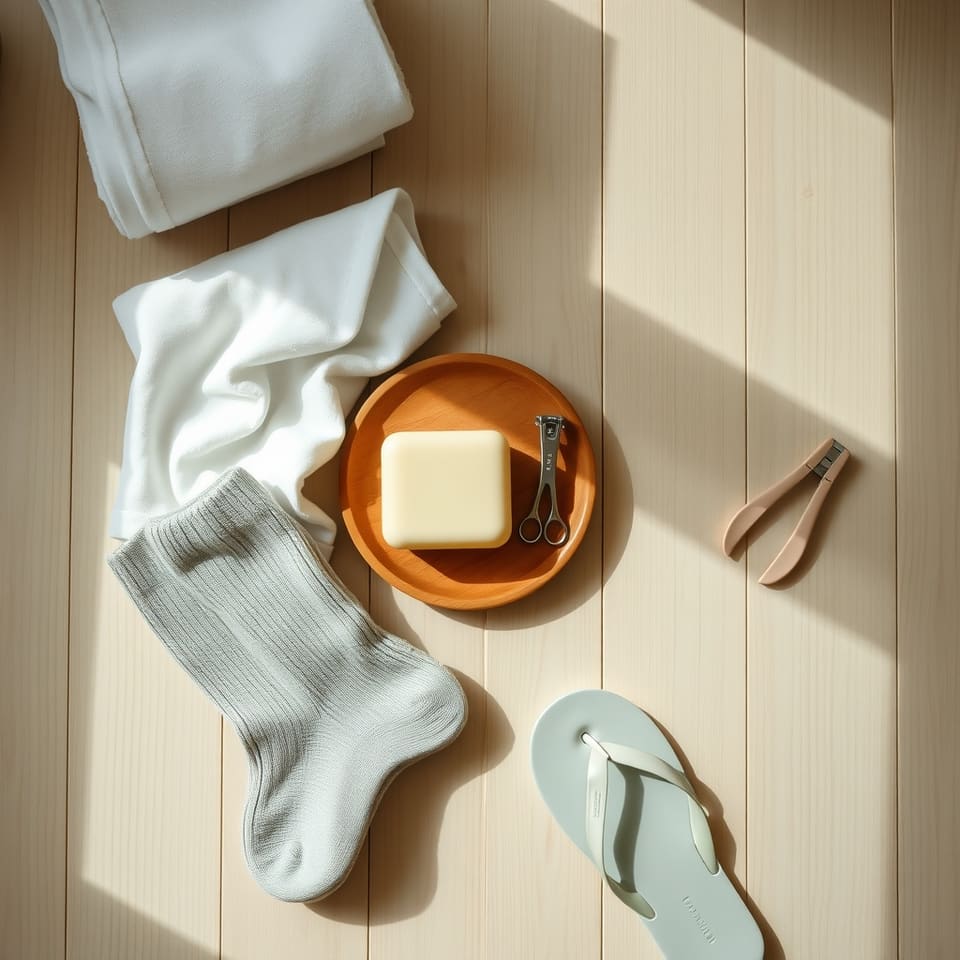
You need
- bar of mild, unscented soap1
- clean towel for your feet only1
- clean cotton or moisture-wicking socks for each day1 pair
- flip-flops or shower shoes for shared showers1 pair
- set of nail clippers that only you use1
Method
- Wash your feet every day with soap and water, including between the toes.
- Dry them thoroughly, especially between the toes, with your own towel.
- Put on clean, dry socks. Change them again if they get damp or sweaty during the day.
- Alternate your shoes so each pair can dry out, and choose well-fitting shoes that do not squeeze your toes.
- Keep your nails short and trimmed straight across with your own clippers. Clean the clippers after each use.
- Wear flip-flops or shower shoes in pools, gyms, shared showers and hotel rooms.
Tips
- If you also have itchy, peeling skin between your toes, that may be athlete's foot. Ask a pharmacist about treating it early so it does not spread to the nails.
Popular home remedies, honestly reviewed
Tea tree oil is the most studied home remedy, and the evidence is still weak. NCCIH, part of the US National Institutes of Health, says only a few studies have looked at tea tree oil for fungal nails, and both the amount and quality of the research are too low to draw any conclusions. Mayo Clinic notes that one small study found pure tea tree oil helped a few people, while studies using weaker concentrations found no benefit.
Vinegar soaks, garlic, baking soda and mentholated chest rubs are widely shared online. None of the medical sources we checked recommends them as a treatment, and we did not find good-quality evidence that they clear nail fungus. If you do try a soak, stop if your skin becomes red, sore or cracked.
The honest summary: home remedies are unlikely to clear a fungal nail, and none should delay proper advice if the nail is painful or spreading, or if you have diabetes.
What the evidence says about real treatment
The NHS says a pharmacist can suggest an antifungal nail paint, brushed on daily or weekly depending on the product. Treatment usually lasts 6 to 12 months, and it can take several months to see a change. These products may not be suitable for people under 18 or during pregnancy or breastfeeding. The infection is considered cured when healthy nail grows back from the base.
If that does not work, a GP may prescribe antifungal tablets for up to about 6 months. The NHS says blood tests check your liver before and during treatment, and side effects can include headache, an itchy rash, nausea and diarrhea. People with some conditions, such as liver or kidney disease, cannot take them.
Expect it to be slow. Because treatment goes on until healthy new nail has grown back from the base, any approach needs months of patience.
Daily habits that genuinely help
Prevention is where you have the most control. The NHS advises treating athlete's foot early, keeping nails short and feet clean and dry, and not sharing towels, shoes or nail clippers. The American Academy of Dermatology adds choosing socks that wick moisture and rotating shoes so each pair can dry out. The routine below puts it all together.
Questions people ask
Does tea tree oil cure nail fungus?
There is not enough good research to say it works. NCCIH says the evidence is too limited for any conclusions. If you try it, never swallow it, and stop if your skin gets irritated.
How long does it take to get rid of nail fungus?
Usually many months. The NHS says pharmacy nail paints are used for 6 to 12 months, and the infection is only cured when healthy nail grows back from the base.
Is nail fungus contagious?
It can spread, which is why the NHS advises not sharing towels, shoes or nail clippers and treating athlete's foot early so it does not reach the nails. Wear flip-flops in shared showers.
Sources
- Fungal nail infection — NHS 111 Wales
- Tea Tree Oil: Usefulness and Safety — NCCIH
- Tea tree oil — Mayo Clinic
- Athlete's foot: how to prevent — American Academy of Dermatology
This article is for general information only and is not medical advice. Herbs can interact with medicines and health conditions. Talk to a doctor or pharmacist before trying a herbal remedy, especially if you are pregnant, breastfeeding, giving it to a child, or taking any medication.