Herbal Soap DIY: Melt-and-Pour Bars and Lye Safety
Herbal soap is a lovely first craft project, and you do not need to handle lye to make it. Here is an easy melt-and-pour method, plus the safety rules that matter if you later make soap from scratch.
People have made soap at home for a very long time. The FDA notes that soap was once made at home from animal fats and lye taken from wood ashes, and today handmade soap is a popular craft all over the world.
Today, adding dried flowers, oats or herbs to a bar is one of the most popular home projects. The part that deserves real respect is lye, the strong alkali that turns oil into soap. This guide starts with a method that skips lye entirely, then explains how to stay safe if you decide to go further.
What soap actually is
True soap forms when fats or oils react with an alkali such as lye. The US Food and Drug Administration explains that the fats break down and combine with the alkali to make soap, and that properly made soap contains no leftover lye. It also notes that many bars sold as soap today are actually synthetic detergents.
So the risk sits in the making stage, before the reaction is complete. A finished bar made from a tested recipe should not contain free lye.
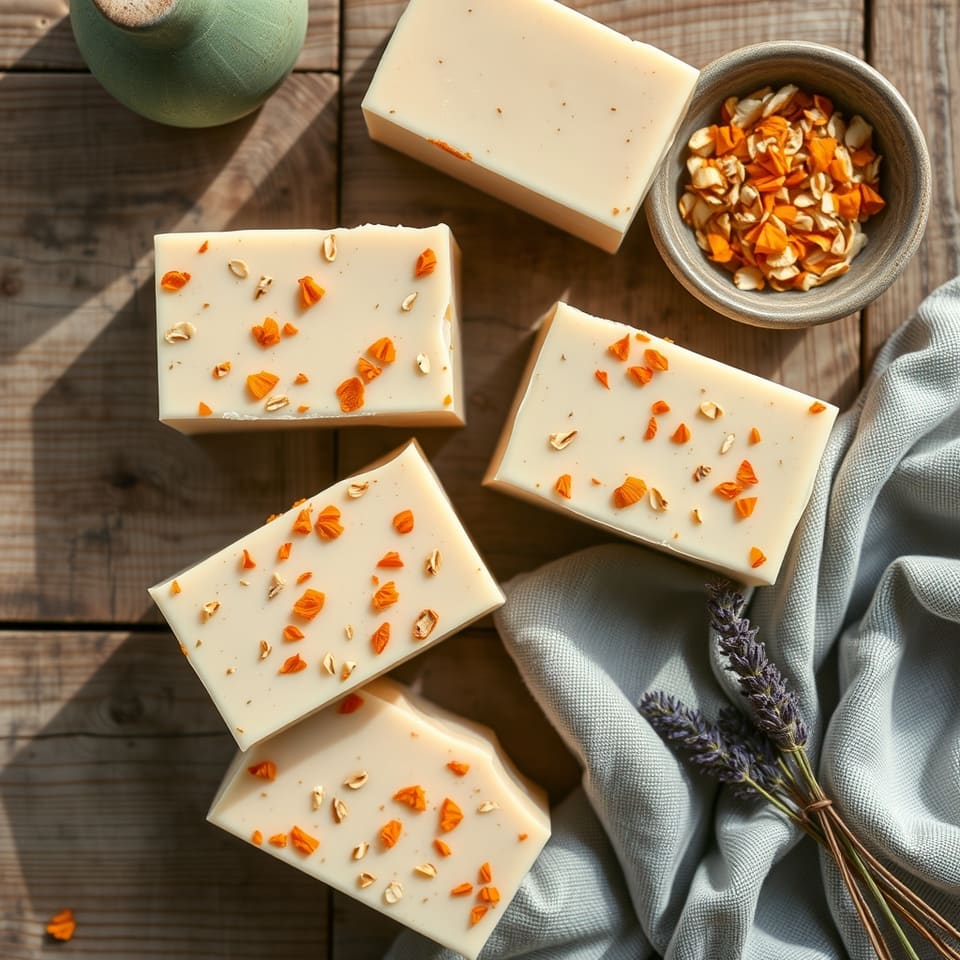
Oat and Calendula Melt-and-Pour Soap
You need
- unscented melt-and-pour soap base (glycerin or goat milk type), cut into cubes500 g (about 1 lb)
- dried calendula petals1 tbsp
- finely ground rolled oats2 tbsp
- dried lavender flowers, optional1 tsp
Method
- Put the soap cubes in a heatproof glass jug or bowl and melt them gently over a pan of barely simmering water, or in the microwave in short bursts of 20 to 30 seconds, stirring between each one.
- Do not let the base boil. Once it is fully melted, take it off the heat and let it cool for a minute or two.
- Stir in the ground oats and most of the calendula petals. Stir slowly to avoid bubbles.
- Pour into silicone molds and sprinkle the remaining petals and lavender on top.
- Leave to set at room temperature for 2 to 3 hours, then push the bars out of the molds.
- Wrap each bar in baking paper or store in an airtight box so the surface does not attract moisture.
Tips
- Use fully dried herbs only. Fresh leaves and petals hold water and may turn brown inside the bar.
- A little goes a long way. Too many petals or oats make a scratchy bar.
- Skip essential oils if you or the person receiving the soap has sensitive skin. Unscented bars are the gentlest choice.
Two ways to make herbal soap
Melt-and-pour is the easiest route. You buy a ready-made soap base, where the lye reaction has already happened, melt it, stir in your herbs and pour it into a mold. You can have bars the same day.
Cold-process soap is made from scratch by mixing oils with a lye solution. It gives you full control of the oils, but it means handling a corrosive chemical. If you want to try it, follow a tested recipe exactly and use a soap calculator to check the amounts. Never guess or swap oils without recalculating.
Lye safety rules for soap from scratch
Lye is sodium hydroxide. MedlinePlus explains that it can burn the skin, cause severe eye pain and possible vision loss, and cause serious burns of the throat and stomach if swallowed. MedlinePlus lists drain and oven cleaners among products that contain it.
Wear chemical safety goggles, gloves and long sleeves, and work in a well-ventilated space. A university safety data sheet for sodium hydroxide gives a clear rule: always add the lye to the water while stirring, never the water to the lye, because mixing releases a lot of heat. The same sheet warns that lye reacts with aluminum, tin and zinc to form flammable hydrogen gas, so use stainless steel or heat-safe plastic tools, never aluminum.
Keep lye in a tightly closed, clearly labeled container, away from moisture and well out of reach of children and pets. Never use your soap tools for food.
What the evidence says
There is no good evidence that adding herbs to soap gives it healing powers. A wash-off bar only touches your skin for a short time, and dried petals mostly add color, texture and a gentle look. Enjoy herbal soap as a pleasant, homemade cleanser.
The FDA also draws a clear line on claims. If a product is said to moisturize or deodorize, it counts as a cosmetic, and if it is said to treat or prevent a condition such as acne or eczema, it counts as a drug. So if you give or sell your bars, describe them simply and avoid health claims.
Questions people ask
Is homemade soap safe to use on skin?
A bar made from a tested recipe or a ready-made base should be safe for most people. The FDA notes that properly made soap contains no leftover lye. Patch test first if your skin is sensitive.
Can I make herbal soap without lye?
Not truly from scratch, because soap needs an alkali to form. Melt-and-pour bases let you skip handling lye yourself, because that step has already been done.
Can I use fresh herbs from the garden?
It is better to dry them first. Fresh plant material adds water to the bar and may leave brown spots.
Sources
- Frequently Asked Questions on Soap — US Food and Drug Administration
- Sodium hydroxide poisoning — MedlinePlus
- Sodium Hydroxide Material Safety Data Sheet — University of Alabama at Birmingham, Environmental Health and Safety
- How to test skin care products — American Academy of Dermatology
This article is for general information only and is not medical advice. Herbs can interact with medicines and health conditions. Talk to a doctor or pharmacist before trying a herbal remedy, especially if you are pregnant, breastfeeding, giving it to a child, or taking any medication.